The Silent Alarm No One Hears

It’s not the sound of a siren that wakes you. It’s the silence. The hollow hum of a dead refrigerator. The eerie quiet where the power grid’s heartbeat used to be. Your phone is a dark, useless slab. In that moment, the carefully stocked bin in your closet feels a million miles away. Because a kit, on its own, is just a pile of things. What you truly need isn’t a what. It’s a how. You need the invisible infrastructure—the silent, pre-installed operating system that boots up the second the world flickers. This isn’t about prepping. This is about building your family’s protocol for chaos.

When the Lights Go Out: Your Plan is a Ghost

We’ve all told ourselves, “We have a plan.” But under the crushing weight of a real crisis, those paper-thin plans dissolve. Fear does that. It narrows your vision, turns your hands cold, and shuts down the logical part of your brain. What you’ve written down? Forgotten. The vague “we’ll figure it out” promise? Useless. What you need isn’t a plan. It’s a protocol. A set of actions so deeply practiced, they feel like muscle memory.

The Four Layers of Staying Alive

Think of your readiness not as a checklist, but as a stack of layers, each one supporting the next.

  1. The Mind: This is your foundation. It’s the calm in the storm. The grit to make a hard decision when every cell in your body is screaming to panic. Without a resilient mind, the fanciest gear is just dead weight.
  2. The Material: This is your disaster preparedness kit for home and car. The water, the food, the first-aid supplies. It’s the tangible proof you saw this coming. But on its own, it’s inert. It’s potential energy waiting for a spark.
  3. The Method: This is the spark. It’s the how. How do you purify water if the filter fails? How do you secure a broken window? Method is what turns your stuff into capability. It’s the playbook for the game you never wanted to play.
  4. The Communication: This is the lifeline. It’s the family communication tree, the rally points, the silent language of hand signals. This layer transforms a group of individuals into a coordinated team, moving with a single purpose.

The Software You Forgot to Install

Anyone can buy a 72-hour survival kit. It’s the easiest part. The software—the drills, the agreements, the practiced rhythms—is what most people never download. This software includes the unspoken rules: the decision trees that tell you if this, then that; the skill memory of knowing how to shut off the gas valve blindfolded; the social scripts for dealing with a frightened neighbor or an anxious authority figure.

Your Home Isn’t a Shelter. It’s a Command Node.

In a crisis, your house must transform from a place of comfort into a headquarters. Your home emergency kit isn’t a stash. It’s the beating heart of your central command node.

Where Do We Go? The Rally Point & The Communication Tree

“Meet at home” is a great idea until the roads are closed or the house is compromised. You need a cascade of options.

  • Primary Rally Point: Inside the home. A fortified interior room, like a bathroom during a tornado.
  • Secondary Rally Point: Outside the home. The big tree in the backyard, the garden shed.
  • Tertiary Rally Point: A neighborhood location. The library, the community center.
    Your family communication tree is a pre-assigned phone chain. Person A calls B and C. B calls D and E. This isn’t a suggestion; it’s a protocol. It prevents everyone from calling the same person and crashing the network.

The Shift Schedule: The Antidote to Exhaustion

Your 72 hour emergency backpack has 72 hours of supplies. That doesn’t mean you can operate for 72 hours straight. Fatigue makes cowards and casualties of us all.

  • Create a Roster: 4-hour shifts for watch, rest, and maintenance.
  • Define Roles: Who is on water duty? Who handles communications? Who is the medic?
  • Schedule Rest: This is non-negotiable. Mandatory rest is what prevents the single mistake that unravels everything.

Do You Know Where Your Water Shut-Off Is?

It’s a simple question. But in the dark, with the sound of water rushing, would you know? This is where protocol becomes action.

  • Map Your Home: Take pictures. Label them. “MAIN WATER SHUT-OFF.” “GAS MAIN VALVE.” “ELECTRICAL PANEL.”
  • Create Laminated Cards: Simple, illustrated steps for each critical task. Keep them with your home survival kit. Make it idiot-proof, because in a crisis, we’re all idiots.

Your Car Kit: The Reconnaissance Unit

Your car emergency kit is not a smaller version of your home supplies. It has a different, more urgent mission: to become a mobile lifeline, a deployed reconnaissance unit dedicated to getting everyone back to the command node.

The Get-Home Agreement: The Rules of Engagement

This is the family contract, signed in calm times, for use in chaotic ones. It eliminates the “what do I do?” paralysis.

  • Rule 1: If an event happens within your 5-mile “bubble” during the day, you move. Now.
  • Rule 2: If a shelter-in-place order is given for your current location, you secure your position and signal your status.
  • Rule 3: A car is a tool, not a safe room. If the roads are dead, you abandon it for a pre-planned route on foot.

Your Car is a Power Plant on Wheels

That metal box in your driveway is a giant battery and a potential signal tower.

  • Power Inverter: Plug this into your car survival kit. It turns your cigarette lighter into a charging station for phones, radios, and medical devices.
  • Signal Booster: A small, often-overlooked device that can grab one more bar of cell signal—the bar that lets a crucial text message get through.
  • The Humble Radio: An AM/FM radio with a long antenna can pull in emergency broadcasts long after your smartphone becomes a brick.

The Currency of Kindness: Barter & Goodwill

In a collapse, the most valuable asset isn’t in your bank account. It’s in your community. Trust is the new gold.

  • Barter Inventory: A small, separate pouch in your kit. Extra water filters, high-calorie bars, duplicate medical supplies. Not for hoarding. For trading.
  • Goodwill Tools: A dedicated first-aid kit for helping others. A multi-tool to lend. These small acts build social capital—the kind that might buy you safe passage or a critical warning.

The Quarterly Drill: Where Fantasy Meets Reality

A plan you don’t practice is a fantasy. You have to pressure-test your systems. You have to fail in safety to succeed in chaos.

The 15-Minute ‘Power’s Out’ Drill

Pick a random Saturday. Announce: “Drill start. Power is down. Cells are dead. You have 15 minutes.”

  • The Mission: Can everyone find the rally point without speaking? Can your teenager locate the water valve? Can you retrieve and inventory the emergency backpack in the dark?
  • Introduce Chaos: “The primary rally point is blocked by simulated smoke.” Now what? How does the protocol adapt?

The After-Action Review: The Most Important 10 Minutes

The drill isn’t over when the timer beeps. It’s over after the debrief. Gather everyone and ask:

  1. What was supposed to happen?
  2. What actually happened?
  3. What do we need to change for next time?
    This loop of practice and refinement is what turns a family into a team.

The Hardware for Your Operating System

All this talk of protocols and systems needs a physical anchor. It needs reliable, intuitive hardware. This is where a purpose-built kit stops being a “product” and becomes the enabling core of your invisible infrastructure.

How the Right Kit Feels Like an Extension of Your Will

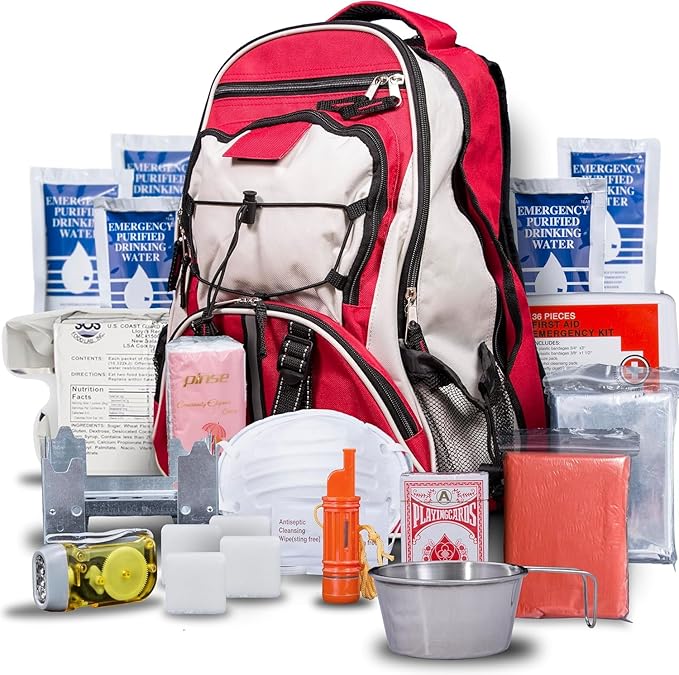
We built this methodology using the Blue Seventy-Two Pro Series Red Deluxe 72-Hour Emergency Backpack as our benchmark. Here’s why it fits the OS model:

  • It Offloads Thinking: The kit is logically organized. You don’t waste precious mental energy searching for a light source; it’s in the intuitively labeled pocket. In a crisis, cognitive clarity is everything.
  • It Builds in Backup: Multiple fire starters. Multiple water purification methods. This redundancy is the material expression of a robust protocol. It ensures a single point of failure doesn’t break your entire system.
  • It’s a Complete Baseline: With its comprehensive range of items, it solidifies the Material Layer, giving you the confidence to focus your energy on the higher, more critical layers of Method and Communication.

Weaving the Kit Into Your Family’s Story

This is where it all comes together. During our *15-minute ‘Power’s Out’ drill*, the Blue Seventy-Two isn’t just a prop; it’s a character.

  • Drill Objective: Establish Comms. A child is tasked with retrieving the hand-crank radio from the kit’s main compartment.
  • Drill Objective: Triage Injury. The comprehensive first aid module is deployed, and its contents become familiar, not foreign.
  • Drill Objective: Secure Water. The water purification tablets are located, assigned, and become part of a practiced routine.
    By integrating a specific, well-designed disaster preparedness kit for home and car into your drills, you move from abstract theory to lived experience. The kit becomes an old friend. Its contents become extensions of your own hands.

Products / Tools / Resources

This isn’t a checklist; it’s a curation of tools that have earned their place in the system we’ve described.

  • The Foundation Kit: The Blue Seventy-Two Pro Series Red Deluxe. We use it as our core home base kit because of its logical organization and built-in redundancies, which are critical for executing protocols under stress.
  • Communication Lifeline: A hand-crank NOAA weather radio with a USB charging port. It’s your link to the outside world when everything else fails.
  • Power When It’s Gone: A reliable 300-watt power inverter for your car. This turns your vehicle into a true emergency power station.
  • The Knowledge Archive: A physical, printed manual of basic survival skills and a laminated copy of your home’s system maps (water, gas). Don’t rely on a digital file.
  • The Get-Home Bag: A lightweight, durable backpack stocked with a core set of supplies from your main kit—water, a filter, high-calorie food, a first-aid kit, and a power bank—designed to live in your car trunk.
What Would a Second American Civil War Look Like? Modern Scenarios and Potential Triggers

Understanding Modern Civil Conflict in America

The possibility of large-scale civil conflict in America has moved from fringe speculation to serious academic discourse. Political scientists, security experts, and think tanks now actively study scenarios that once seemed unthinkable. While most experts emphasize that traditional civil war remains unlikely, understanding potential flashpoints and modern conflict dynamics has become essential for preserving democratic stability.

Unlike historical conflicts with clear geographic boundaries, any modern American civil strife would unfold in a dramatically different landscape shaped by technology, demographic complexity, and interconnected systems that didn’t exist during the 1860s.

How Modern Civil Wars Differ From Historical Conflicts

Contemporary civil conflicts bear little resemblance to the organized armies and clear battle lines of America’s first Civil War. Modern internal conflicts are characterized by asymmetric warfare, information campaigns, and fragmented rather than unified opposing forces.

The Role of Technology and Cyber Warfare

Digital technology fundamentally changes how modern conflicts develop and spread. Social media platforms can rapidly mobilize groups, spread disinformation, and coordinate activities across vast distances. Cyber warfare capabilities allow small groups to target critical infrastructure, disrupt communications, and attack financial systems without traditional military resources.

Modern conflicts increasingly involve attacks on power grids, internet infrastructure, and supply chain management systems. These vulnerabilities create opportunities for widespread disruption with relatively limited manpower, making traditional security models insufficient for current threats.

Geographic and Demographic Challenges

America’s current political divisions don’t follow neat geographic boundaries. Urban areas lean progressive while surrounding rural regions trend conservative, creating a patchwork of competing jurisdictions within individual states. This demographic reality makes traditional territorial warfare nearly impossible while creating numerous potential friction points.

Military installations, federal facilities, and critical infrastructure are distributed throughout the country, crossing multiple political jurisdictions. Supply chains for food, fuel, and essential goods span regions with different political orientations, creating vulnerabilities that didn’t exist in earlier eras.

Most Likely Crisis Scenarios That Could Trigger Conflict

Security analysts have identified several categories of events that could escalate political tensions beyond normal democratic processes.

Electoral and Constitutional Crises

The most commonly cited trigger involves disputed election results where competing claims to legitimacy paralyze normal governance. This could include situations where state and federal authorities recognize different winners, courts are unable to resolve disputes, or peaceful power transfers break down.

Constitutional crises might emerge from attempts to dramatically alter fundamental governing processes, such as changing voting procedures through executive action, states nullifying federal laws on a massive scale, or attempts to suspend constitutional protections during emergencies.

Economic Collapse and Social Breakdown

Severe economic disruption combined with government fiscal crisis could create conditions for widespread civil unrest. Scenarios include currency collapse, hyperinflation, mass unemployment, or breakdown of social safety nets during economic depression.

Regional economic disparities reaching extreme levels, particularly if combined with political grievances, could fuel secessionist movements or demands for fundamental governmental restructuring that normal political processes cannot accommodate.

Federal vs. State Authority Conflicts

Escalating disputes over federal versus state authority could reach breaking points if multiple states simultaneously refuse to comply with federal laws or court decisions. This becomes particularly dangerous if law enforcement or National Guard units face conflicting loyalty demands.

Military leadership facing orders they consider unconstitutional, or state governments attempting to mobilize armed forces against federal authority, represent scenarios that could quickly escalate beyond political resolution.

What Modern American Conflict Would Actually Look Like

Rather than armies facing each other across battlefields, contemporary experts describe scenarios involving fragmented violence, economic warfare, and information campaigns.

Fragmented Violence and Targeted Attacks

Modern internal conflict would likely involve decentralized militia groups, targeted assassinations of political figures, and attacks on infrastructure rather than traditional military campaigns. Urban centers might experience guerrilla-style attacks while rural areas see militia conflicts and law enforcement confrontations.

Critical infrastructure including power plants, communication networks, transportation hubs, and water treatment facilities would become primary targets. These attacks could cause widespread disruption with relatively small groups, making traditional security approaches inadequate.

Economic and Information Warfare Tactics

Economic disruption through coordinated boycotts, work strikes, and supply chain interference could prove more effective than violent confrontation. Regional economic non-cooperation, banking system attacks, and trade disruptions might achieve political goals without traditional warfare.

Information warfare involving competing media narratives, social media manipulation, and the breakdown of shared factual foundations for democratic discourse represents a particularly modern threat. When populations can’t agree on basic facts, democratic resolution becomes impossible.

Key Players and Factions in Modern Conflict

Unlike the clear North-South division of the 1860s, modern American conflict would involve multiple competing factions with complex motivations and alliances.

Contemporary militia movements, extremist groups across the political spectrum, and radicalized political factions represent potential organized participants. However, the majority of Americans would likely seek to avoid conflict, creating a complex environment where small groups could have disproportionate impact.

Law enforcement and military personnel would face unprecedented challenges regarding loyalty and constitutional obligations. State versus federal authority conflicts could force individual officers and soldiers to choose sides in ways that traditional training hasn’t prepared them for.

International Implications and Foreign Involvement

American civil conflict would create global consequences extending far beyond domestic politics. Economic disruption would affect international markets, trade relationships, and global financial systems that depend on American stability.

Foreign powers might exploit American weakness by expanding their influence in regions where US commitment becomes uncertain. International security arrangements, defense treaties, and global peacekeeping operations could collapse if America becomes internally focused.

The refugee crisis and international intervention questions arising from American civil conflict would create unprecedented challenges for neighboring countries and international organizations designed around American leadership.

Expert Assessments and Academic Analysis

Leading political scientists emphasize that while civil conflict scenarios deserve serious study, traditional civil war remains statistically unlikely. Most experts point to strong institutional foundations, economic interdependence, and professional military commitment to constitutional governance as protective factors.

However, researchers note concerning trends including increasing acceptance of political violence in polling, breakdown of democratic norms, and foreign interference in domestic politics as warning signs requiring attention.

Academic studies of global civil conflicts identify key predictive factors that merit monitoring, including political polarization levels, economic inequality, and institutional trust measures.

Warning Signs and Prevention Strategies

Political scientists have identified early indicators that democratic societies can monitor to prevent escalation toward violence. These include dehumanizing language about political opponents, acceptance of political violence in public opinion surveys, and breakdown of democratic norms in political competition.

Institutional safeguards including independent courts, professional law enforcement, and constitutional limitations on executive power remain crucial protective factors. Economic opportunity, civic education, and cross-cutting social identities that bridge political divisions also strengthen democratic resilience.

Frequently Asked Questions About American Civil War Scenarios

How likely is a second American civil war?

Most experts consider traditional civil war unlikely due to strong institutions, economic interdependence, and military professionalism, though they acknowledge increasing risks of political violence and democratic breakdown.

Would the military split in a civil conflict?

Military leadership has historically maintained constitutional loyalty regardless of political pressures, though unprecedented scenarios involving conflicting legal authorities could create difficult situations for individual service members.

What states would be involved in modern civil war?

Unlike the 1860s, modern political divisions run through states rather than between them, making geographic predictions difficult. Urban-rural divides within states might prove more significant than state-level politics.

How would foreign countries respond to American civil war?

International responses would likely include economic sanctions, refugee assistance, and diplomatic intervention attempts, while rival powers might exploit American weakness to expand their global influence.

What role would social media play in modern conflict?

Social media would serve as both an organizing tool and a battleground for information warfare, potentially accelerating conflict escalation while making resolution more difficult through echo chamber effects.

Could economic warfare replace traditional battles?

Economic disruption through supply chain attacks, financial system targeting, and coordinated non-cooperation might prove more effective than violent confrontation in achieving political goals.

Historical Context and Lessons Learned

The American Civil War of 1861-1865 occurred in a fundamentally different context with clear geographic divisions, agricultural versus industrial economies, and limited communication technology. Modern America’s demographic complexity, economic interdependence, and technological capabilities create entirely different dynamics.

International examples of recent civil conflicts emphasize the importance of maintaining democratic institutions, addressing economic grievances, and preventing the breakdown of shared civic culture before violence becomes normalized.

Understanding Risk Without Fear-Mongering

Analyzing potential civil conflict scenarios serves prevention rather than prediction. Strong democratic institutions, economic opportunity, and civic engagement remain the most effective safeguards against political violence.

The purpose of understanding these risks is to strengthen democratic resilience, address underlying grievances through political processes, and maintain the institutional foundations that have prevented major internal conflict for over 150 years. Most Americans across political divides share more common interests than divisions, providing hope for continued democratic governance despite current challenges.

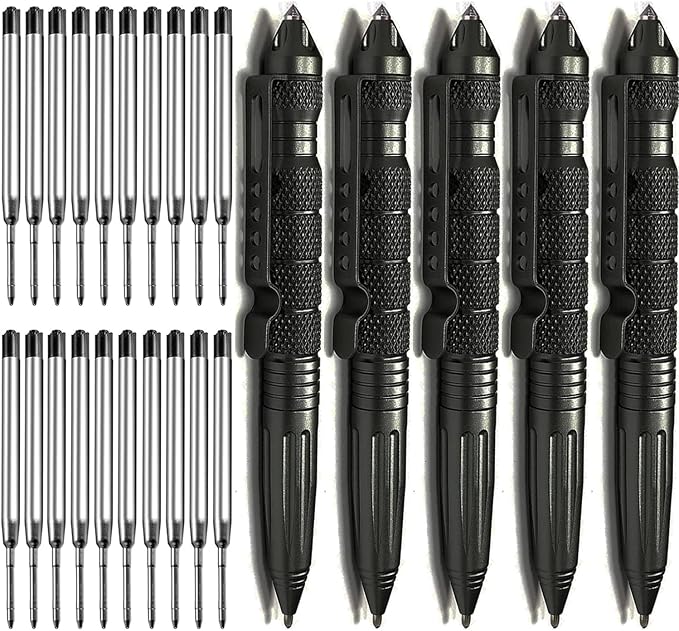
Origin-Joy 5 Pack Military Tactical Pens – Tungsten Steel EDC Self-Defense Pen Set with 20 Ballpoint Refills – Discreet Protection, Heavy-Duty Reliability, Everyday Carry Survival Tool


🟦 BULLET POINTS (FEATURES + THEMATIC EDGE)

Looks Like a Pen. Performs Like a Tool.
Crafted from ultra-durable tungsten steel, each pen is built to deliver discreet, dependable protection when you need it most.

MacGyver-Approved Multifunctionality
Write, defend, and break glass in emergencies — these pens do more with less, just like the icons of the ’80s and ’90s we grew up admiring.

Built for Real-World Readiness
Compact enough to carry daily, strong enough to count on in high-stakes moments. Quiet strength meets tactical confidence.

Smooth Writing. Serious Backup.
Includes 20 high-quality ink refills — so your EDC doesn’t stop working when the writing gets tough.

The ThinkPad of Tactical Gear
No flash, all function. Designed for professionals, first responders, and anyone who values reliability without the noise.


🟦 PRODUCT DESCRIPTION (NARRATIVE-DRIVEN + SEO SMART)

🔒 Stay Ready. Stay Under the Radar.

The Origin-Joy Tactical Pen Set is not just a writing tool — it’s a mindset. For those who know that real strength doesn’t shout, it just shows up when needed.

Inspired by the quiet resilience of Gen X heroes — from Jason Bourne’s calm precision to MacGyver’s everyday genius — this 5-pack of tungsten steel pens brings confidence and capability to your pocket.

Whether you’re commuting, traveling, or navigating uncertain environments, each pen offers:

  • Rugged tungsten steel build
  • Emergency glass breaker tip
  • Smooth ballpoint writing
  • 20 ink refills for long-term use
  • Subtle, professional design

Perfect for gifting, prepping, or everyday carry. Because in a world full of noise, strength is silent.


🟦 A+ CONTENT / ENHANCED BRAND CONTENT HEADLINES (if applicable):

  • Hidden Strength, Always Ready
  • Built for the Real World, Not Just the Boardroom
  • Inspired by Legends: Bourne. MacGyver. You.
  • 5 Pens. 20 Refills. 1 Mission: Be Prepared.

💥 How to Stay Alive in a Mass Shooting

No one wants to think about it.
But if it happens — you need to know what to do.
These steps can save your life.


🚪 1. Before Anything Happens

Look around.
Seriously — every time you walk into a place, take 3 seconds:
👀 Where are the exits?
🧱 What could you hide behind?
💭 If something went wrong, where would you go?

Trust your gut.
If someone or something feels off — move. Don’t wait for “proof.”


🏃 2. When It Starts — RUN. HIDE. FIGHT.

That’s your survival plan. In that order.

🏃‍♂️ RUN

Get out. Fast.

  • Drop your stuff — it’s not worth your life.
  • Don’t freeze. Just move.
  • Zigzag if you hear shots.
  • Keep your hands visible when you see police.

🤫 HIDE

Can’t run? Hide smart.

  • Lock or block the door.
  • Turn off lights. Stay quiet.
  • Silence your phone (no buzz).
  • Stay behind something thick — walls > curtains.
  • Don’t huddle together — spread out.

💪 FIGHT

Last resort — but fight like your life depends on it.
Because it does.

  • Grab anything — chair, fire extinguisher, mug.
  • Go for the attacker’s weak spots: eyes, face, throat.
  • Work together if you can.
  • Commit. Don’t hold back.

🚔 3. When Police Arrive

  • Hands up. Fingers spread.
  • Follow directions.
  • Don’t run at them. Don’t yell.
  • They may pass the wounded — their job is to stop the threat first.

💬 4. After You’re Safe

  • Get far away before calling or posting.
  • Help others if it’s safe.
  • Tell police what you saw, clearly and calmly.
  • Get checked for injuries — shock hides pain.
  • Talk to someone later. Trauma is real, and healing matters.

Quick Survival Recap

RUN first.
HIDE second.
FIGHT only if you must.
Stay low. Stay quiet.
Show hands when police arrive.


💡 You can’t control evil — but you can control how prepared you are.
Knowing what to do turns panic into action.

This Fatal Hurricane Prep Mistake Could Kill Your Family (Even If You Follow Every Guide Perfectly)


You’ve checked every hurricane preparation list twice. Supplies? Ready. Evacuation route? Memorized. Timeline? Rehearsed to perfection.

But there’s a hidden killer that no emergency guide mentions—and it’s lurking inside your own head.

When that Category 4 storm barrels toward your neighborhood, your brain will betray you in the most dangerous way possible. Your carefully calculated timeline becomes dangerously wrong, your time perception completely breaks, and your family’s safety hangs in the balance.

Here’s the terrifying truth: your stressed brain can’t tell time accurately during crisis, making even perfect hurricane preparations potentially lethal.

The Hurricane Prep Blind Spot That Emergency Guides Never Mention

Most families obsess over supply checklists and evacuation routes. Smart moves, but they’re missing the biggest threat of all: temporal distortion under stress.

When hurricane warnings hit, your brain doesn’t just get stressed—it fundamentally breaks down in ways that make accurate time perception impossible. Minutes stretch into hours while actual hours vanish without notice.

Your 30-minute evacuation plan? It might take 10 minutes in a dangerous rush or 3 hours in paralyzing perfectionism. Neither scenario ends well for your family’s safety.

What Your Brain Does During Hurricane Panic (The Science Will Shock You)

Your hippocampus—the brain region controlling time perception—works like a Swiss watch under normal conditions. You can estimate task duration with remarkable accuracy.

Stress hormones destroy everything.

When cortisol and adrenaline flood your system during hurricane preparation, they dysregulate hippocampal function completely. Neuroscientists call the result “chronostasis”—a total breakdown where your internal clock becomes unreliable.

Picture this nightmare scenario: Emergency alerts blare. Panic spikes as you realize the storm will hit sooner than expected. Your brain shifts into crisis mode, and suddenly time becomes elastic.

You spend what feels like forever gathering documents—90 minutes vanish on a 15-minute task. Or you race through boarding windows in seeming moments, cutting dangerous corners because your distorted time sense screams there’s no time left.

Both reactions exponentially increase danger.

The “Planning Fallacy” Becomes a Family Death Trap

Under normal circumstances, most people underestimate task duration—psychologists call this the “planning fallacy.” During hurricane preparation, this cognitive bias transforms into something far more sinister.

Stress amplifies the planning fallacy by orders of magnitude.

Your brain simultaneously:

  • Overestimates how much time you have to prepare
  • Underestimates how long each task actually requires
  • Creates a perfect storm of deadly poor decision-making

Research reveals people consistently underestimate evacuation time by 40-60% while overestimating their preparation window by similar margins. When your hippocampus can’t process temporal sequences accurately, these errors become potentially fatal.

You think you have three hours to evacuate safely—you actually have one. You believe securing your home takes 30 minutes—it requires two hours under stress conditions.

The math doesn’t work in your favor.

Two Death Traps: The Rush vs. The Freeze

Temporal distortion during hurricane preparation manifests in two equally dangerous ways:

The Dangerous Rush

Time feels scarce, so you race through critical safety steps. You skip double-checking window boards, forget to turn off utilities, or leave without essential medications. Speed becomes the enemy of thoroughness—and thoroughness often determines survival outcomes.

Perfectionist Paralysis

Time feels endless, so you get trapped optimizing minor details while major threats approach. Hours vanish organizing supply closets while evacuation deadlines pass. Analysis paralysis strikes when action matters most.

The tragic irony? Your stressed brain can’t tell which trap you’re falling into. The same temporal distortion that makes you rush also makes you freeze—sometimes within the same preparation session.

Why Navy SEALs Train “Tactical Tempo” (And You Should Too)

Elite military units spend enormous time training “tactical tempo”—maintaining accurate time perception under extreme stress. They understand what civilian emergency programs miss entirely:

Technical skills without temporal calibration equal failure under pressure.

Navy SEALs don’t just practice room clearing; they practice room clearing while maintaining precise time awareness. Emergency responders don’t just memorize protocols; they rehearse until they execute with chronometer accuracy regardless of stress levels.

This recognizes a fundamental truth: when your internal clock breaks, external time constraints become exponentially more dangerous.

Your hurricane preparation needs the same temporal discipline.

The 4-Step System to Beat Temporal Distortion

Maintaining accurate time perception during crisis isn’t about willpower—it’s about training your nervous system to function independently of stress-induced breakdown.

1. External Time Anchors

Use visible timers and alarms to bypass your internal clock entirely. Set 15-minute intervals for each preparation task with audible alerts that cut through stress-induced tunnel vision.

2. Rhythmic Breathing Protocols

Controlled breathing patterns help regulate hippocampal function. Practice 4-7-8 breathing during preparation drills to maintain temporal awareness under pressure.

3. Stress Inoculation Training

Practice hurricane preparation during artificially stressful conditions. Time yourself with loud music playing, or run checklists after intense exercise. Stress inoculation builds temporal resilience.

4. Mandatory Checkpoint Systems

Create pause points in your timeline where you must check actual elapsed time against planned time. These reality checks prevent both dangerous rushing and deadly freezing.

The Families Who Survive vs. Those Who Don’t

The families who survive major hurricanes with minimal trauma aren’t necessarily those with the most supplies or best evacuation routes. They’re the ones whose temporal intelligence remains intact when their neighbors’ time perception collapses.

Most hurricane preparation focuses on having right supplies and knowing right steps. These matter, but they’re not enough.

True preparedness means becoming someone whose nervous system stays temporally calibrated regardless of external chaos.

Your Brain Wasn’t Built for Modern Emergencies

Your temporal distortion isn’t a bug—it’s an ancient survival mechanism designed for immediate physical threats, not complex modern emergencies requiring sustained logical thinking and accurate time management.

Hurricane preparation demands something evolution never equipped you for: maintaining sophisticated temporal reasoning while your nervous system screams “danger.”

This creates a mismatch between what your biology delivers and what the situation requires. Bridging that gap requires intentional training most families never consider.

Don’t Trust Your Internal Clock This Hurricane Season

Stop trusting your brain’s time perception during hurricane warnings. Your temporal distortion will sabotage even the most careful preparation plans unless you actively train temporal resilience before you need it.

Start now, while weather is calm. Practice your hurricane timeline with external anchors, stress inoculation, and checkpoint systems. Build the temporal intelligence that could save your family when storm surge rises and your hippocampus shuts down.

Because when hurricane warnings turn red and your nervous system floods with stress hormones, your ability to perceive time accurately won’t just determine how well-prepared you are.

It might determine whether your family makes it to safety at all.

Early Winter Preps for Your Vehicle: A No-Nonsense, Slightly Rambling Guide to Not Freezing on the Side of the Road

You know that first cold morning of the season—the one where you sit in your car, turn the key, and nothing happens but a sad little click? Or maybe your windshield is frosted solid, and you’re scraping away with a loyalty card from the gas station because you forgot the ice scraper. Yeah. Winter sneaks up like that annoying neighbor who borrows your snowblower and never returns it.

But here’s the thing: it doesn’t have to. With just a little bit of prep work now—before the snow falls and your tires are basically skating on black ice—you can set yourself up for a winter that’s, well, survivable. Maybe even comfortable.

So grab a cup of coffee (or hot cocoa, if you’re fancy), and let’s go through everything you need to do to winter-proof your vehicle.


Why Winter Prepping Actually Matters (More Than You Think)

Look, cars hate the cold almost as much as you do. Fluids thicken, rubber stiffens, batteries quit, and roads turn into slip-n-slides. What’s worse, breakdowns don’t politely happen in your heated garage—they happen on the side of the highway in the middle of a snowstorm while your phone battery is at 3%.

The goal here isn’t perfection. It’s prevention. A little maintenance can save you from expensive repairs, dangerous situations, and, honestly, a whole lot of stress.


Step 1: Don’t Let Your Battery Ghost You

You know how your phone battery drains faster in the cold? Same thing with your car battery. Except you can’t just plug your car into the wall at Starbucks (well, unless it’s an EV, but that’s another rabbit hole).

  • Test your battery at a local shop. Many do it for free.
  • If it’s over 3 years old, replace it. Yes, even if “it’s still fine.” Winter doesn’t care.
  • Clean the corrosion off the terminals—it’s that green, crusty stuff that looks like your battery just aged 100 years.

And hey, toss a portable jump starter in the trunk. Trust me: the day you need it, you’ll thank past-you for being such a genius.


Step 2: Tires Aren’t Optional Ice Skates

Driving on bald tires in the snow? That’s like wearing flip-flops to a hockey game—you’re not going to win.

  • Check tread depth: Stick a penny in the grooves. If Lincoln’s head isn’t partly covered, you need new tires.
  • Pressure matters: Cold weather makes tire pressure drop, sometimes dangerously low. Check it monthly.
  • Consider winter tires: They’re not just marketing hype. The rubber is softer, so they grip better in the cold.

Think of tires as your shoes. Would you wear smooth-bottomed dress shoes to hike through snow? Nope. Same logic applies here.


Step 3: Fluids—Because Cars Get Thirsty Too

Your car is basically a coffee-drinking office worker—it needs the right fluids to function.

  • Coolant/Antifreeze: Make sure it’s a 50/50 mix, or else it might freeze solid.
  • Oil: In colder climates, your car might need thinner oil. Check the manual.
  • Windshield washer fluid: Regular stuff freezes. Buy the winter-grade blue stuff. (And keep an extra jug in the trunk, because salty slush is windshield paint.)

Step 4: Wipers, Visibility, and Not Driving Blindfolded

Imagine trying to watch Netflix with a screen smeared in peanut butter—that’s what bad wipers are like in a snowstorm.

  • Replace them before the snow starts falling.
  • Consider winter wipers. They’re sturdier and don’t freeze as easily.
  • Check your defrosters and heater. Don’t wait for the first storm to discover they’re busted.

Because honestly, if you can’t see, it doesn’t matter how good your tires are.


Step 5: Build an Emergency Kit (Future You Will Hug Present You)

Let’s be real: most of us think, “Eh, it won’t happen to me.” Until it does. Snow drifts don’t discriminate.

Here’s your starter kit:

  • Blanket, gloves, and hat (the kind you won’t mind ruining).
  • Ice scraper + snow brush. Not your credit card.
  • Flashlight (with fresh batteries).
  • Snacks. Seriously, keep a couple of granola bars in there.
  • A small shovel. Collapsible ones are cheap.
  • Kitty litter or sand for traction.

It’s not glamorous, but neither is sitting in your car for four hours waiting for a tow truck while your toes go numb.


Step 6: Fuel & Exhaust Checks

Quick tip: keep your gas tank at least half full all winter. Not only does it prevent fuel lines from freezing, but it also means you’ve got heat if you get stuck in traffic during a blizzard.

And before starting your car after a heavy snow, check the exhaust pipe. If it’s blocked by snow or ice, carbon monoxide can back up into the cabin. Silent, deadly, not worth the risk.


Step 7: Lights, Electronics, and “Seeing Is Living”

Shorter days = more driving in the dark.

  • Check every exterior light—headlights, brake lights, turn signals.
  • Carry spare bulbs. They’re small, cheap, and can prevent accidents.
  • Make sure you’ve got a working phone charger in the car. Because being stranded with a dead phone? Nightmare fuel.

Step 8: Protect the Exterior (Because Salt Is Basically Acid)

Winter isn’t just tough on engines—it eats at the body too.

  • Get a good coat of wax on before the snow hits. Think of it like chapstick for your car.
  • Wash regularly in winter. Yes, even when it’s freezing. Focus on the undercarriage.
  • Spray or rub silicone lubricant on door seals to stop them from freezing shut.

Nothing worse than yanking on your frozen door at 7 a.m. and realizing it’s glued shut by Mother Nature.


Step 9: The “Unexpected Happens” Plan

Winter doesn’t care about your schedule. So…

  • Tell someone your route before long drives.
  • Check weather reports.
  • Download roadside assistance apps (AAA, insurance-based apps, etc.).

Planning takes five minutes. Being stranded takes hours.


Bonus Section: Stuff People Forget Every. Single. Year.

  • Floor mats: Swap out the nice ones for rubber mats. Easier to clean and keeps your carpet from smelling like wet dog.
  • Spare tire: Check it! A flat spare is the definition of useless.
  • Gloves for gas pumping: Because grabbing that frozen nozzle with bare hands? Instant regret.
  • Sunglasses: Snow glare is real. Keep a pair in the car.

Winter Prepping by Vehicle Type (Because Not All Cars Are Created Equal)

  • SUV/Trucks: Great in snow, but don’t get cocky. They slide too. Keep the weight balanced—maybe throw a bag of sand in the bed.
  • Sedans: Lower clearance = easier to get stuck. Don’t try to plow through snowbanks.
  • Electric Vehicles: Cold zaps range. Plan for more frequent charging. Keep the charging port free of snow/ice.
  • Classics/Older Cars: They hate the cold. Store them if possible, or at least baby them with regular starts and fluid checks.

Wrapping It All Up: Winter Is Coming… For Your Car

At the end of the day, early winter prep isn’t about turning you into a mechanic. It’s about avoiding those “I should’ve listened” moments when your car lets you down in the worst possible conditions.

Yes, it takes a weekend. Yes, you’ll probably get a little cold while checking your tire pressure. But would you rather do it now, or at 6 a.m. on a January morning when your fingers are numb and your breath looks like smoke signals?

Take care of your vehicle, and it’ll take care of you. That’s the deal.