The Silent Alarm No One Hears

It’s not the sound of a siren that wakes you. It’s the silence. The hollow hum of a dead refrigerator. The eerie quiet where the power grid’s heartbeat used to be. Your phone is a dark, useless slab. In that moment, the carefully stocked bin in your closet feels a million miles away. Because a kit, on its own, is just a pile of things. What you truly need isn’t a what. It’s a how. You need the invisible infrastructure—the silent, pre-installed operating system that boots up the second the world flickers. This isn’t about prepping. This is about building your family’s protocol for chaos.

When the Lights Go Out: Your Plan is a Ghost

We’ve all told ourselves, “We have a plan.” But under the crushing weight of a real crisis, those paper-thin plans dissolve. Fear does that. It narrows your vision, turns your hands cold, and shuts down the logical part of your brain. What you’ve written down? Forgotten. The vague “we’ll figure it out” promise? Useless. What you need isn’t a plan. It’s a protocol. A set of actions so deeply practiced, they feel like muscle memory.

The Four Layers of Staying Alive

Think of your readiness not as a checklist, but as a stack of layers, each one supporting the next.

  1. The Mind: This is your foundation. It’s the calm in the storm. The grit to make a hard decision when every cell in your body is screaming to panic. Without a resilient mind, the fanciest gear is just dead weight.
  2. The Material: This is your disaster preparedness kit for home and car. The water, the food, the first-aid supplies. It’s the tangible proof you saw this coming. But on its own, it’s inert. It’s potential energy waiting for a spark.
  3. The Method: This is the spark. It’s the how. How do you purify water if the filter fails? How do you secure a broken window? Method is what turns your stuff into capability. It’s the playbook for the game you never wanted to play.
  4. The Communication: This is the lifeline. It’s the family communication tree, the rally points, the silent language of hand signals. This layer transforms a group of individuals into a coordinated team, moving with a single purpose.

The Software You Forgot to Install

Anyone can buy a 72-hour survival kit. It’s the easiest part. The software—the drills, the agreements, the practiced rhythms—is what most people never download. This software includes the unspoken rules: the decision trees that tell you if this, then that; the skill memory of knowing how to shut off the gas valve blindfolded; the social scripts for dealing with a frightened neighbor or an anxious authority figure.

Your Home Isn’t a Shelter. It’s a Command Node.

In a crisis, your house must transform from a place of comfort into a headquarters. Your home emergency kit isn’t a stash. It’s the beating heart of your central command node.

Where Do We Go? The Rally Point & The Communication Tree

“Meet at home” is a great idea until the roads are closed or the house is compromised. You need a cascade of options.

  • Primary Rally Point: Inside the home. A fortified interior room, like a bathroom during a tornado.
  • Secondary Rally Point: Outside the home. The big tree in the backyard, the garden shed.
  • Tertiary Rally Point: A neighborhood location. The library, the community center.
    Your family communication tree is a pre-assigned phone chain. Person A calls B and C. B calls D and E. This isn’t a suggestion; it’s a protocol. It prevents everyone from calling the same person and crashing the network.

The Shift Schedule: The Antidote to Exhaustion

Your 72 hour emergency backpack has 72 hours of supplies. That doesn’t mean you can operate for 72 hours straight. Fatigue makes cowards and casualties of us all.

  • Create a Roster: 4-hour shifts for watch, rest, and maintenance.
  • Define Roles: Who is on water duty? Who handles communications? Who is the medic?
  • Schedule Rest: This is non-negotiable. Mandatory rest is what prevents the single mistake that unravels everything.

Do You Know Where Your Water Shut-Off Is?

It’s a simple question. But in the dark, with the sound of water rushing, would you know? This is where protocol becomes action.

  • Map Your Home: Take pictures. Label them. “MAIN WATER SHUT-OFF.” “GAS MAIN VALVE.” “ELECTRICAL PANEL.”
  • Create Laminated Cards: Simple, illustrated steps for each critical task. Keep them with your home survival kit. Make it idiot-proof, because in a crisis, we’re all idiots.

Your Car Kit: The Reconnaissance Unit

Your car emergency kit is not a smaller version of your home supplies. It has a different, more urgent mission: to become a mobile lifeline, a deployed reconnaissance unit dedicated to getting everyone back to the command node.

The Get-Home Agreement: The Rules of Engagement

This is the family contract, signed in calm times, for use in chaotic ones. It eliminates the “what do I do?” paralysis.

  • Rule 1: If an event happens within your 5-mile “bubble” during the day, you move. Now.
  • Rule 2: If a shelter-in-place order is given for your current location, you secure your position and signal your status.
  • Rule 3: A car is a tool, not a safe room. If the roads are dead, you abandon it for a pre-planned route on foot.

Your Car is a Power Plant on Wheels

That metal box in your driveway is a giant battery and a potential signal tower.

  • Power Inverter: Plug this into your car survival kit. It turns your cigarette lighter into a charging station for phones, radios, and medical devices.
  • Signal Booster: A small, often-overlooked device that can grab one more bar of cell signal—the bar that lets a crucial text message get through.
  • The Humble Radio: An AM/FM radio with a long antenna can pull in emergency broadcasts long after your smartphone becomes a brick.

The Currency of Kindness: Barter & Goodwill

In a collapse, the most valuable asset isn’t in your bank account. It’s in your community. Trust is the new gold.

  • Barter Inventory: A small, separate pouch in your kit. Extra water filters, high-calorie bars, duplicate medical supplies. Not for hoarding. For trading.
  • Goodwill Tools: A dedicated first-aid kit for helping others. A multi-tool to lend. These small acts build social capital—the kind that might buy you safe passage or a critical warning.

The Quarterly Drill: Where Fantasy Meets Reality

A plan you don’t practice is a fantasy. You have to pressure-test your systems. You have to fail in safety to succeed in chaos.

The 15-Minute ‘Power’s Out’ Drill

Pick a random Saturday. Announce: “Drill start. Power is down. Cells are dead. You have 15 minutes.”

  • The Mission: Can everyone find the rally point without speaking? Can your teenager locate the water valve? Can you retrieve and inventory the emergency backpack in the dark?
  • Introduce Chaos: “The primary rally point is blocked by simulated smoke.” Now what? How does the protocol adapt?

The After-Action Review: The Most Important 10 Minutes

The drill isn’t over when the timer beeps. It’s over after the debrief. Gather everyone and ask:

  1. What was supposed to happen?
  2. What actually happened?
  3. What do we need to change for next time?
    This loop of practice and refinement is what turns a family into a team.

The Hardware for Your Operating System

All this talk of protocols and systems needs a physical anchor. It needs reliable, intuitive hardware. This is where a purpose-built kit stops being a “product” and becomes the enabling core of your invisible infrastructure.

How the Right Kit Feels Like an Extension of Your Will

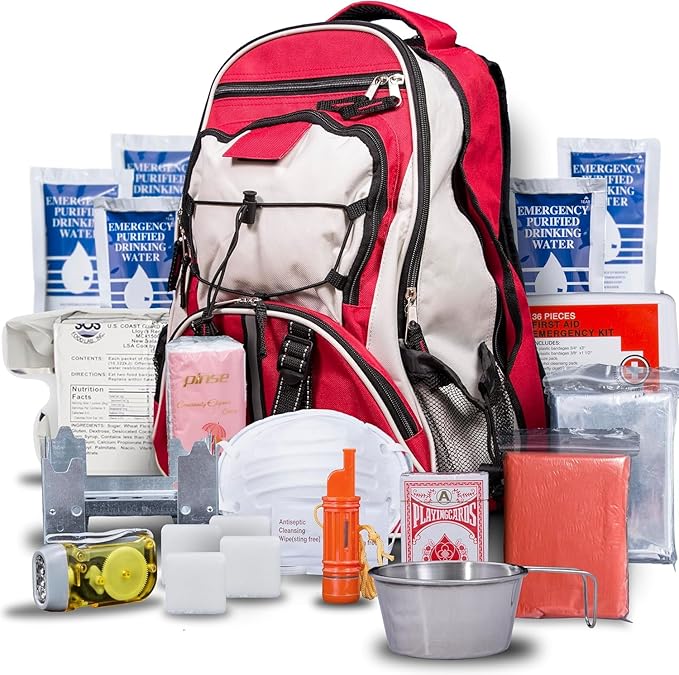
We built this methodology using the Blue Seventy-Two Pro Series Red Deluxe 72-Hour Emergency Backpack as our benchmark. Here’s why it fits the OS model:

  • It Offloads Thinking: The kit is logically organized. You don’t waste precious mental energy searching for a light source; it’s in the intuitively labeled pocket. In a crisis, cognitive clarity is everything.
  • It Builds in Backup: Multiple fire starters. Multiple water purification methods. This redundancy is the material expression of a robust protocol. It ensures a single point of failure doesn’t break your entire system.
  • It’s a Complete Baseline: With its comprehensive range of items, it solidifies the Material Layer, giving you the confidence to focus your energy on the higher, more critical layers of Method and Communication.

Weaving the Kit Into Your Family’s Story

This is where it all comes together. During our *15-minute ‘Power’s Out’ drill*, the Blue Seventy-Two isn’t just a prop; it’s a character.

  • Drill Objective: Establish Comms. A child is tasked with retrieving the hand-crank radio from the kit’s main compartment.
  • Drill Objective: Triage Injury. The comprehensive first aid module is deployed, and its contents become familiar, not foreign.
  • Drill Objective: Secure Water. The water purification tablets are located, assigned, and become part of a practiced routine.
    By integrating a specific, well-designed disaster preparedness kit for home and car into your drills, you move from abstract theory to lived experience. The kit becomes an old friend. Its contents become extensions of your own hands.

Products / Tools / Resources

This isn’t a checklist; it’s a curation of tools that have earned their place in the system we’ve described.

  • The Foundation Kit: The Blue Seventy-Two Pro Series Red Deluxe. We use it as our core home base kit because of its logical organization and built-in redundancies, which are critical for executing protocols under stress.
  • Communication Lifeline: A hand-crank NOAA weather radio with a USB charging port. It’s your link to the outside world when everything else fails.
  • Power When It’s Gone: A reliable 300-watt power inverter for your car. This turns your vehicle into a true emergency power station.
  • The Knowledge Archive: A physical, printed manual of basic survival skills and a laminated copy of your home’s system maps (water, gas). Don’t rely on a digital file.
  • The Get-Home Bag: A lightweight, durable backpack stocked with a core set of supplies from your main kit—water, a filter, high-calorie food, a first-aid kit, and a power bank—designed to live in your car trunk.
 

10 Practical Survival Tips That Could Save Your Life When Disaster Strikes

When modern comfort suddenly disappears—no electricity, no running water, no quick call for help—your survival depends on what you know and how prepared you are. Every year, thousands of people face unexpected emergencies, from wilderness accidents to natural disasters. The difference between panic and survival often comes down to a handful of practical skills. With these survival tips and emergency preparedness strategies, you can increase your chances of making it through any crisis.

1. Learn to Find and Purify Water

You can survive weeks without food, but only three days without water. To ensure wilderness survival, practice finding fresh sources:

  • Collect rainwater using a tarp, poncho, or leaves.
  • Use portable water filters or purification tablets.
  • Boil water for at least one minute to kill pathogens (longer at higher altitudes).

2. Master Fire-Starting Techniques

Fire is one of the most important survival skills. It provides warmth, light, safety, and the means to cook food and purify water. Carry waterproof matches, a magnesium striker, or a windproof lighter. If tools fail, dry grass, cotton, or pine sap can serve as tinder.

3. Build a Shelter Quickly

In emergencies, exposure is just as dangerous as dehydration. Shelter protects you from hypothermia, sunburn, or rainstorms. Use:

  • Branches and leaves for insulation.
  • Tarps, ponchos, or emergency blankets for waterproofing.
  • Natural features like cave overhangs or tree roots as a base.

4. Stockpile Multi-Use Gear

When preparing a bug-out bag or survival kit, prioritize multipurpose gear:

  • A knife for food prep, defense, or cutting rope.
  • Paracord for tying shelters, making traps, or splinting limbs.
  • A bandana to filter water, cover the head, or stop bleeding.

5. Know Basic First Aid

In survival situations, medical care may not be available. Learn how to:

  • Stop bleeding with pressure or a makeshift tourniquet.
  • Treat burns, cuts, and insect bites.
  • Recognize early signs of hypothermia and dehydration.

6. Signal for Help

If stranded, attracting attention saves lives. Effective rescue survival tips include:

  • Using mirrors, whistles, or strobe lights.
  • Creating ground signals visible from the air.
  • Building daytime fires with green leaves for smoky signals.

7. Stay Calm and Conserve Energy

Survival psychology is as important as physical skill. Avoid panic—sit down, breathe, and assess your options logically. Conserve calories by limiting unnecessary movement until you have a strategy.

8. Learn Navigation Without Technology

When GPS and phones fail, traditional navigation helps:

  • Use the sun’s position or stars like the North Star.
  • Rivers and valleys often lead toward civilization.
  • Carry a compass and map as reliable tools.

9. Forage Wisely and Avoid Poisonous Foods

Knowing what’s safe to eat is crucial. Understand your local environment and edible species. As a rule, avoid:

  • Plants with milky sap.
  • Leaves in groups of three.
  • Berries with unusual colors or odors.

Fishing, trapping, and gathering nuts are safer food-survival methods than guessing at wild plants.

10. Prepare Before Disaster Happens

The best survival tip is preparation. Keep a go-bag in your home, car, or workplace with:

  • Long-lasting emergency food
  • Portable water filter
  • Flashlight and batteries
  • Emergency blanket
  • Basic first aid supplies

Final Thought

Survival isn’t about luck—it’s about readiness, training, and resilience. These emergency preparedness tips will help keep you safe whether you face a wilderness accident, a natural disaster, or an urban crisis. The more knowledge you have now, the better your chances of survival later.

What Would You Do With a Broken Arm in a SHTF Situation?

Okay—deep breath. You’re crouched behind a half-burned-out truck, maybe in the middle of some godforsaken back road where the birds went quiet three days ago. And your arm? Bent wrong. Not “twisted funny” wrong—but wrong wrong. Bone-deep throbbing, like someone’s hammering inside your skin. And there’s this pop sound still echoing in your ears like it’s stuck in time.

So now what?


First… freeze. Not literally. Figuratively. Stop everything.

Because if you keep moving? You’ll do more damage. Or pass out. Or both. You gotta breathe, slow—yeah, I know the pain is screaming, but you need to think.

Okay. Is it actually broken? Like, really?

  • Arm hanging limp like spaghetti? Probably.
  • Swollen? Fingers turning a weird, purplish hue?
  • Did you hear the crack? Not a snap. A crack. That hollow wooden-branch kind.

Right. Welcome to the club. You broke it.


Now make it stop moving. Right. Now.

You gotta immobilize it. Fast.

I once watched a guy—mid-pandemic, middle of nowhere, Wyoming—use two tent stakes and a torn-up Guns N’ Roses shirt to splint his arm. Ugly? Sure. But it worked.

  • Stick + stick + cloth = DIY splint. It doesn’t need to look clean. Just… hold it together.
  • If you’ve got paracord, use it. Don’t have any? Shoelaces. Bra strap. Duct tape. Doesn’t matter.
  • Then, sling it. Tie it against your chest—tight, but not “cut off the blood flow” tight.

And don’t forget: Elevate if you can. Gravity’s your friend here. Mostly.


Pain. It’s not going away. But you can muffle it.

Look, unless you’re hoarding black-market morphine from some dusty barter outpost, you’ve got two options: ibuprofen or grit.

  • Pop a few NSAIDs—assuming you still have your med kit.
  • No meds? Cold water from a stream, snow, even the side of a tin can that sat in the wind overnight. Jam it on there. Let the cold bite.

Just don’t let the pain win. You have to stay functional, not fearless.


Bleeding? Infection? Oh, it gets worse.

If that bone’s poked through the skin? Yeah, that’s what they call an “open fracture.” Which really means: “Hey! Come on in, bacteria! Door’s open!”

You need to flush it—somehow.

  • Boiled water (cooled down first, obviously).
  • Iodine? Alcohol? Even old whiskey (hurts like betrayal, but works).
  • Cover it with anything clean. Sanitary pads. Coffee filters. T-shirt boiled in water. Use what you’ve got, not what you wish you had.

Change dressings daily. Twice daily if it smells like death—or like gym socks soaked in vinegar. You’ll know.


Survival’s different now. You’re one arm short.

Building shelter? Gonna take longer.

Defending yourself? One-handed knife fighting is cinematic—until it’s not.

Making fire, carrying gear, climbing over fences—everything changes.

So adjust. Think smaller. Lower your center of gravity, like a wounded animal, because you are one now. Focus on defense, not bravado.

You ever tried snaring a rabbit one-handed while your bones are knitting themselves back together? You will.


Food. Water. Healing. Yeah, you still need that stuff.

  • Protein fuels healing—so eat. Don’t fast, don’t skip.
  • Vitamin C too. Dandelion greens. Rose hips. You’d be shocked what’s edible if you’re desperate (and you will be).
  • Water? Hydration isn’t a suggestion. It’s life support.

If the arm gets infected?

You’re in trouble. But not doomed. Yet.

  • Swelling. Heat. Ooze. Smell. Those are red flags.
  • If it gets bad, you may have to—okay, this sucks—cut open the wound and drain it. Sterilize your blade over flame. Bite on leather. Or your tongue. Or scream into the wind.

Got fish antibiotics? Amoxicillin? Use ‘em. Carefully. Wrong dose and you’ll just make the bacteria stronger. But it’s still better than not trying.


The Truth: It won’t heal perfectly. But you can still be lethal.

Yeah, the bone might set crooked. Might end up with a T-Rex arm, unable to lift more than a frying pan. Who cares? You’re alive. You outlasted it. That’s the win.

And let’s be honest—half the world didn’t even make it to month three.

You did. With a broken damn arm.


Final thought. Because this matters.

Most people will read something like this and scoff. “Won’t happen to me.” But reality doesn’t care about optimism. You slip on wet rocks, get hit in a raid, fall while hauling firewood—snap. Just like that, everything changes.

So prep now. Stash a SAM splint. Pack extra meds. Learn how to tie a sling with one hand. Practice it. Seriously. Tonight.

Because when things go sideways—and they will—you won’t have time to Google it.

And in that moment? It’ll just be you. A broken arm. And the cold, relentless whisper of survival.

Funny how one flicker of light—just one tiny interruption in the hum of everyday life—can unravel everything you thought was “normal.”

I was halfway through boiling pasta when the power cut out. Just like that. Silence. No warning, no rumble, just… gone. The kind of silence that grabs you by the throat—not violently, but with the eerie gentleness of realization. And I stood there. Water bubbling in inertia. Suddenly remembering every headline I skimmed over the last few weeks. Supply chain stuff. Rolling blackouts. Grid vulnerabilities. Oh, and that piece about the freak snowstorm in May—who knew snow had an ego?

But the thing is, I didn’t panic. No, not exactly. There was this weird peace. A click, like something settling into place. I had this quiet whisper in the back of my mind saying, Now would be a good time to be the one with a plan. And then the other voice, louder and smug, scoffed, Come on—you’re in your sixties. Let the younger folks scramble for batteries and bottled water. That voice is always a little dramatic, by the way.

Still—what if everything we’ve been told about prepping past a certain age is… just noise? Empty chatter. A social script written decades ago when people assumed 60 meant fading into the background, not gearing up for the next chapter. I mean, really—who decided prepping was for camo-wearing twenty-year-olds with bug-out bags and questionable YouTube channels? Somewhere along the way, we bought this idea that after a certain point, we just survive until we don’t.

But you’ve survived. And then some.

You’ve witnessed enough to know what resilience looks like. You’ve buried loved ones, rebuilt after heartbreak, handled layoffs and disappointments with more grace than you ever gave yourself credit for. If prepping is about mental strength, you’ve already been training for decades. If it’s about adaptability—hell, you lived through dial-up internet, cassette tapes, and whatever the 2020s are throwing at us.

And yet, people still assume you’re not cut out for this kind of thing. Like preparedness requires speed instead of insight. Like steady hands and calm thinking are liabilities, not strengths. Strange logic, right? Especially when you realize half the panic we see on the news could be eased by one person in every neighborhood having a few flashlights, a week’s worth of food, and a calm voice.

That’s the magic of quiet power. You don’t have to shout to be seen. Sometimes it’s the people who speak the least who move the most when it counts.

I saw this older couple last month during that unexpected hailstorm—weird weather again, because the climate forgot how to be normal—and while folks were scrambling for umbrellas that flipped inside out and cursing at their dead phones, this couple sat on a bench with thermoses and waterproof ponchos. Laughing. I kid you not, laughing. I wanted to ask them their secret. I didn’t. I just watched. And I remember thinking, That’s the kind of old I want to be. Prepared, not panicked. Respected, not pitied. Present.

This isn’t about fear. It’s about not needing to ask “what now?” when things go sideways. About waking up knowing that even if the grocery store closes, or the phone lines go dead, you’ve got options. Options are freedom. And freedom at this stage in life? That’s sacred.

Now, okay—I get it. The idea of learning a whole new prepping philosophy, buying gear, figuring out what’s necessary vs. nonsense—it can feel overwhelming. But here’s where it gets interesting: the most powerful preppers aren’t the ones with bunkers. They’re the ones who know themselves. Who can pivot. Who understand that staying calm is a skill, and planning is just self-care for the future.

The truth? Most of it’s easier than you think. Some of it’s even… fun. Organizing a discreet pantry. Learning to cook from scratch again (remember ration cookbooks?). Knowing how to heat water without electricity. It scratches the same itch as gardening or puzzles—only now it comes with a dash of confidence and an edge of quiet rebellion.

Because let’s be real. Choosing to prepare when the world tells you to relax and fade out? That’s kind of badass.

And people notice. Whether they admit it or not, they feel it when you’ve got it handled. When your lights are on. When your calm steadiness in a storm draws them in like a lighthouse. You don’t have to tell them. They’ll sense it. Admire it. Maybe even follow your lead.

But here’s the thing—they can’t follow if you don’t step up. And stepping up doesn’t mean broadcasting. It just means beginning. You don’t have to dive headfirst into survivalism. You just need the right mindset shift. A small, quiet pivot that says: I’m not waiting to be rescued—I’m becoming the one who rescues.

There’s a guide—tailored for folks who’ve lived, not just existed. Built for clarity, not complexity. No jargon, no panic. Just straight talk, small steps, and real empowerment.

Because age isn’t the end. It’s the edge. The elevation. And you? You’re just getting started.

Choose to be the steady presence in a world that spins too fast. Prepare—not because you’re scared—but because you’re wise enough to know better.

Dependence on Failing Systems

We live in a world of fragile systems—systems that can crumble in an instant. The power grid, food supply chains, clean water access—most people never stop to think how thin the line between normalcy and chaos truly is. But deep down, you know the truth. If these systems failed tomorrow, how would you protect your family?

Here’s the reality: depending on unreliable systems is a risk most aren’t prepared for. When things are running smoothly, it’s easy to trust that everything will stay that way. But what happens when the unexpected strikes—a blackout, a supply shortage, or a financial crisis? When others panic, scrambling to find solutions, you have the opportunity to stay calm and prepared. Why? Because you’ve already taken control of your future.

Picture this: no matter what disruption arises, you remain confident. You have a sustainable plan in place—food stored, water purified, and backup power ready. You’re not a victim of the system; you’ve created your own security. While others stand in line for dwindling supplies, you’re miles ahead. That’s what true independence looks like.

And the best part? It’s not as difficult as you might think. Prepping doesn’t require extreme measures. It’s about making smart, practical decisions today that set you up for success tomorrow. By taking small steps now, you can achieve a level of self-sufficiency that ensures your family will never be caught off guard.

Don’t leave your future in the hands of failing systems. You have the power to break free from that dependence—and when you do, you’ll feel unstoppable. Imagine the relief of knowing you’re ready for anything life throws your way. It’s a freedom most can only dream of, but it’s within your reach right now.

Are you ready to make that dream your reality? The time to act is today. Your future self will thank you.

“What if I invest in survival gear, and it turns out I never need it? It feels like such a gamble.”

surviving homelessness

Ah, the eternal dilemma of preparedness. It’s a thought that lingers, isn’t it? Like a tiny pebble in your shoe—barely noticeable some days, but impossible to ignore once you’re standing at the checkout page of your favorite gear site. You’re torn between two versions of yourself: the savvy, forward-thinking planner and the practical realist who doesn’t want to throw cash at a hypothetical apocalypse. Let’s talk about it, because that little voice in your head deserves more than a quick shrug or a hasty “better safe than sorry.”

Why Does It Feel Like a Gamble?

It’s simple, really. Survival gear doesn’t come with a guarantee. There’s no cheerful customer service agent promising, “Oh yes, you’ll absolutely use this solar-powered water purifier within the next 18 months.” That uncertainty triggers something primal in us. Humans like to feel in control, and investing in something you may never use feels a little like tossing money into the wind and hoping it lands somewhere useful.

But here’s the kicker: almost everything we invest in comes with uncertainty. Your gym membership? You might end up binge-watching TV instead. That insurance policy? You’d prefer not to use it. Heck, even that shiny kitchen gadget could gather dust if you lose interest in meal-prepping. The difference with survival gear is that the stakes feel higher. It’s not about convenience or aesthetics—it’s about safety, even survival.

The Cost of Being Unprepared

Imagine this: a storm barrels through your town, knocking out power for days. Grocery shelves are bare, water supplies are limited, and cell towers are down. In moments like these, survival gear isn’t just a “nice-to-have”—it’s the difference between calm and chaos. Suddenly, that portable generator and emergency food supply don’t feel like wasted money. They feel like lifelines.

Think of survival gear as a form of peace of mind. Sure, you might never need to use your emergency bivvy sack or those freeze-dried meals. But if the moment comes and you do need them, you’ll be profoundly grateful you planned ahead. And let’s face it, peace of mind is priceless. You can’t put a dollar value on the ability to sleep soundly, knowing you’re prepared for whatever life throws your way.

Reframing the “What If I Don’t Need It?” Question

Here’s a thought experiment: flip the script. Instead of asking, “What if I never need it?” ask yourself, “What if I do?” It’s easy to focus on the potential for wasted resources, but what about the alternative? The “what if” scenarios we try to avoid thinking about—natural disasters, unexpected emergencies, even global disruptions—are precisely why survival gear exists.

It’s not about fearmongering or expecting the worst. It’s about being realistic. Just like you keep a spare tire in your trunk or a first aid kit in your bathroom, having survival gear is a way of saying, “I’ve got my back, no matter what.” It’s an act of self-reliance, not paranoia.

Survival Gear as an Investment in Adaptability

Here’s the thing about survival gear—it’s not just for apocalyptic scenarios. Many items have everyday uses that make them far more versatile than you might think. That multi-tool? Perfect for small repairs or camping trips. The portable water filter? Handy for hiking or international travel. Emergency blankets? Great for outdoor adventures or even keeping in the car during winter.

Investing in survival gear is less about preparing for one specific event and more about equipping yourself to adapt to a range of situations. It’s a mindset shift: instead of seeing your gear as something collecting dust “just in case,” view it as a toolkit for navigating life’s curveballs.

How to Start Small (and Smart)

You don’t have to drop a small fortune on a doomsday stockpile to feel prepared. Start with the essentials—items that address your most basic needs: water, food, shelter, and first aid. A simple emergency kit with a water filter, non-perishable snacks, a flashlight, and a first aid kit is a great place to begin.

Think about your personal situation, too. Do you live in an area prone to hurricanes or earthquakes? Tailor your kit to your region’s specific risks. It’s not about buying the fanciest gear; it’s about building a collection of tools that make sense for your life.

The Hidden Benefits of Preparedness

Here’s something unexpected: investing in survival gear can actually reduce anxiety. When you know you’re prepared, you worry less about the “what ifs.” You stop spiraling into worst-case scenarios because you’ve already done something proactive to address them. It’s like wearing a seatbelt—you hope you’ll never need it, but you feel better knowing it’s there.

There’s also a sense of empowerment that comes with being prepared. You’re not just reacting to life; you’re anticipating it. You’re saying, “I trust myself to handle whatever comes my way.” That confidence can ripple into other areas of your life, too—making you feel more capable, resourceful, and resilient.

Stories That Stick: Real-Life Moments of Gratitude

Still not convinced? Let’s borrow from real life. There’s the family who rode out a weeklong power outage with the help of their emergency solar lanterns and a stash of freeze-dried meals. Or the solo traveler who avoided dehydration in a remote area thanks to a portable water filter. These aren’t hypothetical situations—they’re real moments where preparation made all the difference.

And here’s the thing: you don’t have to live through a natural disaster or global crisis to appreciate your gear. Even small, everyday uses—like patching up a scraped knee with your first aid kit or using your power bank during a camping trip—can reinforce the value of being prepared.

A Mindset, Not Just a Purchase

Ultimately, survival gear is more than just stuff. It’s a mindset. It’s about embracing the idea that being ready for the unexpected isn’t a gamble—it’s a gift you give to yourself and your loved ones. It’s a way of saying, “I value my safety and peace of mind enough to plan ahead.”

If you never need to use your gear, great! That means life went smoothly. But if the day comes when you do need it, you’ll thank your past self for making the investment.

So, the next time that little voice in your head whispers, “What if I never need it?” respond with this: “What if I do?” Because at the end of the day, preparedness isn’t about predicting the future—it’s about trusting yourself to face it, no matter what.

Ready to begin or just add to your stockpile?