Be safe and enjoy the day!
Category: Uncatagorized
“The Day the Milk Turned to Smoke”

I don’t remember what day it was. Might’ve been Wednesday. Or maybe Sunday. Doesn’t matter — the days bleed together now, like dirty water soaking through torn lace.
But I remember the moment.
My daughter, Hiba, sat cross-legged on the floor, tongue poking out in concentration, sketching with a half-broken crayon on the inside of a cereal box. We hadn’t had cereal in months — maybe longer. I’d kept that box like some idiot souvenir. She was drawing… I think it was a flower. Or a rocket. The difference blurs, these days.
I had one sachet of powdered milk left. Just one. Not enough for both of us. Barely enough for her. The water I boiled was cloudy — it always was — but I stirred the powder into it anyway, pretending I didn’t smell the bitterness. That tinny, almost rusty tang. I told her it was “magic milk,” like I always did.
“Drink it fast before it disappears,” I said with a smile that felt stitched onto my face. Her fingers wrapped around the cup like it was the Holy Grail. I turned away so she wouldn’t see me watching, but I still listened to the sound — her small lips against the rim. That sound broke me.
Because I was hungry too. God, I was so hungry.
We live — if you can call this living — in what used to be a tailor’s shop. The mirrors are cracked. Threads and buttons still scatter the floor. Every morning, I sweep them into a pile like I’m tidying a museum of broken dreams. I sleep on a mattress that smells like damp shoes and burned fabric. Hiba has a blanket I found in the rubble of an old bakery. It has cartoon ducks on it, now stained grey from soot and grief.
Our window is boarded up with wood that used to be someone’s front door. A red number is spray-painted on it — 342-B — which means someone once thought this place mattered enough to mark.
When the shelling starts — and it always starts — we play a game.
I tell her, “Shhh… the ground is sleeping. Don’t wake it.”
She nods like it makes sense, like explosions are just dreams we can tiptoe around. She clutches her blanket, and I pretend the way she shakes is from the cold.
I tell her stories about trees, about mangoes falling onto picnic blankets. I describe soft grass and birthday cakes — things she barely remembers. Sometimes I make her laugh. Other times, I just hold her while she stares at a wall like it might answer something I can’t.
There used to be a woman down the street, Samia — old, half-blind, sharp-tongued. She sold lentils from a jar, one scoop at a time. I traded her my wedding earrings for a bag once. The metal was cheap. She knew it. But she gave me the lentils anyway. Said, “Kids don’t eat jewelry.” Then she laughed, and I cried, and she patted my arm like she was dusting it off.
She’s gone now. Hit during market hour. Her stall burned. I stepped over her glass jars weeks later, the lentils spilled like brown rain.
My husband — Hiba’s father — disappeared last spring. One minute, he was fixing the hinges on our water drum; the next, just… gone. He left his shoes by the mat. I still haven’t moved them. I don’t know if I’m waiting or in denial or if I just like the way they anchor me to a version of reality that doesn’t exist anymore.
She asks about him. Less often now. That makes it worse, somehow.
One night — weeks ago, or maybe longer — I found a pigeon. Dead. Whole. No maggots. Just still warm.
I stood there, staring at it like it had personally challenged my morals. Would I cook it? Could I?
I did. Boiled it with garlic paste and salt. That night, Hiba said it was the best chicken she ever had. I laughed so hard I had to sit down. Then I cried. Quietly.
And then — two days ago — something strange happened.
A truck came. Not the kind that brings bombs. A white truck with a blue stripe and loudspeakers blaring something garbled. Men in masks tossed bags onto the road. Flour. Water. Sanitary pads. Powdered formula. They didn’t wait.
People ran like hyenas. Clawing, screaming. I ran too. I don’t know how I got the bag. I think I elbowed someone. Or bit someone. I don’t care. I got the bag.
Inside: rice, oil, two tins of beans, and — oh God — a bar of soap.
A bar of soap.
I let Hiba smell it first. She looked confused.
“What is it?”
I didn’t know how to answer.
“It smells like… something pretty,” she whispered.
We haven’t used it yet. It’s wrapped in cloth, under my pillow. I like to believe that the moment I open it, something good will return. Like hope, or electricity, or maybe just the feeling of being clean.
Last night, she asked me, “Mama, are we the good guys or the bad guys?”
I couldn’t answer. I just pulled her close.
Because in war, there are no good guys. Just people trying not to disappear.
And I don’t care if I have to boil shoe leather or barter my own breath. I will keep her safe.
Even if everything else burns.
If you only have minutes to evacuate, you need to think fast, stay calm, and grab only the essentials. Here’s a prioritized list of what to take:
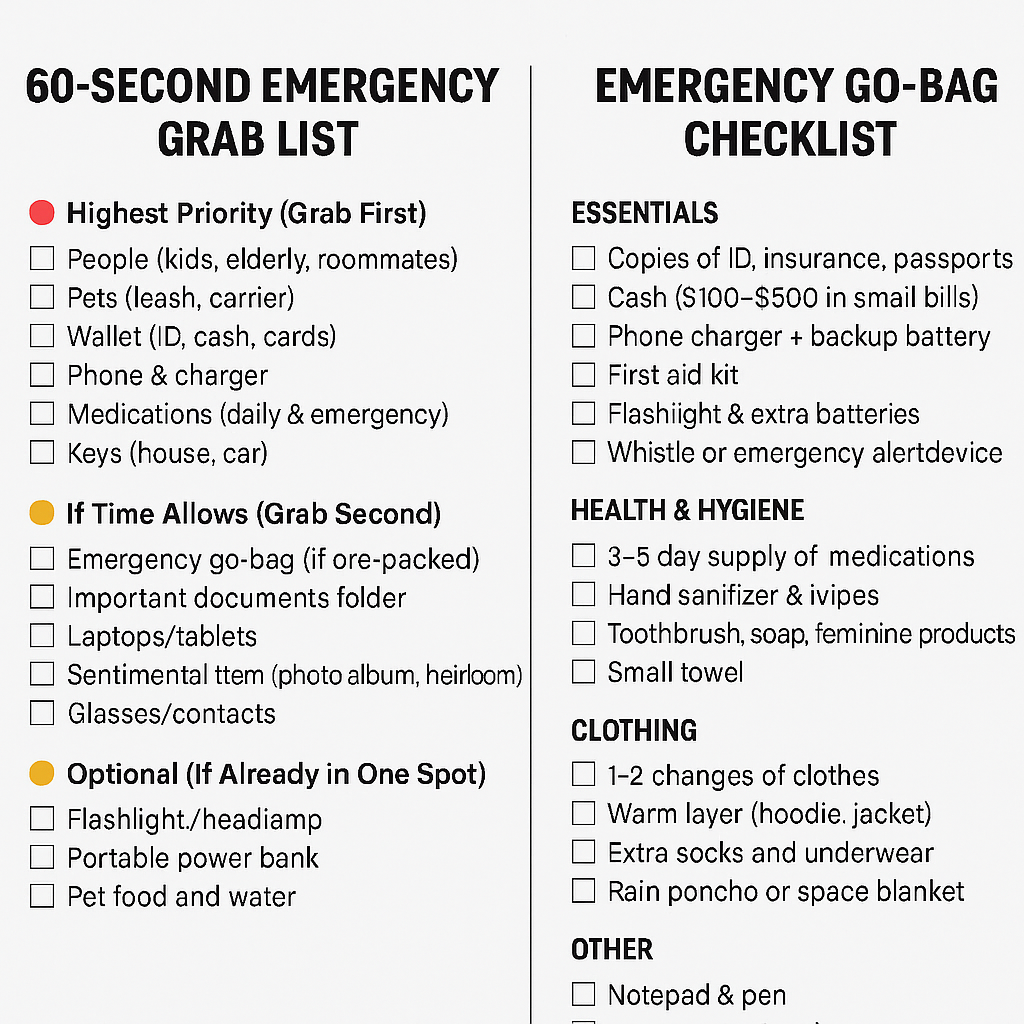
🚨 Top Priority: Life-Saving Essentials
- People and Pets – Get everyone (including animals) out first.
- Keys – Car keys, house keys.
- Wallet – ID, credit/debit cards, cash.
- Phone & Charger – Communication and navigation.
- Medications – Especially life-critical ones like insulin, EpiPens, inhalers.
🎒 Grab-and-Go Emergency Bag (if you’ve prepped one)
- Copies of documents: passports, insurance, birth certificates
- Flashlight, batteries
- First aid kit
- Water bottles, snacks
- Change of clothes, socks, underwear
- Emergency contacts list
- Small power bank
💻 Digital & Sentimental
- Laptop or hard drive (if it’s within reach)
- Important documents (if not already in emergency bag)
- Jewelry or small irreplaceable heirlooms
- Photos or sentimental items (if quick to grab)
🐾 If You Have Pets
- Leash, carrier, food
- Pet meds
- Comfort toy or blanket
⏱️ Time-Saving Tip:
If it’s already packed and near the door, take it.
If not, don’t waste time packing—your safety comes first.
Dodge Power Wagon vs Ford F150 for use as a bug out vehicle – The Ultimate Survivalist Debate
The age-old rivalry between Dodge and Ford takes on a new dimension as we delve into the world of survival vehicles. The Dodge Power Wagon and Ford F150 are both formidable contenders, but which one reigns supreme when it comes to serving as a reliable bug out vehicle?
The Power Wagon, with its robust build and off-road prowess, is a formidable contender. It promises durability and resilience, qualities essential for any survival vehicle. On the other hand, the Ford F150, known for its superior towing capacity and fuel efficiency, offers practicality and reliability in equal measure.
As we navigate the nuances of these two automotive giants, we will explore their strengths, weaknesses, and suitability for the unpredictable demands of a bug out scenario. Buckle up and join us on this thrilling journey, as we help you decide the ultimate bug out vehicle between the Dodge Power Wagon and the Ford F150.
Dodge Power Wagon or Ford F150 for bug out?
When considering a bug out vehicle, the Dodge Power Wagon and the Ford F150 both offer compelling features. The Dodge Power Wagon is known for its ruggedness and off-road capabilities, making it an ideal choice for traversing challenging terrains during emergencies. Its high ground clearance, reinforced frame, and powerful engine enable it to tackle obstacles that may be impassable for other vehicles.
On the other hand, the Ford F150 is renowned for its reliability and versatility. This vehicle boasts impressive towing capacity, which can be crucial for carrying supplies and equipment. Its spacious interior also provides ample room for passengers and gear, while its fuel efficiency can be a significant advantage during long-distance travel.
Both vehicles have their strengths. The choice between the Dodge Power Wagon and the Ford F150 largely depends on your specific needs and preferences. If off-road performance is a priority, the Power Wagon might be the better option. However, if you value fuel efficiency and towing capacity, the Ford F150 could be more suitable.
It’s also worth considering the availability of spare parts and ease of maintenance. In this regard, the Ford F150, being a more common vehicle, might have an edge. Regardless, both vehicles have proven their worth as bug out vehicles, and either could serve you well in an emergency situation.
“Which has better off-road capabilities?”
When it comes to the off-road capabilities of the Dodge Power Wagon and the Ford F150, there are several factors to consider. Firstly, the Dodge Power Wagon’s standard 4×4 drivetrain and 14.3 inches of ground clearance provide significant advantages for off-road navigation. Its locking differentials, electronic disconnecting sway bar, and 12,000-pound winch further enhance its bug out vehicle potential.
On the other hand, the Ford F150, specifically the Raptor variant, also boasts impressive off-road abilities. It features a high-output 3.5L V6 EcoBoost engine, FOX Live Valve shocks, and Terrain Management System with seven selectable drive modes. However, its ground clearance is slightly less than the Power Wagon, measuring at 11.5 inches.
When comparing their towing capacities, the Ford F150 generally outperforms the Dodge Power Wagon. However, for off-road use and bug out scenarios, the Power Wagon’s features like the winch and disconnecting sway bar may provide a more significant advantage.
Both vehicles have their strengths, and the choice between them often boils down to personal preference and specific bug out requirements. The Dodge Power Wagon’s robust off-road features make it a formidable contender, while the Ford F150 Raptor’s performance and versatility also earn it high marks in the realm of bug out vehicles.
“Which vehicle has more storage space?”
When considering the Dodge Power Wagon and the Ford F150 as a bug out vehicle, storage space is a critical factor. The Dodge Power Wagon, renowned for its ruggedness and durability, offers ample storage space. However, the Ford F150, a staple in the American pick-up truck market, is not to be underestimated.
The Power Wagon’s cargo bed measures 76.3 inches in length, providing substantial room for bug out gear. Additionally, it has a maximum payload capacity of 1,660 lbs. This allows for the transport of heavy equipment, essential for survival situations.
On the other hand, the Ford F150 boasts a longer cargo bed, measuring up to 96.8 inches in some models. It also surpasses the Power Wagon with a maximum payload capacity of 3,325 lbs. These features make the F150 a strong contender for a bug out vehicle with superior storage capabilities.
Despite the Power Wagon’s robustness, the Ford F150 clearly offers more storage space. Both the length of the cargo bed and the payload capacity are greater in the F150, making it a more suitable choice for those prioritizing storage space in their bug out vehicle. However, the choice between the two ultimately depends on individual needs and preferences.
“How is the fuel efficiency?”
When comparing the Dodge Power Wagon and the Ford F150 as bug out vehicles, fuel efficiency is a key factor to consider. The Ford F150, particularly with its EcoBoost engine, is known for its impressive fuel economy. This makes it a reliable choice for long-distance travel during bug out situations. Furthermore, the F150’s large fuel tank capacity enhances its range, reducing the frequency of refueling stops.
On the other hand, the Dodge Power Wagon, a sturdy and robust vehicle, is not as fuel-efficient as the Ford F150. It’s designed for off-road capabilities and heavy-duty work, which often compromises fuel economy. However, the Power Wagon’s ruggedness and durability might prove more valuable in certain bug out scenarios, despite its higher fuel consumption.
- Ford F150: Superior fuel efficiency, large fuel tank capacity.
- Dodge Power Wagon: Less fuel-efficient, but offers ruggedness and durability.
These factors should be considered in the context of your specific bug out plan. If fuel availability is a concern, the Ford F150 may be a more suitable choice. However, if off-road capabilities and durability take precedence, the Dodge Power Wagon’s fuel efficiency trade-off might be worth it. Remember, the best bug out vehicle is one that aligns with your individual needs and circumstances.
“Which is more durable for long-term use?”
When considering the Dodge Power Wagon and the Ford F150 as a bug out vehicle, durability is a critical factor. The Power Wagon, with its robust frame and heavy-duty suspension, is built to withstand harsh off-road conditions. Its 6.4L HEMI V8 engine delivers exceptional power, making it ideal for navigating through challenging terrains.
On the other hand, the Ford F150 boasts of military-grade, aluminum-alloy body and high-strength steel frame. It’s designed for resilience, with an impressive towing capacity and payload. The F150’s EcoBoost engine, coupled with its 10-speed automatic transmission, ensures a smooth ride even in the roughest conditions.
Both vehicles offer excellent durability, but their performance may vary based on maintenance practices and the specific model. The Power Wagon’s solid build and off-road prowess make it a strong contender, while the F150’s advanced technology and robust structure cannot be overlooked. Therefore, the choice between the two as a bug out vehicle largely depends on personal preferences and specific needs.
“What are the maintenance costs?”
When it comes to choosing between a Dodge Power Wagon and a Ford F150 as your bug out vehicle, maintenance costs play a significant role. The Dodge Power Wagon, known for its robustness and off-road capabilities, tends to have higher maintenance costs. This is largely due to its heavy-duty components and complex systems that require specialized care.
The Ford F150, on the other hand, is celebrated for its reliability and comparatively lower maintenance costs. Its parts are readily available and generally more affordable, making it a more economical choice for long-term use.
- Oil changes: A routine oil change for a Dodge Power Wagon may cost more than one for a Ford F150 due to the larger engine and higher-quality oil required.
- Tire replacement: Both vehicles will need regular tire changes, especially when used off-road. However, the Power Wagon’s larger tires may be pricier to replace.
- Brake system: The Power Wagon’s heavy-duty brake system may require more frequent servicing, adding to the overall maintenance cost.
In contrast, the Ford F150’s more common parts and widespread service availability can help keep maintenance costs down. However, it’s important to remember that both vehicles’ maintenance costs can vary based on usage, driving conditions, and individual care. Regular preventive maintenance can help keep both the Dodge Power Wagon and the Ford F150 in optimal condition for when you need them most.
“Which has better safety features?”
When considering the Dodge Power Wagon and the Ford F150 as a bug out vehicle, safety is a paramount concern. The Power Wagon boasts a robust frame and advanced airbag system, providing a high level of protection in the event of a collision. The vehicle’s Electronic Stability Control ensures optimal control in challenging terrains and weather conditions.
On the other hand, the Ford F150 is equipped with advanced safety features that are designed to protect and assist the driver in various situations. The truck’s Pre-Collision Assist with Automatic Emergency Braking can detect potential collisions with vehicles or pedestrians and take necessary actions to avoid or mitigate the impact. Additionally, the F150’s Lane-Keeping System helps to prevent unintentional lane departures.
When it comes to off-road capabilities, both the Power Wagon and the F150 offer impressive features. The Power Wagon’s off-road package includes a disconnecting front sway bar, locking front and rear differentials, and a built-in winch, all of which can be life-saving in a bug out scenario. The F150, meanwhile, offers the Raptor variant with its high-output engine, terrain management system, and Fox Racing shocks, providing exceptional off-road performance.
In terms of safety technology, the F150 pulls ahead with its Ford Co-Pilot360, a suite of driver-assist technologies that includes Blind Spot Information System, Cross-Traffic Alert, and more. However, the Power Wagon’s robust construction and off-road capabilities make it a strong contender as a bug out vehicle. Each truck has its strengths, and the choice largely depends on individual preferences and needs.
“Which vehicle is more comfortable for long trips?”
When it comes to long-haul journeys, comfort is paramount. The Dodge Power Wagon and the Ford F150 are both formidable contenders as bug out vehicles, but they offer different comfort features. The Dodge Power Wagon is renowned for its spacious cabin and plush seating, providing ample legroom and headroom. Its suspension system is designed to absorb shocks from rough terrains, offering a smoother ride.
On the other hand, the Ford F150 is recognized for its luxurious interiors and state-of-the-art comfort features. The F150 offers adjustable seating, climate control, and a quiet cabin, all of which contribute to a comfortable long-distance journey. Its suspension system is equally competent, ensuring a smooth ride even on uneven terrains.
- Dodge Power Wagon: Spacious cabin, plush seating, shock-absorbing suspension system
- Ford F150: Luxurious interiors, adjustable seating, climate control, quiet cabin, competent suspension system
While both vehicles provide impressive comfort features, the choice between the Dodge Power Wagon and the Ford F150 ultimately depends on individual preferences. Whether it’s the ruggedness of the Power Wagon or the luxury of the F150, both vehicles are equipped to make long trips comfortable and enjoyable.
Final Thoughts: Dodge Power Wagon vs Ford F150 for use as a bug out vehicle
After a comprehensive comparison of the Dodge Power Wagon and Ford F150 in terms of their suitability as bug out vehicles, several key points have emerged. Both vehicles have their strengths and weaknesses, depending on the criteria considered.
When it comes to off-road capabilities, storage space, durability for long-term use, and safety features, both vehicles have demonstrated competitive attributes. However, the Ford F150 edges out slightly in terms of fuel efficiency and maintenance costs, while the Dodge Power Wagon has proven to be more comfortable for long trips.
The choice between the Dodge Power Wagon and Ford F150 ultimately depends on your specific needs and preferences as a bug out vehicle owner. One might prioritize fuel efficiency and maintenance costs, while another might prioritize comfort and off-road capabilities.
It’s important to keep an eye out for future developments and trends in the automotive industry, as they could potentially impact the performance and suitability of these vehicles as bug out vehicles. As always, it’s recommended to take a test drive and consult with professionals before making a final decision.
Can You Mix New Gasoline With Old? – Unraveling The Fuel Paradox

Ever found yourself pondering the question: Can you mix new gasoline with old? You’re not alone. This is a common query among vehicle owners, especially those with machines that are not frequently used.
Fuel management is a critical aspect of vehicle maintenance. It directly impacts the performance, longevity, and overall health of your engine. But how exactly does mixing old and new gasoline affect these factors?
Join us as we delve into the intricacies of gasoline composition, storage, and usage. We’ll explore the science behind fuel degradation and the potential implications of mixing new and old gasoline.
From the casual driver to the seasoned mechanic, this comprehensive guide promises insightful revelations. Get ready to fuel your knowledge and drive your understanding to new heights.
“Can You Mix New Gasoline With Old?”
Certainly, it’s possible to mix new gasoline with old, but it’s not always advisable. The main concern is the stability of the old gasoline. Gasoline is a refined product with volatile components that can degrade over time. If the old gasoline has been stored properly and hasn’t degraded significantly, mixing it with new gasoline shouldn’t pose any issues.
However, if the old gasoline has started to degrade, it can cause problems with your engine. The degraded gasoline can leave deposits in your engine, clog your fuel system, and reduce your engine’s performance.
Here are some factors to consider when deciding whether to mix new gasoline with old:
- Storage Conditions: Gasoline stored in a cool, dry place and in a proper fuel container has a longer shelf life.
- Age of the Gasoline: Generally, gasoline starts to degrade after about three to six months.
- Presence of a Fuel Stabilizer: A fuel stabilizer can extend the life of gasoline for up to a year.
If you’re uncertain about the quality of your old gasoline, it’s best to err on the side of caution and not mix it with new gasoline. Instead, consider using it for less critical applications, such as a lawnmower, or dispose of it properly. Remember, the health of your vehicle’s engine is paramount.
What Happens When You Mix Old and New Gas?
Gasoline, a volatile and perishable product, undergoes degradation over time. When left unused for prolonged periods, it begins to lose its combustibility, a factor that could potentially harm your engine. But what about mixing old gasoline with new?
In essence, mixing fresh gasoline with old won’t cause any immediate, catastrophic damage to your vehicle. However, if the old gasoline has significantly degraded, it can lower the overall quality of the mix. This can lead to less efficient combustion and, over time, can cause wear and tear on your engine.
Stale gasoline may also contain water and rust particles, which can clog fuel filters and injectors, causing poor performance and potentially expensive repairs. To avoid this, it’s best to use fresh gasoline whenever possible.
• If you must mix old and new gas, ensure the old gas has not been sitting for more than a few months and doesn’t contain any visible debris or water.
In sum, while you can mix new gasoline with old, it’s not the best practice for maintaining the health of your engine. It’s always advisable to use fresh gasoline to ensure optimal engine performance and longevity. Remember, prevention is better than cure, especially when it comes to your vehicle’s health.
In the end, the decision to mix old and new gas should be made with careful consideration of the potential risks and the condition of the old gas. If in doubt, it’s best to err on the side of caution and use fresh fuel.
Does Old Gasoline Affect Engine Performance?
Old gasoline, when mixed with new, can indeed affect engine performance. Over time, gasoline loses its volatility and oxidizes, resulting in a less efficient fuel. This can cause rough idling, stalling, and even engine damage. Gasoline has a shelf life, and beyond that, it starts to degrade, losing its combustibility and turning into a substance that can harm fuel lines and other engine components.
The impact of old gasoline on engine performance becomes more noticeable when it’s mixed with new gasoline. The new gasoline’s effectiveness is reduced by the old gasoline, leading to subpar engine performance. This is especially true for engines that require high-octane fuel. In such cases, the old gasoline can cause knocking, a condition where the fuel-air mixture in an engine’s cylinder detonates in more than one place at a time.
- Old gasoline can cause engine knocking
- It can lead to rough idling and stalling
- Old gasoline can damage fuel lines and other engine components
Therefore, it’s always advisable to use fresh gasoline in your engine. If you have old gasoline, consider using it for less critical applications, like a lawnmower, or dispose of it properly. Remember, mixing new gasoline with old can reduce the overall quality of the fuel, leading to potential engine problems. Regular maintenance and use of fresh fuel can keep your engine running smoothly, ensuring optimal performance.
While some might think that the effects of old gasoline are negligible, the potential damage to your engine and the resulting repair costs can be significant. So, the next time you consider mixing new gasoline with old, think about the potential impact on your engine’s performance.
How To Safely Dispose of Old Gasoline?
When it comes to handling old gasoline, safety should be your top priority. Unlike new gasoline, old gasoline loses its combustibility and can cause damage to your engine. Mixing new gasoline with old is not advisable due to the potential damage it can cause to your vehicle.
To safely dispose of old gasoline, you should first locate a certified hazardous waste disposal facility in your area. These facilities have the necessary equipment and expertise to handle and dispose of hazardous materials like gasoline.
To transport the old gasoline, use an approved gasoline container. These containers are designed to safely hold gasoline and prevent leaks. Ensure the container is tightly sealed before transporting it to prevent any accidental spills.
Never pour old gasoline down the drain, into the ground, or into a body of water. This can lead to contamination of the water supply and harm to the environment.
Additionally, avoid burning old gasoline. It’s not only dangerous but also illegal in many places.
Remember, when dealing with old gasoline, safety should always come first. It’s better to take the time to dispose of it properly than to risk damaging your vehicle or harming the environment.
Can Old Gasoline Damage Your Car?
Old gasoline, if left unused in your car’s tank for a prolonged period, can indeed cause harm. The primary issue with old gasoline is that it can lead to engine deposits, which can significantly hamper your vehicle’s performance. These deposits can clog the fuel injectors, leading to poor fuel efficiency and potential engine damage.
Now, the question arises, “Can you mix new gasoline with old?” The answer is yes, but with caution. If the old gasoline has not significantly degraded, mixing it with fresh gasoline can help dilute the old fuel, enhancing its quality. However, if the old gasoline has developed a varnish-like consistency or a foul odor, it’s best not to mix it with new gasoline.
- Engine Deposits: Old gasoline can lead to engine deposits, which can affect vehicle performance.
- Fuel Injectors: These can get clogged due to old gasoline, leading to poor fuel efficiency.
- Mixing: Mixing new gasoline with old can be done if the old gasoline has not significantly degraded.
While mixing new and old gasoline can be a temporary solution, the best practice is to avoid leaving gasoline in your car’s tank for too long. Regularly driving your vehicle can help prevent gasoline degradation, ensuring your vehicle’s optimal performance and longevity. Ultimately, understanding how old gasoline can affect your car is crucial for maintaining its health and efficiency.
How Long Does Gasoline Stay Fresh?
Gasoline, like any other petroleum-based product, has a shelf life. Under ideal storage conditions, gasoline can stay fresh for up to 6 months. However, exposing gasoline to heat, oxygen, and moisture can significantly reduce its lifespan. Stale gasoline can harm your engine, leading to poor performance and potential damage.
It’s crucial to consider the age of gasoline before mixing it with new fuel. If the old gasoline has been stored properly and is less than a month old, it can be safely mixed with new gasoline. However, if it’s older, it’s recommended to dispose of it properly to avoid engine complications.
Storage conditions play a vital role in maintaining gasoline freshness. Here are a few tips to keep your gasoline fresh for longer:
- Store gasoline in a cool, dry place
- Use airtight, approved containers
- Avoid storing gasoline for more than a month without use
Remember, mixing new gasoline with old can be a risky practice if the old gasoline has deteriorated. Always assess the condition of your old gasoline before deciding to mix it with new fuel. Keep in mind that the safety of your engine is paramount, and not all risks are worth taking.
What Are the Signs of Bad Gasoline?
Bad gasoline can cause a variety of problems for your vehicle. One of the first signs is difficulty starting your car. This can be due to the gasoline not igniting properly, leading to problems with the combustion process. Another sign is poor engine performance. If your car is not running smoothly, hesitating, or stalling, it could be due to bad gasoline.
In addition, you might notice a decrease in fuel efficiency. Old or contaminated gasoline can make your engine work harder, resulting in more fuel being used. Moreover, bad gasoline can lead to the formation of deposits in the fuel system. These deposits can clog the fuel injectors, leading to poor engine performance.
Furthermore, if you notice a strange smell from the fuel, it’s a clear sign that the gasoline has gone bad. Fresh gasoline should have a somewhat sweet smell, while old or contaminated gasoline often has a sour or stale smell.
In the context of whether you can mix new gasoline with old, these signs of bad gasoline are crucial. Mixing new and old gasoline can potentially dilute the bad gasoline and help mitigate some of these issues. However, if the old gasoline is too degraded or contaminated, it’s best to avoid using it altogether.
Lastly, always remember that the quality of gasoline plays a significant role in the health and performance of your engine. Therefore, it’s essential to pay attention to these signs and take appropriate action when needed.
Can Fuel Stabilizers Extend Gasoline Shelf Life?
Fuel stabilizers can indeed extend the shelf life of gasoline, making it possible to mix new gasoline with old. They work by preventing the oxidation process that causes gasoline to degrade over time. When gasoline oxidizes, it forms varnish and gum, which can clog fuel lines and damage engine components. By adding a fuel stabilizer, you can slow down this process and keep your gasoline usable for longer.
Fuel stabilizers are particularly beneficial for engines that are not used regularly, such as those in lawnmowers, boats, and classic cars. Without a stabilizer, gasoline can start to degrade in as little as 30 days. However, with a stabilizer, you can extend this period to up to a year or more.
To use a fuel stabilizer, you simply add it to your gasoline according to the manufacturer’s instructions. It’s important to add the stabilizer when the gasoline is fresh, as it cannot reverse oxidation that has already occurred. Once the stabilizer is added, you should run the engine for a few minutes to circulate the stabilized fuel throughout the system.
There are several different types of fuel stabilizers available, including:
- Conventional stabilizers, which are suitable for most types of gasoline.
- Marine stabilizers, which are designed for use in boats and other watercraft.
- Storage stabilizers, which are designed for long-term storage of gasoline.
While fuel stabilizers can extend the shelf life of gasoline, they are not a permanent solution. Over time, all gasoline will degrade, regardless of whether a stabilizer is used. Therefore, it’s always best to use fresh gasoline whenever possible. However, if you need to store gasoline for an extended period, a fuel stabilizer can be a valuable tool.
Conclusion: Understanding the Implications of Mixing New and Old Gasoline
In summary, mixing new gasoline with old can have varying effects on your vehicle’s performance. The key takeaway is that old gasoline, especially if it’s been stored for a long period, can indeed affect engine performance negatively. It can lead to issues such as hard starting, rough running, and decreased fuel economy.
Disposing of old gasoline safely is crucial to prevent environmental harm, and there are designated facilities for this purpose. Using old gasoline can potentially damage your car’s engine, causing unnecessary repair costs. Therefore, it’s essential to recognize the signs of bad gasoline, such as a sour smell or darker color.
Gasoline doesn’t stay fresh indefinitely, and its shelf life can be extended with the use of fuel stabilizers, which can be a useful measure for those who store fuel for extended periods.
As for future trends, advancements in fuel technology and storage methods may further influence how we handle old gasoline. It’s always advisable to stay updated with these developments to ensure the longevity of your vehicle’s engine and overall performance.
In conclusion, it’s better to be safe than sorry when it comes to mixing new gasoline with old. Always prioritize fresh fuel for optimal engine health and performance.
What to do when Gangs come to take over your neighborhood. – A Guide to Reclaiming Your Peace
Every neighborhood deserves to be a haven of peace and safety. But what happens when that tranquility is threatened by the ominous presence of gangs?
This is a question many residents grapple with, and it’s a situation that calls for proactive measures. It’s about empowering yourself, understanding the dynamics of gang activity, and knowing the right steps to take.
We’re here to help navigate this challenging terrain, offering insights and strategies that can help restore peace and order in your neighborhood. This guide is your starting point, a beacon of knowledge in a sea of uncertainty.
Remember, you’re not alone in this fight. With the right information and a community united, it’s possible to reclaim your neighborhood from gang influence. Let’s explore this journey together.
Recognizing Gang Activity in Your Neighborhood

The first step in combating gang activity is understanding how to recognize it. Look out for the presence of graffiti and tags, which gangs often use to mark territory. Unusual amounts of litter, especially alcohol and drug paraphernalia, can also be a red flag.
Another common sign is an increase in crime, particularly violent crime. Gangs often engage in illegal activities, such as drug trafficking, robbery, and assault. If your neighborhood has seen a sudden spike in these types of incidents, it may be due to gang activity.
Intimidation is another tactic that gangs use to establish control. This can take the form of threats, harassment, or even physical violence. If you or your neighbors feel unsafe or targeted, it’s important to report this to the local authorities.
In addition, you may notice changes in the behavior of local youths. They might start wearing similar clothing or colors, a common way for gang members to identify each other. They may also show signs of skipping school or engaging in other risky behaviors.
One of the most important steps you can take is to get involved in your community. Attend neighborhood meetings, support local businesses, and get to know your neighbors. A strong, united community is one of the best defenses against gang activity.
Remember, recognizing the signs of gang activity is just the first step. If you believe there is gang activity in your neighborhood, report it to your local police department. They can provide resources and support to help keep your community safe.
Creating a Neighborhood Watch Program
A Neighborhood Watch Program is a proactive approach to combat the threat of gangs in your community. It involves organizing residents to be vigilant and report any suspicious activities to law enforcement.
The first step is to gather interested neighbors and form a committee. This group will be responsible for coordinating meetings, distributing information, and liaising with local law enforcement. Regular meetings are crucial to update members about any criminal activities in the area and to discuss strategies for prevention.
Communication is key in a Neighborhood Watch Program. Establish a system for sharing information quickly, such as a phone tree or a social media group. This ensures that everyone is aware of what’s happening and can respond appropriately.
Training is another essential component. Law enforcement agencies often provide training on how to identify suspicious behavior and what to do when it’s observed. They can also offer advice on home security measures and personal safety.
Engaging local youth in the program can be particularly effective. They can be trained to recognize gang activities and encouraged to participate in positive community activities instead.
Remember, a Neighborhood Watch Program’s success depends on the active participation of all community members. It’s about everyone working together to create a safer, more secure neighborhood.
Reporting Gang Activity to Law Enforcement
When gang activity escalates in your neighborhood, it’s crucial to report it to law enforcement. This step is essential in maintaining the safety of your community and can potentially deter further criminal activity. The first step is to document any suspicious behavior. This includes noting the time, location, and details of the incident.
Your local law enforcement agency is the primary point of contact. Many cities have dedicated gang units that specialize in dealing with gang-related incidents. Remember, it’s important to provide as much information as possible, but never put yourself in danger to gather it. If the situation is immediate or life-threatening, dial 911.
Next, consider anonymous tip lines. If you’re concerned about retaliation or want to maintain your privacy, these services offer a way to report gang activity without revealing your identity.
Finally, engage with local community organizations. Many cities have groups dedicated to crime prevention and community safety. They can provide resources and support, and often work closely with law enforcement to address gang issues.
Remember, reporting is a vital tool in the fight against gang activity. By staying vigilant and proactive, you can help protect your neighborhood from the threat of gang takeover.
Implementing Crime Prevention Through Environmental Design
When gangs threaten to take over your neighborhood, one effective strategy is to implement Crime Prevention Through Environmental Design (CPTED). This approach involves modifying the physical environment to deter criminal activity. For instance, improving street lighting can increase visibility and discourage gang activity.
Another component of CPTED is territorial reinforcement. This involves clearly defining property boundaries through landscaping, fencing, or signage. It sends a strong message to potential intruders that the area is well-maintained and monitored.
Natural surveillance is another critical aspect of CPTED. Designing spaces that maximize visibility, such as open green spaces and clear sightlines from windows, can deter criminals. The idea is that if potential criminals feel they can be seen, they are less likely to commit a crime.
Implementing CPTED also involves access control. This can be achieved through strategic placement of entrances, exits, fencing, and landscaping to discourage unauthorized access.
Lastly, maintaining a sense of community ownership can deter gangs. When residents take pride in their neighborhood, they are more likely to report suspicious activity, contributing to overall safety.
Remember, implementing CPTED is not a one-size-fits-all solution. Each neighborhood is unique and requires a tailored approach. By taking a proactive stance and utilizing these strategies, you can help prevent gangs from taking over your neighborhood.
Educating Your Community About Gangs
When the threat of gangs encroaching on your neighborhood becomes apparent, it’s crucial to educate your community about the potential dangers and preventive measures. This education can be facilitated through community meetings, seminars, or workshops, where residents can learn about the signs of gang activity, such as graffiti, increased violence, or unusual traffic patterns.
One effective strategy is to strengthen community bonds. Strong communities are less likely to be targeted by gangs. Encourage neighbors to look out for each other, report suspicious activities, and maintain a visible presence in the neighborhood.
Another important aspect is to involve local law enforcement. They can provide valuable insights into gang behaviors and preventive strategies. Establishing a good relationship with local police can also speed up response times in case of emergencies.
Lastly, focus on the youth. Providing them with positive outlets such as sports, arts, or mentorship programs can deter them from the allure of gangs.
- Identify signs of gang activity
- Strengthen community bonds
- Collaborate with local law enforcement
- Provide positive outlets for youth
Remember, knowledge is power. By educating your community about gangs, you’re taking a proactive step towards ensuring the safety and well-being of your neighborhood.
How to Support At-Risk Youth
When gangs start to infiltrate neighborhoods, it’s vital to understand the importance of supporting at-risk youth. The first step is to establish a safe space where these young people can express their feelings and fears without judgment. It’s also crucial to provide them with positive role models who can guide them, showing that there are alternatives to joining a gang.
Another way to support at-risk youth is through education. Providing access to quality education and tutoring services can help these young people see a brighter future for themselves. It’s also essential to educate them about the realities of gang life, debunking any glamorous or exciting misconceptions they may have.
• Community involvement is another critical factor in supporting at-risk youth. Encourage them to participate in local events, sports, or clubs, which can help them build positive relationships and stay away from gang influence.
Furthermore, offering counseling services can provide these young people with the emotional support they need to resist the pressures of gang involvement.
Lastly, ensuring they have access to resources like job training programs or financial literacy classes can empower them to make positive life choices. Remember, supporting at-risk youth requires a holistic approach, addressing not only their immediate needs but also their long-term development.
Importance of Community Involvement Against Gangs
When gangs threaten to take over your neighborhood, it’s crucial to understand that unity is strength. A neighborhood united can effectively deter gang activities. Community involvement plays a significant role in this process. It fosters a sense of collective responsibility and empowers residents to reclaim their neighborhood.
Firstly, establishing a neighborhood watch program can act as a deterrent to gangs. This initiative fosters a sense of community vigilance and discourages gang activities. Additionally, reporting suspicious activities to law enforcement agencies is another critical step. It’s important to remember, however, that safety should never be compromised in the process.
Secondly, creating a safe space for youth engagement can help prevent them from joining gangs. Community centers, sports clubs, and educational programs can provide alternatives to gang involvement. Engaging the youth in positive activities not only keeps them off the streets but also instills a sense of belonging and purpose.
Lastly, fostering a relationship with local law enforcement can be beneficial. Regular community meetings with police officers can help address concerns and develop strategies to combat gang activities.
In essence, community involvement is a powerful tool in the fight against gang infiltration. A proactive, united neighborhood can effectively safeguard against the threat of gangs. Remember, it’s not just about individual safety but the well-being of the entire community.
Legal Measures Against Gang Activity
When gangs threaten to take over your neighborhood, it’s essential to understand the legal measures available to counteract this menace. The first step is to report the gang activity to local law enforcement. Police departments often have specialized units dedicated to combating gang activity, and these entities thrive on information from vigilant citizens.
If the threat persists, consider obtaining a restraining order against known gang members. This legal tool can provide a barrier of protection, making it illegal for the gang members to approach your property or person.
In addition, many jurisdictions have gang abatement programs. These initiatives, often run by city or county attorneys, target properties that are known to be hubs for gang activity. If a property is deemed a nuisance due to ongoing criminal activity, the authorities can take legal action to shut it down.
- Report the activity to law enforcement
- Obtain a restraining order
- Participate in gang abatement programs
Remember that community involvement is key in combating gang activity. Attend neighborhood watch meetings, encourage your neighbors to report suspicious activities, and work together to create a safer environment.
While these measures can be effective, it’s important to understand that legal action is just one aspect of a broader strategy to combat gang activity. Other aspects include community development, education, and outreach programs.
Remember, the law is on your side when it comes to protecting your neighborhood from gang activity. Be proactive, stay informed, and don’t be afraid to reach out for help when needed.
Conclusion: Action Against Gang Activity in Your Neighborhood
In conclusion, the threat of gang activity in neighborhoods is a pressing issue that requires collective effort. Recognizing gang activity is the first crucial step towards combating it. This awareness allows for the creation of a neighborhood watch program, which acts as a deterrent and helps keep the community safe.
Reporting gang activity to law enforcement is another critical measure, as it enables authorities to take appropriate action. Meanwhile, implementing crime prevention through environmental design can also significantly reduce instances of gang-related activities.
Educating the community about gangs is essential in fostering understanding and proactive behavior. Supporting at-risk youth is a proactive approach that can prevent them from joining gangs, while community involvement is vital in presenting a united front against gang activity.
Legal measures against gang activity reinforce the community’s stand and provide a framework for dealing with such issues. As we move forward, it’s crucial to stay informed about developments and trends related to gang activity and prevention measures. This knowledge will help us adapt and maintain the safety and integrity of our neighborhoods.
Remember, it’s not just about reacting to gang activity, but preventing it through education, community involvement, and support for at-risk youth. Together, we can make our neighborhoods safer.
