I don’t remember what day it was. Might’ve been Wednesday. Or maybe Sunday. Doesn’t matter — the days bleed together now, like dirty water soaking through torn lace.
But I remember the moment.
My daughter, Hiba, sat cross-legged on the floor, tongue poking out in concentration, sketching with a half-broken crayon on the inside of a cereal box. We hadn’t had cereal in months — maybe longer. I’d kept that box like some idiot souvenir. She was drawing… I think it was a flower. Or a rocket. The difference blurs, these days.
I had one sachet of powdered milk left. Just one. Not enough for both of us. Barely enough for her. The water I boiled was cloudy — it always was — but I stirred the powder into it anyway, pretending I didn’t smell the bitterness. That tinny, almost rusty tang. I told her it was “magic milk,” like I always did.
“Drink it fast before it disappears,” I said with a smile that felt stitched onto my face. Her fingers wrapped around the cup like it was the Holy Grail. I turned away so she wouldn’t see me watching, but I still listened to the sound — her small lips against the rim. That sound broke me.
Because I was hungry too. God, I was so hungry.
We live — if you can call this living — in what used to be a tailor’s shop. The mirrors are cracked. Threads and buttons still scatter the floor. Every morning, I sweep them into a pile like I’m tidying a museum of broken dreams. I sleep on a mattress that smells like damp shoes and burned fabric. Hiba has a blanket I found in the rubble of an old bakery. It has cartoon ducks on it, now stained grey from soot and grief.
Our window is boarded up with wood that used to be someone’s front door. A red number is spray-painted on it — 342-B — which means someone once thought this place mattered enough to mark.
When the shelling starts — and it always starts — we play a game.
I tell her, “Shhh… the ground is sleeping. Don’t wake it.”
She nods like it makes sense, like explosions are just dreams we can tiptoe around. She clutches her blanket, and I pretend the way she shakes is from the cold.
I tell her stories about trees, about mangoes falling onto picnic blankets. I describe soft grass and birthday cakes — things she barely remembers. Sometimes I make her laugh. Other times, I just hold her while she stares at a wall like it might answer something I can’t.
There used to be a woman down the street, Samia — old, half-blind, sharp-tongued. She sold lentils from a jar, one scoop at a time. I traded her my wedding earrings for a bag once. The metal was cheap. She knew it. But she gave me the lentils anyway. Said, “Kids don’t eat jewelry.” Then she laughed, and I cried, and she patted my arm like she was dusting it off.
She’s gone now. Hit during market hour. Her stall burned. I stepped over her glass jars weeks later, the lentils spilled like brown rain.
My husband — Hiba’s father — disappeared last spring. One minute, he was fixing the hinges on our water drum; the next, just… gone. He left his shoes by the mat. I still haven’t moved them. I don’t know if I’m waiting or in denial or if I just like the way they anchor me to a version of reality that doesn’t exist anymore.
She asks about him. Less often now. That makes it worse, somehow.
One night — weeks ago, or maybe longer — I found a pigeon. Dead. Whole. No maggots. Just still warm.
I stood there, staring at it like it had personally challenged my morals. Would I cook it? Could I?
I did. Boiled it with garlic paste and salt. That night, Hiba said it was the best chicken she ever had. I laughed so hard I had to sit down. Then I cried. Quietly.
And then — two days ago — something strange happened.
A truck came. Not the kind that brings bombs. A white truck with a blue stripe and loudspeakers blaring something garbled. Men in masks tossed bags onto the road. Flour. Water. Sanitary pads. Powdered formula. They didn’t wait.
People ran like hyenas. Clawing, screaming. I ran too. I don’t know how I got the bag. I think I elbowed someone. Or bit someone. I don’t care. I got the bag.
Inside: rice, oil, two tins of beans, and — oh God — a bar of soap.
A bar of soap.
I let Hiba smell it first. She looked confused.
“What is it?”
I didn’t know how to answer.
“It smells like… something pretty,” she whispered.
We haven’t used it yet. It’s wrapped in cloth, under my pillow. I like to believe that the moment I open it, something good will return. Like hope, or electricity, or maybe just the feeling of being clean.
Last night, she asked me, “Mama, are we the good guys or the bad guys?”
I couldn’t answer. I just pulled her close.
Because in war, there are no good guys. Just people trying not to disappear.
And I don’t care if I have to boil shoe leather or barter my own breath. I will keep her safe.
There was a day—early in the pandemic—when I stood in a grocery aisle staring at the shelves like they’d personally betrayed me.
Canned goods gone. Rice? Gone. Basic stuff—flour, beans, oats—emptied like someone had cleared out the food pyramid.
I wasn’t panicking. I wasn’t angry.
I just felt… tired. Like someone had pulled the plug on whatever fragile sense of security I’d been clinging to. I had $23 in my checking account, a half gallon of milk at home, and a kid who was asking—again—if we’d still be able to get his favorite cereal.
In that moment, something clicked.
This wasn’t about preppers with bunkers or conspiracy threads on Reddit. This was about everyday life. About the invisible tightrope so many of us walk every day—and how quickly it frays under pressure.
For a long time, I resisted anything that smelled like prepping.
I told myself I didn’t have the budget. I didn’t want to be “that person.” I didn’t want to get caught up in fear-based thinking. And truthfully, part of me thought it meant admitting I wasn’t in control.
But here’s the irony: prepping is what gave me back a sense of control.
Not in the dramatic, “I’m ready for the end of the world” kind of way.
In the quiet, deeply human way of opening a cabinet and knowing I can make something work.
I started small.
A second jar of peanut butter when it was on sale. An extra bag of beans. Gradually learning to rotate things so I wasn’t just stockpiling—I was preparing.
The first time I ran out of money for the week but still had meals I could cook from my pantry, I nearly cried.
Because that feeling? That feeling of knowing I had options?
It was the opposite of desperation. It was peace.
People get it twisted.
They think if you’re buying extras, you’re hoarding. That it’s selfish or paranoid. But prepping, real prepping, isn’t about grabbing everything. It’s about thinking ahead. It’s about pacing yourself, planning around your real life, and slowly building a buffer between you and chaos.
Hoarding is reactive. It’s panic in motion.
Prepping is proactive. It’s self-respect.
It’s also, ironically, how you avoid hoarding. Because when people aren’t desperate, they don’t clean out shelves. When communities have what they need, the system bends instead of breaks.
And I get it—money is tight. For many of us, that’s the whole point.
That’s why prepping on a low income might actually be the most important kind.
You don’t need a survival bunker. You need a week’s worth of meals that don’t rely on paycheck timing. You need to know that if your hours get cut or prices spike, your fridge doesn’t become a source of anxiety.
Even now, when things feel slightly more stable, I still prep.
Not because I expect another wave of disaster—but because life is unpredictable, and I’m finally honest about that.
I prep because I’ve lived the feeling of “not enough” and I never want to feel it again if I can help it.
So no, it’s not about hoarding.
It’s about buying when you can—slow, small, intentional—so you’re not stuck making impossible choices when you can’t.
And that’s not fear.
That’s love in action.
Love for your future self. Love for your family. Love for your sanity.
Because when you don’t have to worry about whether dinner’s covered, you’re free to face the rest of life with a little more strength.
And honestly? In a world that keeps shifting under our feet, that kind of strength is everything.
Imagine a sweltering summer day, the heat rising in waves off the pavement, and suddenly, your reliable air conditioning unit goes silent. The power’s out, but that doesn’t mean you’re destined to swelter in the heat.
Welcome to the world of staying cool without power, a realm where innovation meets necessity. Here, we explore the myriad of ingenious ways to keep your cool, literally, when the power grid fails you.
From ancient cooling methods to modern, energy-efficient hacks, we’ll delve into a variety of fascinating topics. Each is designed to equip you with the knowledge and skills to combat the heat, even when the power is out.
Prepare to be surprised, intrigued, and most importantly, educated on how to maintain comfort in the face of an energy crisis. So, let’s set off on this journey of discovery together, ensuring you’re never left sweating on a hot day again.
What Is Evaporative Cooling?
Evaporative cooling is a natural phenomenon that takes advantage of the principle of evaporation to cool air. This process occurs when liquid turns into gas, absorbing heat in the process and thus reducing the temperature of the surrounding air. It’s a cost-effective and eco-friendly method to keep cool without relying on power-hungry air conditioning units.
In the context of staying cool without power, evaporative cooling can be a lifesaver. It’s a principle utilized in many DIY cooling methods. For instance, you can hang a damp cloth in front of a window, and as the breeze evaporates the water, the air cools down. Another method is filling a bowl with ice and placing it in front of a fan. As the ice melts and evaporates, it cools the circulating air.
Evaporative coolers, also known as swamp coolers, are devices designed to harness this principle. They use a fan to draw in hot, dry air, pass it over water-soaked pads, and then distribute the cooled air throughout the room. They are most effective in dry climates where the relative humidity is low.
While evaporative cooling doesn’t provide the same level of cooling as traditional air conditioning, it’s a valuable method for staying cool without power. It’s a testament to the innovative ways we can leverage natural processes to improve our comfort and survivability in challenging situations.
How To Use Fans Effectively?
Fans are a crucial tool for staying cool when there’s no power. The key is understanding how they work and how to use them effectively. Fans don’t actually cool the air; instead, they move air around, creating a breeze that speeds up evaporation of sweat from your skin, making you feel cooler.
One technique is to set up multiple fans in a way that they create a cross breeze. Position one fan at a window or door, blowing cooler air from outside into the room. Place another fan on the opposite side of the room, blowing hot air out. This helps to circulate air and keep the room cooler.
Another method is to use a fan in conjunction with a bowl of ice or a wet cloth. Position the fan so that it blows over the ice or cloth. As the ice melts or the cloth evaporates, the fan will distribute the cooler air around the room.
Remember to turn off fans in unoccupied rooms. Fans cool people, not rooms, so a running fan in an empty room is just wasting energy.
Finally, maintain your fans regularly. A dusty or dirty fan is less effective at moving air. Clean your fans regularly to ensure they’re working at their best.
Using fans effectively is a simple yet potent strategy for staying cool without power.
Can Plants Help Cool My Home?
Plants are not just for decoration; they can also play a significant role in keeping your home cool, especially during the hot summer months. By absorbing sunlight, plants can reduce the amount of heat that enters your home, thereby helping it stay cool. This is particularly beneficial in a situation where you are trying to stay cool without power.
One way plants help cool your home is through a process called transpiration. This is where they release moisture into the air, creating a cooling effect similar to a natural air conditioner. Certain types of plants, such as ferns, are known for their high transpiration rates and can be particularly effective in cooling your home.
Here are a few plants that can help cool your home:
Ferns: These plants are known for their high transpiration rates, which can help cool your home.
Aloe Vera: This plant not only has healing properties but also helps in cooling the surrounding air.
Snake Plant: This plant is great for purifying the air and also aids in cooling.
In addition to these, strategic placement of plants can also help in cooling. For instance, placing plants near windows can block out sunlight, reducing the amount of heat that enters your home. Also, having indoor plants can improve air quality, making your home feel fresher and cooler.
While plants can help keep your home cool, it’s also important to consider other energy-efficient methods such as using thermal curtains or insulating your home properly. Remember, every small step can contribute to a cooler and more comfortable home, even without the use of power.
What Are Cooling Bandanas?
Cooling bandanas are innovative accessories designed to help you stay cool without power. They are typically made from a special fabric that retains water while remaining relatively dry to the touch. When worn around the neck or forehead, these bandanas can significantly reduce body temperature, making them a perfect solution for staying cool without power.
Most cooling bandanas work by harnessing the power of evaporation. You simply wet the bandana, wring out the excess water, and then wear it. As the water evaporates, it draws heat away from your body, effectively cooling you down. This is an example of passive cooling, a method that doesn’t require any electricity.
Here are a few key features of cooling bandanas:
Durable and reusable
Lightweight and comfortable
Easy to activate
Long-lasting cooling effect
Cooling bandanas are not just useful for hot summer days. They are also popular among athletes, construction workers, and anyone else who needs to stay cool during strenuous activities. Plus, they are portable and easy to use, making them a great option for camping trips, outdoor festivals, and other events where access to electricity might be limited.
Remember, staying cool without power doesn’t have to be a challenge. With a cooling bandana, you can beat the heat and stay comfortable, no matter where you are or what you’re doing.
How To Stay Hydrated?
Staying hydrated is an essential part of maintaining your body temperature, especially when you’re without power and air conditioning. One of the most effective ways to stay hydrated is by drinking plenty of water. It’s recommended to consume at least eight glasses of water every day.
In addition to water, you can also consume hydrating foods like fruits and vegetables. Foods such as cucumbers, watermelon, and strawberries contain high water content and can contribute to your daily fluid intake.
Another important aspect of staying hydrated is to limit the intake of dehydrating beverages like alcohol and caffeine. These drinks can increase your body temperature and make you feel hotter.
Rehydration salts and electrolyte solutions can also be beneficial, especially if you’re sweating a lot. They not only replenish the water levels in your body but also replace essential minerals lost through sweat.
Remember, if you’re feeling thirsty, it’s a sign that your body is already dehydrated. So, it’s important to drink water regularly, even if you’re not feeling thirsty.
Lastly, wearing light-colored, loose clothing can help keep your body cool and reduce the need for excessive hydration. Dark, tight clothes can increase your body temperature, making you sweat more and increasing your need for water.
Remember, staying hydrated is not just about drinking water, but also about managing your body temperature and reducing your body’s need for excessive hydration.
How Can I Use Insulation To Stay Cool?
Insulation is a key player in maintaining a cool environment, especially during power outages. It works by reducing the heat transfer between different areas, keeping the inside of your house cool in the scorching summer heat.
One effective way to use insulation is by installing it in your attic. Since heat rises, a well-insulated attic can prevent the heat from seeping into the rest of your house. It’s crucial to use high-quality insulation materials like fiberglass or cellulose to ensure the best results.
Another important area to insulate is your windows. Using reflective window film or thermal curtains can help block the sun’s rays, keeping your home cool.
For those living in extremely hot climates, insulating the walls and floors can also be beneficial. This can prevent heat from entering through these surfaces, maintaining a comfortable temperature inside.
Lastly, remember to seal any leaks or gaps in your home. This can prevent hot air from entering and cool air from escaping, enhancing the effectiveness of your insulation.
Insulate your attic with high-quality materials.
Use reflective window film or thermal curtains.
Insulate walls and floors in hot climates.
Seal any leaks or gaps in your home.
By effectively using insulation, you can maintain a cool and comfortable environment, even without power. Remember, staying cool without power is not just about comfort, but also about safety, as excessive heat can lead to health issues.
What Are The Benefits Of Cold Showers?
Cold showers are not just a method of staying cool without power, they also offer numerous health benefits. First and foremost, cold showers can help improve blood circulation. When exposed to cold water, your body works harder to maintain its internal temperature, thus boosting your heart rate and enhancing circulation. This improved circulation can lead to better overall cardiovascular health.
Another benefit is the bolstering of your immune system. Cold showers can stimulate the production of white blood cells, which fight off diseases. This is because your body, in response to the cold, accelerates its metabolic rate and activates its immune system.
Cold showers also play a significant role in mood enhancement. The shock of cold water can stimulate the production of mood-boosting hormones such as endorphins, reducing stress levels and potentially even alleviating symptoms of depression.
Moreover, cold showers can contribute to healthier skin and hair. Cold water tightens the pores on your skin, preventing them from getting clogged, and it can make your hair appear shinier, stronger, and healthier by closing hair cuticles.
Lastly, cold showers can aid in weight loss. The cold temperature forces your body to work harder to stay warm, thereby burning calories. This process is known as thermogenesis and can aid in weight management.
Remember, while cold showers offer numerous benefits, it’s essential to listen to your body and not push yourself if the cold is too uncomfortable.
How To Create A DIY Air Conditioner?
Creating your own DIY air conditioner is an effective way to stay cool without power. The first step is to gather the necessary materials: a cooler, a fan, and some PVC pipes. Cut a hole in the top of the cooler to match the diameter of the fan and another for the PVC pipe.
Next, fill the cooler with ice or frozen water bottles. Position the fan on top of the hole you cut and secure it with duct tape. Insert the PVC pipe into its corresponding hole. Now, when you turn on the fan, it will draw air over the ice, cooling it, and then push it out through the PVC pipe, cooling your room.
Remember, the size of your DIY air conditioner will directly affect its cooling capacity. A larger cooler filled with more ice can cool a larger space. Also, using a battery-powered fan will ensure your DIY air conditioner continues to function even during a power outage.
This DIY solution is not only cost-effective, but it also promotes eco-friendliness by reducing energy consumption. So, the next time you find yourself without power on a hot day, don’t sweat it. With a little creativity and some basic materials, you can create your own air conditioner and stay cool without relying on electricity.
Concluding Thoughts on Staying Cool Without Power
In summary, the art of staying cool without power is a multifaceted approach that requires a blend of both innovative and traditional methods. We’ve discussed key strategies such as the science of evaporative cooling, the strategic use of fans, the cooling effects of plants, and the benefits of cooling bandanas.
We’ve also delved into the importance of staying hydrated, the role of insulation in maintaining cool temperatures, the refreshing benefits of cold showers, and the ingenuity of creating a DIY air conditioner. Each of these methods offers unique benefits and can be combined to create an effective strategy for staying cool without power.
As we move forward, it’s essential to continue exploring and implementing these techniques. The future may bring new developments and trends that could further enhance these strategies. However, the principles we’ve discussed remain timeless and universally applicable.
Staying cool without power is not just about comfort, but also about sustainability and resilience in the face of power outages or energy shortages. By understanding and applying these concepts, you can not only stay cool, but also contribute to a more sustainable and energy-efficient world.
In an increasingly unpredictable world, honing your survival responses is not just a precaution but a necessity. Natural disasters, unforeseen emergencies, and critical life-threatening situations demand immediate and effective action. Practicing these responses ensures that you and your loved ones remain safe and resilient in the face of adversity. In this comprehensive guide, we delve into the crucial reasons why practicing survival responses is imperative, along with detailed strategies to enhance your preparedness.
Understanding the Importance of Survival Preparedness
Survival preparedness is more than having a plan; it is about instilling muscle memory and instinctual reactions that can save lives. When emergencies strike, panic can impair decision-making. Regular practice of survival responses can mitigate this by:
Enhancing Reaction Time: During an emergency, every second counts. Practiced responses lead to faster, more effective actions.
Building Confidence: Knowing that you are prepared reduces anxiety and boosts confidence, enabling clearer thinking.
Improving Efficiency: Repeated drills streamline your actions, making your response more efficient and effective.
Key Survival Skills to Practice
1. First Aid and Medical Response
Basic first aid skills can be the difference between life and death in an emergency. Key areas to focus on include:
CPR and AED Use: Cardiopulmonary resuscitation and automated external defibrillators are critical in cardiac emergencies.
Bleeding Control: Knowing how to apply pressure, use a tourniquet, and bandage wounds can prevent fatal blood loss.
Basic Wound Care: Proper cleaning and dressing of wounds to prevent infection.
2. Fire Safety and Evacuation
Fires can spread rapidly, necessitating quick and precise actions. Essential practices include:
Evacuation Drills: Regularly practice evacuating your home or workplace to identify the quickest and safest routes.
Using Fire Extinguishers: Learn the PASS method (Pull, Aim, Squeeze, Sweep) and ensure everyone in the household knows how to use an extinguisher.
Smoke Inhalation Avoidance: Teach and practice techniques like staying low to the ground to avoid smoke inhalation.
3. Natural Disaster Preparedness
Different natural disasters require specific responses. Common scenarios include:
Earthquakes: Practice “Drop, Cover, and Hold On” drills, identify safe spots in each room, and know how to turn off utilities.
Floods: Establish an evacuation plan, know your flood zone, and have waterproof bags for important documents.
Hurricanes/Tornadoes: Identify and rehearse the use of safe rooms or shelters, and secure outdoor items that could become projectiles.
4. Self-Defense and Situational Awareness
Personal safety can be compromised in various scenarios, from attacks to abductions. Key strategies include:
Basic Self-Defense: Learn techniques to disable or escape from an attacker, such as striking vulnerable areas.
Situational Awareness: Regularly practice scanning your environment, recognizing potential threats, and maintaining an escape route.
De-escalation Tactics: Practice techniques to calmly and effectively defuse tense situations.
Creating a Comprehensive Survival Plan
Assessment and Planning
Start by conducting a thorough risk assessment of your environment and lifestyle. Identify potential threats and prioritize them based on likelihood and impact.
Family and Community Plans: Ensure all family members know the plan and conduct joint drills. Engage with community preparedness programs to extend your network of support.
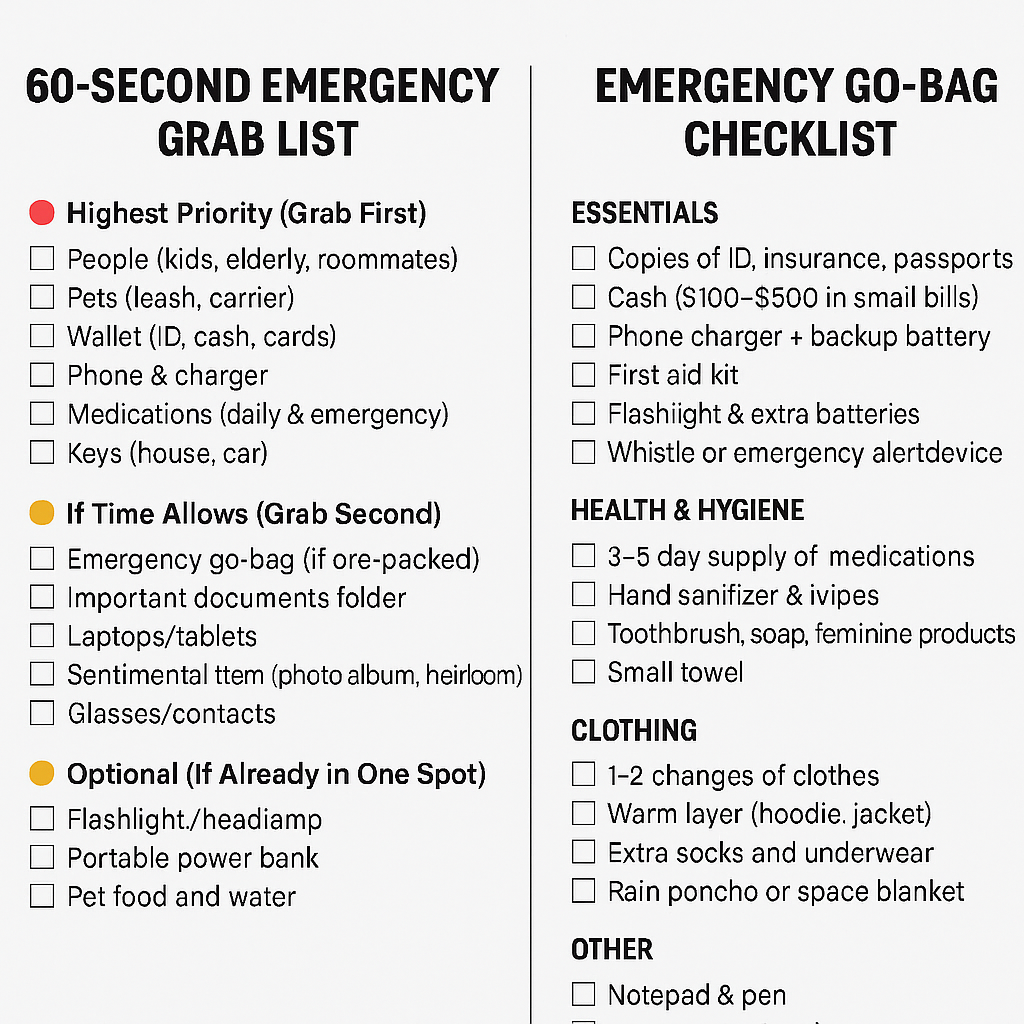
Resource Management: Stockpile essential supplies such as water, non-perishable food, first aid kits, and tools. Regularly check and replenish these supplies.
Regular Drills and Simulations
The best way to cement survival skills is through regular practice. Schedule drills and simulations for various scenarios:
Monthly Drills: Conduct at least one drill per month, focusing on different emergency scenarios.
Realistic Simulations: Create realistic, timed simulations to test and refine your response plans. Involve all household members and assign specific roles.
Review and Improve: After each drill, review what went well and identify areas for improvement. Update your plan accordingly.
Psychological Preparedness
Survival situations can be mentally taxing. Preparing psychologically is as important as physical preparedness.
Stress Management Techniques: Practice techniques such as deep breathing, meditation, and mental visualization to remain calm under pressure.
Building Resilience: Strengthen your mental resilience by challenging yourself in controlled, stressful situations to improve your ability to cope with real emergencies.
Support Systems: Establish a network of support with friends, family, and community members who can provide emotional and practical assistance during crises.
Leveraging Technology for Survival
Technology can play a crucial role in enhancing your survival preparedness:
Emergency Apps: Utilize apps that provide real-time alerts, emergency contacts, and survival guides.
Communication Devices: Ensure you have reliable communication tools such as two-way radios, satellite phones, or emergency beacons.
Online Resources: Regularly update your knowledge with online resources, forums, and survival communities that share tips and experiences.
Conclusion: The Imperative of Preparedness
Practicing your survival responses is not just a recommended activity—it is a vital investment in your safety and the well-being of those around you. By enhancing your reaction time, building confidence, and ensuring efficient responses, you prepare yourself to face emergencies with a calm and controlled demeanor. Survival preparedness is an ongoing process that requires continuous learning, practice, and adaptation. Make it a priority today, and ensure you are ready for whatever challenges the future may hold.
Survivalists are people who prepare for emergencies and disruptions to society, with a focus on self-reliance. Here are some key aspects of survivalism:
Mindset:
Self-reliance: Survivalists believe in taking responsibility for their own well-being and safety.
Positive attitude: Maintaining hope and optimism is crucial in difficult situations.
Adaptability: Survival requires being flexible and able to adjust to changing circumstances.
Skills:
Knowledge of basic survival needs: Shelter, fire, water, and food are paramount for survival.
First aid and medical knowledge: Being able to treat injuries and illnesses can be lifesaving.
Wilderness skills: For those planning to be in remote areas, skills like navigation, foraging, and signaling for help are important.
Self-defense: This can involve martial arts, firearms training, or simply learning to improvise weapons.
Preparation:
Survival kits: These can be pre-assembled backpacks or bags containing essential supplies.
Stockpiling: This could involve food, water, medication, and other necessities.
Shelters: Some survivalists build or modify shelters for emergencies, while others plan to use readily available options.
The motivations and approaches of survivalists can vary. Some may be preparing for natural disasters, while others worry about societal collapse. Regardless of the specific threats they anticipate, all survivalists share a common goal: to be prepared to take care of themselves and their loved ones in difficult times.