Do you really need to stack silver and gold? – A Wealth Preservation Strategy

surviving homelessness

“In the realm of investment and wealth preservation, the question often arises: Do you really need to stack silver and gold? This query, simple yet profound, holds the potential to reshape your financial trajectory.

Delving into the world of precious metals can be a daunting prospect. Yet, it’s a journey that promises to deepen your understanding of wealth, stability, and economic resilience.

Join us as we explore the allure of silver and gold, their role in safeguarding your wealth, and the practicalities of stacking these timeless treasures. We’ll help you navigate the complexities and debunk the myths surrounding this age-old practice.

Embarking on this exploration, you’ll discover the true value of silver and gold, beyond their glittering exterior. So, do you really need to stack silver and gold? Let’s find out together.

Why Stack Silver and Gold?

Stacking silver and gold is a strategy adopted by many investors to safeguard their wealth. The allure of these precious metals lies in their inherent value, which is unaffected by inflation or economic downturns. Gold and silver have been a reliable store of value for centuries, providing a sense of security in turbulent times.

Investors stack silver and gold to diversify their investment portfolios. While stocks and bonds are subject to market fluctuations, gold and silver tend to move independently of the stock market, providing a buffer against losses. This makes them an excellent choice for risk management.

One of the primary reasons to stack silver and gold is their liquidity. These precious metals can be sold almost anywhere in the world, making them a versatile asset.

Gold is universally accepted and can easily be converted into cash.
Silver, on the other hand, is more affordable and accessible for small investors, yet still holds significant value.

In addition, stacking silver and gold allows investors to physically own their investments, giving them full control over their wealth. Unlike digital assets or paper investments, physical gold and silver cannot be hacked or erased.

Finally, stacking silver and gold can be a rewarding hobby. Many people enjoy the tangible nature of these metals, and collecting different coins and bars can be a fun and profitable pastime.

In essence, stacking silver and gold is not just about wealth preservation, but also about financial independence, risk management, and personal enjoyment. Whether you’re a seasoned investor or a novice, stacking silver and gold can be a valuable addition to your financial strategy.

What is Precious Metal Investing?

Precious metal investing refers to the act of buying and holding gold or silver as a form of investment. This is often done as a hedge against inflation or economic uncertainty. The value of these metals tends to rise when the economy is struggling, making them an attractive investment option.

Investors typically stack silver and gold in the form of bullion bars, coins, or rounds. The physical possession of these metals provides a sense of security that other investments may not offer. However, it’s worth noting that this form of investment requires proper storage and insurance, adding to the overall cost.

The question of whether you really need to stack silver and gold depends on your investment goals and risk tolerance. If you’re looking for a safe haven asset that can provide a buffer against economic downturns, then yes, stacking silver and gold could be a viable strategy.

However, it’s important to remember that like all investments, precious metal investing comes with its own set of risks. The prices of silver and gold can be volatile, and there’s also the risk of theft if the metals are not stored securely.

In terms of diversification, precious metals can add balance to an investment portfolio. They tend to perform well when other assets are falling, providing a counterbalance that can help smooth out returns.

In the end, whether you choose to invest in silver and gold will largely depend on your individual circumstances and investment objectives. It’s always a good idea to seek professional advice before making any significant investment decisions.

Benefits of Stacking Gold

Stacking gold is a timeless investment strategy that offers several advantages. Firstly, gold is a tangible asset that holds intrinsic value. Unlike stocks or bonds, the value of gold does not depend on the performance of a company or government. This makes it a safe haven during economic downturns, preserving wealth when other assets may be losing value.

Secondly, gold is a diversification tool. Including gold in your portfolio can reduce volatility and risk, as gold often moves independently of stocks and bonds.

Thirdly, gold is a hedge against inflation. When the cost of living increases, the price of gold tends to rise as well. This can protect your purchasing power in times of high inflation.

Lastly, gold is universally accepted and can be easily bought or sold anywhere in the world. This makes it a liquid asset that can be converted into cash whenever needed.

In contrast, silver also has its benefits but they are different from gold. Silver is more affordable and has a higher industrial demand. However, it is also more volatile and may not provide the same level of security as gold.

So, do you really need to stack gold? The answer depends on your financial goals and risk tolerance. But considering the benefits, it is certainly a strategy worth considering.

Drawbacks of Stacking Silver

Stacking silver, while often touted as a solid investment strategy, has certain drawbacks that potential investors should be aware of. One major disadvantage is the storage issue. Unlike other forms of investment, such as stocks or bonds, silver requires physical storage space. This can lead to additional costs and security concerns, especially for large quantities.

Another challenge is the liquidity of silver. Although silver is a globally recognized asset, it may not be as easy to sell or trade as other assets. This can pose a problem if you need to convert your silver into cash quickly.

Furthermore, the market volatility of precious metals can be a deterrent. Silver prices can fluctuate wildly, and there’s no guarantee that the price will rise over time. This unpredictability can make silver a risky investment, particularly for those with a low risk tolerance.

Lastly, unlike some other investments, silver does not yield any passive income. While stocks may provide dividends and real estate can generate rental income, silver only appreciates in value when the market price increases. This lack of income generation can be a significant drawback for those seeking regular returns on their investment.

While stacking silver can certainly have its advantages, it’s important to consider these drawbacks when deciding whether this investment strategy is right for you.

How to Start Stacking Precious Metals?

To begin stacking precious metals like gold and silver, it’s important to understand their intrinsic value. These metals have been a reliable store of wealth for centuries, outlasting currencies and surviving economic downturns. When you’re deciding whether to stack silver and gold, consider their historical significance and enduring value.

The first step in stacking precious metals is to determine your budget. It’s crucial to only invest money you can afford to lock away for a while. Silver is often a more affordable starting point than gold, making it a popular choice for beginners.

Next, choose where to buy your metals. Reputable bullion dealers are a safe bet, offering a range of products from coins to bars. Online platforms also provide a convenient way to purchase and even store your metals.

Storing your precious metals is another important consideration. Some investors prefer to keep their metals at home, investing in safes or other secure storage methods. Others opt for bank deposit boxes or professional vault services.

In terms of selling your metals, timing is everything. Watch market trends and economic indicators to decide when it’s time to sell. Remember, stacking precious metals is a long-term investment strategy, so patience is key.

Diversifying your portfolio with gold and silver can provide a hedge against inflation and currency devaluation. While it’s not a get-rich-quick scheme, stacking precious metals can be a prudent financial move.

Remember, it’s essential to do your own research and consult with a financial advisor before diving into the world of precious metals. This will ensure you make informed decisions that align with your financial goals and risk tolerance.

What are the Risks Involved?

Stacking silver and gold can be a lucrative investment strategy. However, it’s not without its risks. One of the primary risks involved in stacking precious metals is the volatile market price. The value of silver and gold fluctuates daily based on a myriad of factors, including global economic conditions, investor sentiment, and supply and demand dynamics. This can lead to unpredictable returns on your investment.

Another risk is the potential for physical theft. Storing a large amount of silver and gold in your home can make you a target for thieves. Therefore, you’ll need to invest in a secure storage solution, which can add to your overall costs.

There’s also the issue of liquidity. While silver and gold are generally considered liquid assets, selling them quickly can sometimes be challenging. You might have to deal with dealers or pawn shops, which can result in you receiving less than the market value for your precious metals.

Finally, there’s the risk of counterfeit products. The market is riddled with fake silver and gold products, and if you’re not careful, you could end up purchasing these instead of genuine ones. Always buy from reputable dealers and have your purchases authenticated.

Stacking silver and gold is not a decision to be taken lightly. It’s vital to understand the risks involved and consider whether it aligns with your financial goals and risk tolerance.

Is Stacking Silver and Gold Profitable?

The age-old debate of stacking silver and gold often revolves around its profitability. Many believe that stacking these precious metals is a wise investment strategy, offering a safe haven against economic uncertainties. The inherent value of silver and gold is not subject to the fluctuations of fiat currencies, making them a steady store of value.

However, the profitability of this strategy largely depends on the market conditions. During times of economic instability, precious metals often see a rise in value. Conversely, in a flourishing economy, the value may stagnate or even decrease. This dynamic nature of the market makes the profitability of stacking silver and gold a subjective matter.

It’s also crucial to consider the costs associated with stacking these metals. Storage, insurance, and potential selling costs can eat into the profits. Therefore, it’s essential to factor these into your calculations when considering the profitability of stacking silver and gold.

To maximize returns, investors often diversify their portfolio by including a mix of silver and gold. This allows them to leverage the benefits of both metals, thus potentially increasing their profitability.

While stacking silver and gold can be profitable, it’s not a guaranteed money-maker. Like any investment, it requires careful research, understanding of the market, and strategic planning. Therefore, whether you need to stack silver and gold largely depends on your financial goals and risk tolerance.

Alternatives to Stacking Silver and Gold

Investing in precious metals like silver and gold has been a traditional method of wealth preservation. However, the question arises – do you really need to stack silver and gold? There are indeed other investment vehicles that can offer similar benefits.

One alternative is investing in stocks. Stocks represent ownership in a company and can provide returns through dividends and capital appreciation. While they are subject to market volatility, diversification and strategic investing can mitigate risks.

Another option is real estate. Real estate investments can provide steady income through rentals and potential appreciation in property value. Like precious metals, real estate is a tangible asset, providing a sense of security.

Investing in bonds is another path to explore. Bonds are essentially loans that investors make to entities like governments or corporations. In return, these entities promise to pay back the loan with interest.

Cryptocurrencies, though relatively new, are gaining popularity as an alternative to traditional investments. They offer high potential returns but also come with high risk.

To summarize, while stacking silver and gold can be a safe investment strategy, it’s not the only option. Depending on your risk tolerance and investment goals, there are several alternatives that can offer similar, if not better, returns. Remember, diversification is key in any investment strategy.

ETFs or Exchange Traded Funds are also a viable alternative. ETFs are funds that track indexes like the NASDAQ-100 Index, S&P 500, Dow Jones, etc. They offer the flexibility of stocks and the broad diversification of index funds.

Lastly, mutual funds can be considered as well. They pool money from many investors to purchase a diversified portfolio of stocks, bonds, or other securities.

In conclusion, while stacking silver and gold has its benefits, it’s worth exploring these alternatives to diversify your investment portfolio and potentially increase your returns.

Conclusion: Evaluating the Necessity of Stacking Silver and Gold

In conclusion, the decision to stack silver and gold is subjective, depending on individual financial objectives and risk tolerance. Precious metal investing, such as stacking gold and silver, offers certain benefits like providing a hedge against inflation and currency fluctuations. However, it also has its drawbacks, such as storage and insurance costs, particularly for silver due to its bulk.

Starting to stack precious metals involves understanding market trends, finding reputable dealers, and making informed decisions. As with any investment, it carries risks, and profitability is not guaranteed. It’s important to weigh these aspects before diving in.

While stacking silver and gold can be a profitable venture, it’s not the only option for those interested in precious metals. Alternatives like Exchange-Traded Funds (ETFs) or mining company stocks can provide exposure to this sector without the need for physical storage.

Looking ahead, factors such as global economic trends, supply and demand dynamics, and advancements in mining technology could impact the precious metals market. Therefore, staying informed and adaptable is key. Ultimately, whether or not to stack silver and gold is a personal decision that should be made after careful consideration and consultation with a financial advisor if needed.


If you prefer the hard currency, this resource is for you!

WHEN A MISSILE STRIKE IS ANNOUNCED: WHAT THE HELL DO YOU DO FIRST?(and yes, that sense of panic you’re feeling? Valid. But read on anyway.)


The sirens wail. Or maybe it’s a weird alert on your phone, something that sounds like an air raid from an old Cold War movie—and for a second, you freeze. That instinct to check Twitter or text your mom? Ignore it. There’s no time for scrolling.


🏃‍♂️ Step One: MOVE. NOW.

Seriously—don’t overthink it. Don’t stand there in the kitchen holding a spoon, wondering if it’s real. Get inside. Immediately.

Doesn’t matter if it’s your house, the gas station bathroom, or your cranky neighbor’s tool shed—any building beats open sky. Glass storefront? Fine. Car? Meh. Still better than standing in the street with your mouth open.

I once saw a guy during a tornado warning lean against his porch railing, drinking beer, waiting to “see it for himself.” Don’t be that guy. That guy becomes a statistic.


🌀 Step Two: Down & Deep

No basement? Sucks, but okay—make do.

  • Go to the lowest floor you can get to.
  • Pick a windowless room. Interior bathrooms are clutch (tiles and tubs = extra barriers).
  • Closets work. Hallways can work. Just don’t hug the exterior walls—they won’t hug back.

If you’re in a high-rise… well, you’ve got decisions to make. Mid-level is often safer than top or bottom. Not great, but reality rarely is.


💥 Step Three: Put Walls, Crap, Anything Between You & the Blast

Okay, here’s where it gets a little chaotic.

You want layers. Like an onion. Or a really bad hoarder’s apartment.

Cinder blocks, heavy dressers, fridges—yes, drag that couch into the hallway if you can. Anything dense gives you a better shot. Even books. Stack them if you must.

If you’re caught outdoors? No shelter in sight?

Drop. Face down. Hands over head. Flat like a pancake in the dirt. That instinct to run might scream in your brain, but unless shelter is RIGHT there—running could kill you.

And I mean, unless you’re the Flash, you’re not outrunning this.


☢️ Step Four: If It’s Nuclear or Chemical… That’s a Whole New Kind of Bad

Look, if the thing that just exploded has a mushroom cloud or smells like bleach and doom—now you’re in “fallout” territory.

  • Get sealed up: windows closed, doors locked, vents off. Wet towels under door frames.
  • Take off outer clothes—bag them. Seriously, even your shoes.
  • If you can shower, do it—but not with conditioner. (Weird, right? It binds radioactive particles. Science is strange like that.)

📻 Step Five: Don’t Guess—Listen

You know that old battery-powered radio your uncle gave you that you stuffed in a drawer? Time to go find it.

Forget Instagram rumors. Don’t even trust that one neighbor who’s always scanning the police channels unless he also owns a Geiger counter and a bunker.

Stick with:

  • Emergency alert systems
  • NOAA weather radios
  • The emergency broadcast TV thing—y’know, with the creepy tone that makes your stomach drop.

And conserve your phone battery. Save it for when you need to call someone, not to post a selfie in your bunker.


⏳ Step Six: Stay Put

Don’t peek outside just to “see how bad it is.” Curiosity did not survive the blast.

Unless a fire or collapse forces you to leave your shelter, stay there. For hours. Maybe a whole day. If it’s nuclear? You’re looking at 24-48 hours minimum indoors before radiation levels drop to anything resembling “less death-y.”

This is not like when the power goes out and you decide to grill all the hot dogs and make it fun. It’s survival mode. Ramen. Crackers. Canned peaches if you’re lucky.


🎒 Optional but Crucial: Do This Before the Sirens Start

Let’s be real—waiting until chaos erupts is a recipe for regret.

So:

  • Build a go-bag. No, not a cute Pinterest one. A real one. Water, food, flashlight, batteries, radio, extra underwear, meds, gloves, iodine tablets (if you’re prepping nuclear-style), and copies of ID.
  • Know where you’d go. At work. At school. While walking the dog.
  • Talk with your family. Have a stupid plan. Even a stupid plan is better than panicking on a group text.

⚠️ Final Flash of Truth:

You will not be ready. None of us are. But your brain can be trained—just a bit—to react faster than it panics.

That first 15 seconds after a warning? That’s where survival lives.
Not in hope. Not in prayer.
In action.

So yeah—get up. Get in. Get down. Stay quiet. Wait.
Then come back and rebuild, if the world lets you.

“The Day the Milk Turned to Smoke”

I don’t remember what day it was. Might’ve been Wednesday. Or maybe Sunday. Doesn’t matter — the days bleed together now, like dirty water soaking through torn lace.

But I remember the moment.

My daughter, Hiba, sat cross-legged on the floor, tongue poking out in concentration, sketching with a half-broken crayon on the inside of a cereal box. We hadn’t had cereal in months — maybe longer. I’d kept that box like some idiot souvenir. She was drawing… I think it was a flower. Or a rocket. The difference blurs, these days.

I had one sachet of powdered milk left. Just one. Not enough for both of us. Barely enough for her. The water I boiled was cloudy — it always was — but I stirred the powder into it anyway, pretending I didn’t smell the bitterness. That tinny, almost rusty tang. I told her it was “magic milk,” like I always did.

“Drink it fast before it disappears,” I said with a smile that felt stitched onto my face. Her fingers wrapped around the cup like it was the Holy Grail. I turned away so she wouldn’t see me watching, but I still listened to the sound — her small lips against the rim. That sound broke me.

Because I was hungry too. God, I was so hungry.


We live — if you can call this living — in what used to be a tailor’s shop. The mirrors are cracked. Threads and buttons still scatter the floor. Every morning, I sweep them into a pile like I’m tidying a museum of broken dreams. I sleep on a mattress that smells like damp shoes and burned fabric. Hiba has a blanket I found in the rubble of an old bakery. It has cartoon ducks on it, now stained grey from soot and grief.

Our window is boarded up with wood that used to be someone’s front door. A red number is spray-painted on it — 342-B — which means someone once thought this place mattered enough to mark.


When the shelling starts — and it always starts — we play a game.

I tell her, “Shhh… the ground is sleeping. Don’t wake it.”

She nods like it makes sense, like explosions are just dreams we can tiptoe around. She clutches her blanket, and I pretend the way she shakes is from the cold.

I tell her stories about trees, about mangoes falling onto picnic blankets. I describe soft grass and birthday cakes — things she barely remembers. Sometimes I make her laugh. Other times, I just hold her while she stares at a wall like it might answer something I can’t.


There used to be a woman down the street, Samia — old, half-blind, sharp-tongued. She sold lentils from a jar, one scoop at a time. I traded her my wedding earrings for a bag once. The metal was cheap. She knew it. But she gave me the lentils anyway. Said, “Kids don’t eat jewelry.” Then she laughed, and I cried, and she patted my arm like she was dusting it off.

She’s gone now. Hit during market hour. Her stall burned. I stepped over her glass jars weeks later, the lentils spilled like brown rain.


My husband — Hiba’s father — disappeared last spring. One minute, he was fixing the hinges on our water drum; the next, just… gone. He left his shoes by the mat. I still haven’t moved them. I don’t know if I’m waiting or in denial or if I just like the way they anchor me to a version of reality that doesn’t exist anymore.

She asks about him. Less often now. That makes it worse, somehow.


One night — weeks ago, or maybe longer — I found a pigeon. Dead. Whole. No maggots. Just still warm.

I stood there, staring at it like it had personally challenged my morals. Would I cook it? Could I?

I did. Boiled it with garlic paste and salt. That night, Hiba said it was the best chicken she ever had. I laughed so hard I had to sit down. Then I cried. Quietly.


And then — two days ago — something strange happened.

A truck came. Not the kind that brings bombs. A white truck with a blue stripe and loudspeakers blaring something garbled. Men in masks tossed bags onto the road. Flour. Water. Sanitary pads. Powdered formula. They didn’t wait.

People ran like hyenas. Clawing, screaming. I ran too. I don’t know how I got the bag. I think I elbowed someone. Or bit someone. I don’t care. I got the bag.

Inside: rice, oil, two tins of beans, and — oh God — a bar of soap.

A bar of soap.


I let Hiba smell it first. She looked confused.

“What is it?”

I didn’t know how to answer.

“It smells like… something pretty,” she whispered.

We haven’t used it yet. It’s wrapped in cloth, under my pillow. I like to believe that the moment I open it, something good will return. Like hope, or electricity, or maybe just the feeling of being clean.


Last night, she asked me, “Mama, are we the good guys or the bad guys?”

I couldn’t answer. I just pulled her close.

Because in war, there are no good guys. Just people trying not to disappear.

And I don’t care if I have to boil shoe leather or barter my own breath. I will keep her safe.

Even if everything else burns.

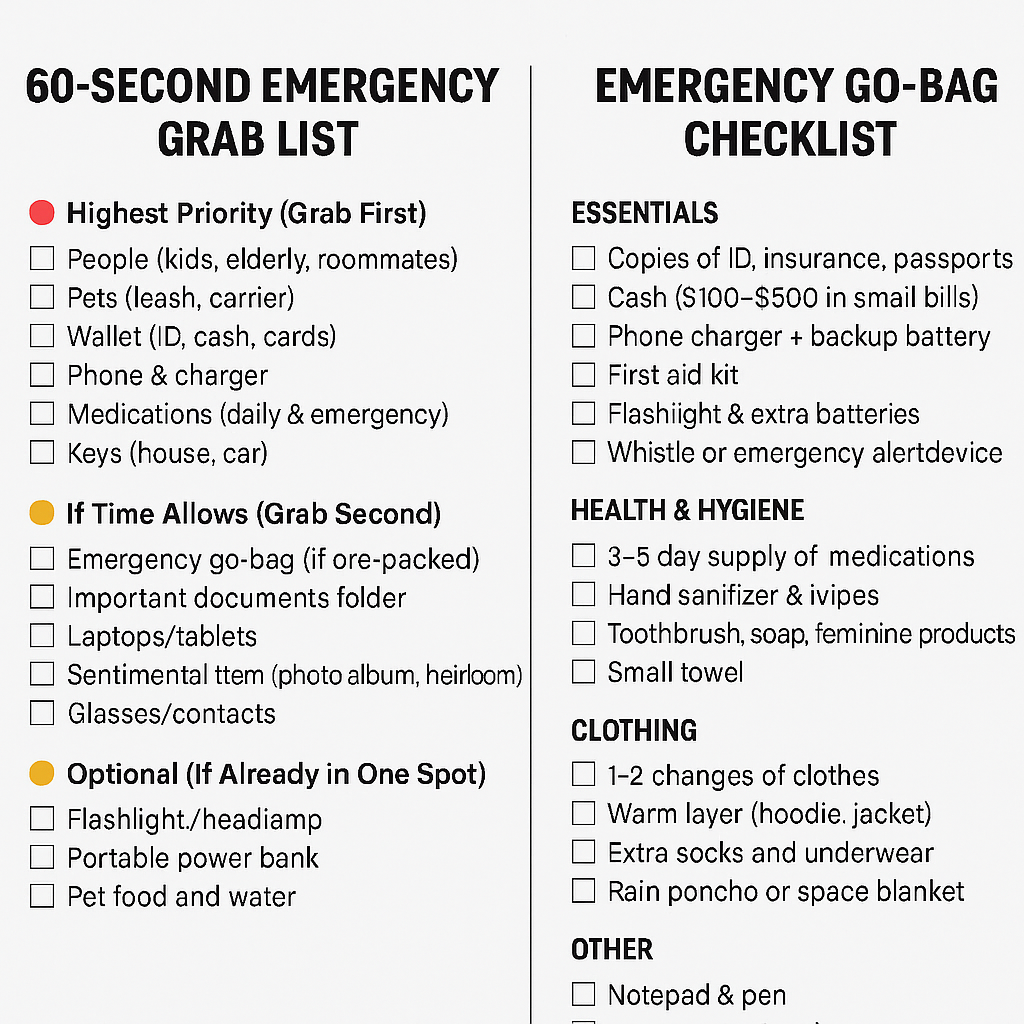
If you only have minutes to evacuate, you need to think fast, stay calm, and grab only the essentials. Here’s a prioritized list of what to take:


🚨 Top Priority: Life-Saving Essentials

  1. People and Pets – Get everyone (including animals) out first.
  2. Keys – Car keys, house keys.
  3. Wallet – ID, credit/debit cards, cash.
  4. Phone & Charger – Communication and navigation.
  5. Medications – Especially life-critical ones like insulin, EpiPens, inhalers.

🎒 Grab-and-Go Emergency Bag (if you’ve prepped one)

  • Copies of documents: passports, insurance, birth certificates
  • Flashlight, batteries
  • First aid kit
  • Water bottles, snacks
  • Change of clothes, socks, underwear
  • Emergency contacts list
  • Small power bank

💻 Digital & Sentimental

  • Laptop or hard drive (if it’s within reach)
  • Important documents (if not already in emergency bag)
  • Jewelry or small irreplaceable heirlooms
  • Photos or sentimental items (if quick to grab)

🐾 If You Have Pets

  • Leash, carrier, food
  • Pet meds
  • Comfort toy or blanket

⏱️ Time-Saving Tip:

If it’s already packed and near the door, take it.
If not, don’t waste time packing—your safety comes first.

It’s not about hoarding. It’s about buying when you can so you’re not desperate when you can’t


There was a day—early in the pandemic—when I stood in a grocery aisle staring at the shelves like they’d personally betrayed me.

Canned goods gone. Rice? Gone. Basic stuff—flour, beans, oats—emptied like someone had cleared out the food pyramid.

I wasn’t panicking. I wasn’t angry.

I just felt… tired. Like someone had pulled the plug on whatever fragile sense of security I’d been clinging to. I had $23 in my checking account, a half gallon of milk at home, and a kid who was asking—again—if we’d still be able to get his favorite cereal.

In that moment, something clicked.

This wasn’t about preppers with bunkers or conspiracy threads on Reddit. This was about everyday life. About the invisible tightrope so many of us walk every day—and how quickly it frays under pressure.


For a long time, I resisted anything that smelled like prepping.

I told myself I didn’t have the budget. I didn’t want to be “that person.” I didn’t want to get caught up in fear-based thinking. And truthfully, part of me thought it meant admitting I wasn’t in control.

But here’s the irony: prepping is what gave me back a sense of control.

Not in the dramatic, “I’m ready for the end of the world” kind of way.

In the quiet, deeply human way of opening a cabinet and knowing I can make something work.


I started small.

A second jar of peanut butter when it was on sale. An extra bag of beans. Gradually learning to rotate things so I wasn’t just stockpiling—I was preparing.

The first time I ran out of money for the week but still had meals I could cook from my pantry, I nearly cried.

Because that feeling? That feeling of knowing I had options?

It was the opposite of desperation. It was peace.


People get it twisted.

They think if you’re buying extras, you’re hoarding. That it’s selfish or paranoid. But prepping, real prepping, isn’t about grabbing everything. It’s about thinking ahead. It’s about pacing yourself, planning around your real life, and slowly building a buffer between you and chaos.

Hoarding is reactive. It’s panic in motion.

Prepping is proactive. It’s self-respect.

It’s also, ironically, how you avoid hoarding. Because when people aren’t desperate, they don’t clean out shelves. When communities have what they need, the system bends instead of breaks.


And I get it—money is tight. For many of us, that’s the whole point.

That’s why prepping on a low income might actually be the most important kind.

You don’t need a survival bunker. You need a week’s worth of meals that don’t rely on paycheck timing. You need to know that if your hours get cut or prices spike, your fridge doesn’t become a source of anxiety.

Even now, when things feel slightly more stable, I still prep.

Not because I expect another wave of disaster—but because life is unpredictable, and I’m finally honest about that.

I prep because I’ve lived the feeling of “not enough” and I never want to feel it again if I can help it.


So no, it’s not about hoarding.

It’s about buying when you can—slow, small, intentional—so you’re not stuck making impossible choices when you can’t.

And that’s not fear.

That’s love in action.

Love for your future self. Love for your family. Love for your sanity.

Because when you don’t have to worry about whether dinner’s covered, you’re free to face the rest of life with a little more strength.

And honestly? In a world that keeps shifting under our feet, that kind of strength is everything.

Review of Land Guard Galvanized Planter for Vegetables

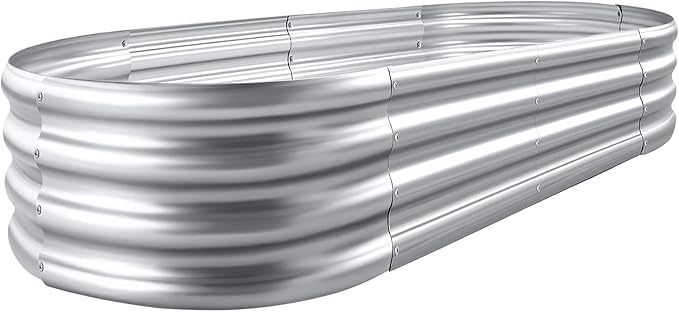
In an age where urban gardening has gained immense popularity, the Land Guard Galvanized Planter for Vegetables stands out as a durable and stylish solution for those looking to grow their own produce, regardless of limited space. This planter combines functionality with aesthetic appeal, making it an excellent choice for both novice and experienced gardeners. Whether you have a sprawling backyard or a compact balcony, this planter offers a versatile way to cultivate fresh vegetables, herbs, and flowers. In this article, we will delve into the features of the Land Guard Galvanized Planter, explore its advantages and disadvantages, and ultimately determine if it is the right fit for your gardening needs.

The Land Guard Galvanized Planter is constructed from high-quality galvanized steel, which is not only resistant to rust and corrosion but also adds a modern touch to any outdoor or indoor space. Measuring 36 inches in length, 12 inches in width, and 12 inches in height, it provides ample space for a variety of plants, from tomatoes and peppers to leafy greens and herbs. The planter’s design features a sleek, minimalist aesthetic that fits seamlessly into various decor styles—from rustic to contemporary—making it an attractive addition to patios, decks, and gardens. Furthermore, the planter is lightweight, allowing for easy relocation as needed, which is particularly advantageous for those who may want to reposition their garden based on sunlight exposure or seasonal changes.

One of the standout features of the Land Guard Galvanized Planter is its excellent drainage system. The bottom of the planter is designed with drainage holes that prevent water from pooling, which is crucial for preventing root rot and ensuring the health of your plants. Additionally, the galvanized steel construction allows for superior temperature regulation, keeping the soil warmer in cooler months and cooler in hot weather, thus extending the growing season. This versatility makes it suitable for a wide range of climates and plant types. Moreover, the planter’s depth allows for adequate root growth, ensuring that your vegetables can thrive and produce a bountiful harvest.

While the Land Guard Galvanized Planter offers numerous benefits, it is essential to consider its drawbacks as well. One potential downside is that the galvanized steel can become quite hot in direct sunlight, which may affect the soil temperature and plant health. Gardeners in hotter climates might need to consider additional shading solutions to protect their plants from overheating. Additionally, while the planter’s lightweight design is advantageous for mobility, it can also be susceptible to tipping over in strong winds, particularly if filled with taller plants. Therefore, securing the planter in a sheltered area or weighing it down with additional materials may be necessary for optimal stability.

Another consideration is the cost associated with the Land Guard Galvanized Planter. While it is competitively priced compared to other high-quality planters, it may still be considered an investment for some consumers. Those on a tight budget might find more affordable options made from plastic or wood, though they may not offer the same durability and aesthetic appeal. It is essential for potential buyers to weigh their budget against the longevity and performance of the galvanized planter, as it is designed to withstand the elements for years to come.

In conclusion, the Land Guard Galvanized Planter for Vegetables presents an excellent option for urban gardeners and plant enthusiasts alike. Its robust construction, stylish design, and effective drainage system make it an appealing choice for growing a variety of vegetables and herbs. While there are some drawbacks, including potential overheating in direct sunlight and the need for stability in windy conditions, the overall benefits far outweigh these challenges.

Ultimately, if you are serious about cultivating your own vegetables and are looking for a planter that combines durability with aesthetic appeal, the Land Guard Galvanized Planter is worth considering. Its ability to enhance your gardening experience while providing a stylish focal point in your outdoor space makes it a valuable addition to any home. Whether you are a seasoned gardener or just starting your journey, this planter can help you achieve a thriving vegetable garden, bringing fresh produce right to your doorstep.