This Fatal Hurricane Prep Mistake Could Kill Your Family (Even If You Follow Every Guide Perfectly)


You’ve checked every hurricane preparation list twice. Supplies? Ready. Evacuation route? Memorized. Timeline? Rehearsed to perfection.

But there’s a hidden killer that no emergency guide mentions—and it’s lurking inside your own head.

When that Category 4 storm barrels toward your neighborhood, your brain will betray you in the most dangerous way possible. Your carefully calculated timeline becomes dangerously wrong, your time perception completely breaks, and your family’s safety hangs in the balance.

Here’s the terrifying truth: your stressed brain can’t tell time accurately during crisis, making even perfect hurricane preparations potentially lethal.

The Hurricane Prep Blind Spot That Emergency Guides Never Mention

Most families obsess over supply checklists and evacuation routes. Smart moves, but they’re missing the biggest threat of all: temporal distortion under stress.

When hurricane warnings hit, your brain doesn’t just get stressed—it fundamentally breaks down in ways that make accurate time perception impossible. Minutes stretch into hours while actual hours vanish without notice.

Your 30-minute evacuation plan? It might take 10 minutes in a dangerous rush or 3 hours in paralyzing perfectionism. Neither scenario ends well for your family’s safety.

What Your Brain Does During Hurricane Panic (The Science Will Shock You)

Your hippocampus—the brain region controlling time perception—works like a Swiss watch under normal conditions. You can estimate task duration with remarkable accuracy.

Stress hormones destroy everything.

When cortisol and adrenaline flood your system during hurricane preparation, they dysregulate hippocampal function completely. Neuroscientists call the result “chronostasis”—a total breakdown where your internal clock becomes unreliable.

Picture this nightmare scenario: Emergency alerts blare. Panic spikes as you realize the storm will hit sooner than expected. Your brain shifts into crisis mode, and suddenly time becomes elastic.

You spend what feels like forever gathering documents—90 minutes vanish on a 15-minute task. Or you race through boarding windows in seeming moments, cutting dangerous corners because your distorted time sense screams there’s no time left.

Both reactions exponentially increase danger.

The “Planning Fallacy” Becomes a Family Death Trap

Under normal circumstances, most people underestimate task duration—psychologists call this the “planning fallacy.” During hurricane preparation, this cognitive bias transforms into something far more sinister.

Stress amplifies the planning fallacy by orders of magnitude.

Your brain simultaneously:

  • Overestimates how much time you have to prepare
  • Underestimates how long each task actually requires
  • Creates a perfect storm of deadly poor decision-making

Research reveals people consistently underestimate evacuation time by 40-60% while overestimating their preparation window by similar margins. When your hippocampus can’t process temporal sequences accurately, these errors become potentially fatal.

You think you have three hours to evacuate safely—you actually have one. You believe securing your home takes 30 minutes—it requires two hours under stress conditions.

The math doesn’t work in your favor.

Two Death Traps: The Rush vs. The Freeze

Temporal distortion during hurricane preparation manifests in two equally dangerous ways:

The Dangerous Rush

Time feels scarce, so you race through critical safety steps. You skip double-checking window boards, forget to turn off utilities, or leave without essential medications. Speed becomes the enemy of thoroughness—and thoroughness often determines survival outcomes.

Perfectionist Paralysis

Time feels endless, so you get trapped optimizing minor details while major threats approach. Hours vanish organizing supply closets while evacuation deadlines pass. Analysis paralysis strikes when action matters most.

The tragic irony? Your stressed brain can’t tell which trap you’re falling into. The same temporal distortion that makes you rush also makes you freeze—sometimes within the same preparation session.

Why Navy SEALs Train “Tactical Tempo” (And You Should Too)

Elite military units spend enormous time training “tactical tempo”—maintaining accurate time perception under extreme stress. They understand what civilian emergency programs miss entirely:

Technical skills without temporal calibration equal failure under pressure.

Navy SEALs don’t just practice room clearing; they practice room clearing while maintaining precise time awareness. Emergency responders don’t just memorize protocols; they rehearse until they execute with chronometer accuracy regardless of stress levels.

This recognizes a fundamental truth: when your internal clock breaks, external time constraints become exponentially more dangerous.

Your hurricane preparation needs the same temporal discipline.

The 4-Step System to Beat Temporal Distortion

Maintaining accurate time perception during crisis isn’t about willpower—it’s about training your nervous system to function independently of stress-induced breakdown.

1. External Time Anchors

Use visible timers and alarms to bypass your internal clock entirely. Set 15-minute intervals for each preparation task with audible alerts that cut through stress-induced tunnel vision.

2. Rhythmic Breathing Protocols

Controlled breathing patterns help regulate hippocampal function. Practice 4-7-8 breathing during preparation drills to maintain temporal awareness under pressure.

3. Stress Inoculation Training

Practice hurricane preparation during artificially stressful conditions. Time yourself with loud music playing, or run checklists after intense exercise. Stress inoculation builds temporal resilience.

4. Mandatory Checkpoint Systems

Create pause points in your timeline where you must check actual elapsed time against planned time. These reality checks prevent both dangerous rushing and deadly freezing.

The Families Who Survive vs. Those Who Don’t

The families who survive major hurricanes with minimal trauma aren’t necessarily those with the most supplies or best evacuation routes. They’re the ones whose temporal intelligence remains intact when their neighbors’ time perception collapses.

Most hurricane preparation focuses on having right supplies and knowing right steps. These matter, but they’re not enough.

True preparedness means becoming someone whose nervous system stays temporally calibrated regardless of external chaos.

Your Brain Wasn’t Built for Modern Emergencies

Your temporal distortion isn’t a bug—it’s an ancient survival mechanism designed for immediate physical threats, not complex modern emergencies requiring sustained logical thinking and accurate time management.

Hurricane preparation demands something evolution never equipped you for: maintaining sophisticated temporal reasoning while your nervous system screams “danger.”

This creates a mismatch between what your biology delivers and what the situation requires. Bridging that gap requires intentional training most families never consider.

Don’t Trust Your Internal Clock This Hurricane Season

Stop trusting your brain’s time perception during hurricane warnings. Your temporal distortion will sabotage even the most careful preparation plans unless you actively train temporal resilience before you need it.

Start now, while weather is calm. Practice your hurricane timeline with external anchors, stress inoculation, and checkpoint systems. Build the temporal intelligence that could save your family when storm surge rises and your hippocampus shuts down.

Because when hurricane warnings turn red and your nervous system floods with stress hormones, your ability to perceive time accurately won’t just determine how well-prepared you are.

It might determine whether your family makes it to safety at all.
 

10 Practical Survival Tips That Could Save Your Life When Disaster Strikes

When modern comfort suddenly disappears—no electricity, no running water, no quick call for help—your survival depends on what you know and how prepared you are. Every year, thousands of people face unexpected emergencies, from wilderness accidents to natural disasters. The difference between panic and survival often comes down to a handful of practical skills. With these survival tips and emergency preparedness strategies, you can increase your chances of making it through any crisis.

1. Learn to Find and Purify Water

You can survive weeks without food, but only three days without water. To ensure wilderness survival, practice finding fresh sources:

  • Collect rainwater using a tarp, poncho, or leaves.
  • Use portable water filters or purification tablets.
  • Boil water for at least one minute to kill pathogens (longer at higher altitudes).

2. Master Fire-Starting Techniques

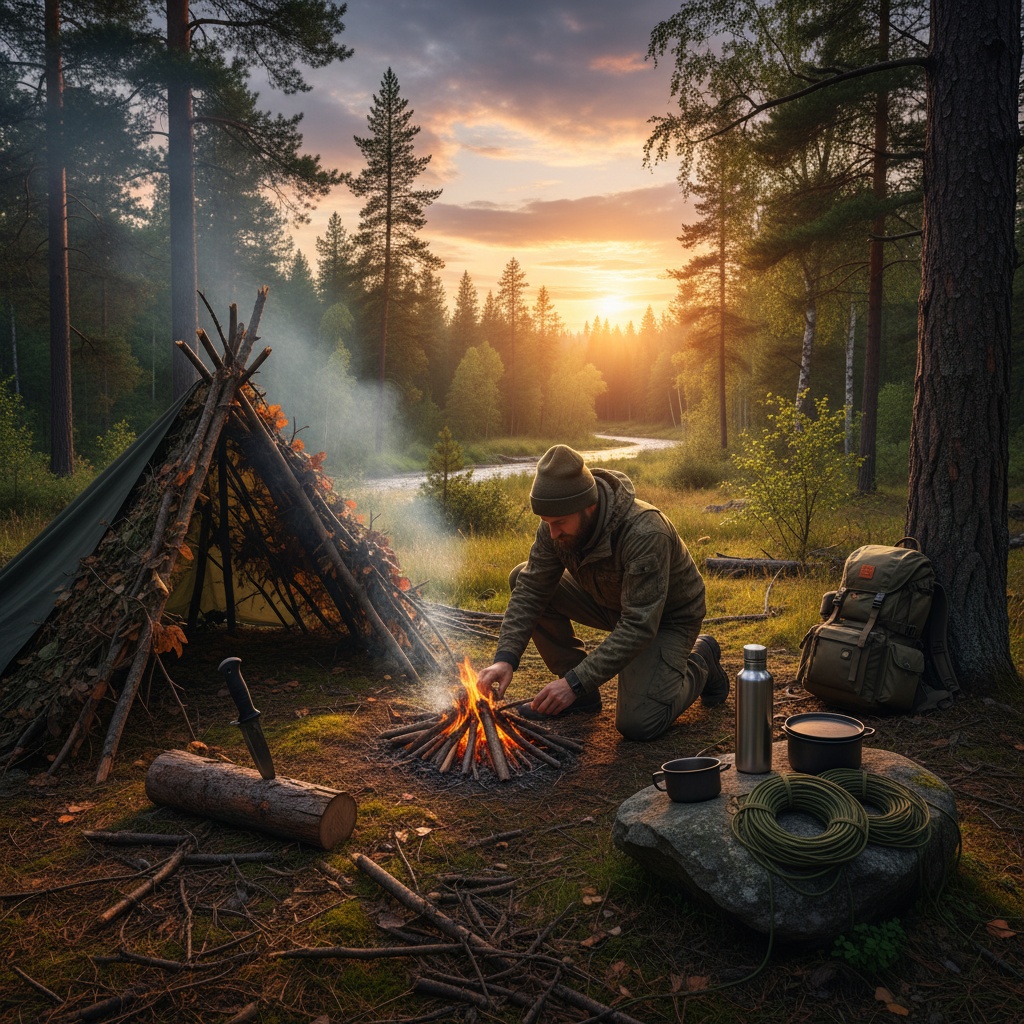
Fire is one of the most important survival skills. It provides warmth, light, safety, and the means to cook food and purify water. Carry waterproof matches, a magnesium striker, or a windproof lighter. If tools fail, dry grass, cotton, or pine sap can serve as tinder.

3. Build a Shelter Quickly

In emergencies, exposure is just as dangerous as dehydration. Shelter protects you from hypothermia, sunburn, or rainstorms. Use:

  • Branches and leaves for insulation.
  • Tarps, ponchos, or emergency blankets for waterproofing.
  • Natural features like cave overhangs or tree roots as a base.

4. Stockpile Multi-Use Gear

When preparing a bug-out bag or survival kit, prioritize multipurpose gear:

  • A knife for food prep, defense, or cutting rope.
  • Paracord for tying shelters, making traps, or splinting limbs.
  • A bandana to filter water, cover the head, or stop bleeding.

5. Know Basic First Aid

In survival situations, medical care may not be available. Learn how to:

  • Stop bleeding with pressure or a makeshift tourniquet.
  • Treat burns, cuts, and insect bites.
  • Recognize early signs of hypothermia and dehydration.

6. Signal for Help

If stranded, attracting attention saves lives. Effective rescue survival tips include:

  • Using mirrors, whistles, or strobe lights.
  • Creating ground signals visible from the air.
  • Building daytime fires with green leaves for smoky signals.

7. Stay Calm and Conserve Energy

Survival psychology is as important as physical skill. Avoid panic—sit down, breathe, and assess your options logically. Conserve calories by limiting unnecessary movement until you have a strategy.

8. Learn Navigation Without Technology

When GPS and phones fail, traditional navigation helps:

  • Use the sun’s position or stars like the North Star.
  • Rivers and valleys often lead toward civilization.
  • Carry a compass and map as reliable tools.

9. Forage Wisely and Avoid Poisonous Foods

Knowing what’s safe to eat is crucial. Understand your local environment and edible species. As a rule, avoid:

  • Plants with milky sap.
  • Leaves in groups of three.
  • Berries with unusual colors or odors.

Fishing, trapping, and gathering nuts are safer food-survival methods than guessing at wild plants.

10. Prepare Before Disaster Happens

The best survival tip is preparation. Keep a go-bag in your home, car, or workplace with:

  • Long-lasting emergency food
  • Portable water filter
  • Flashlight and batteries
  • Emergency blanket
  • Basic first aid supplies

Final Thought

Survival isn’t about luck—it’s about readiness, training, and resilience. These emergency preparedness tips will help keep you safe whether you face a wilderness accident, a natural disaster, or an urban crisis. The more knowledge you have now, the better your chances of survival later.

How to Stay Safe When the Grid Goes Silent for Good

The light didn’t flicker. It vanished. Gone. No warning, no hum, no eerie build-up—just a void, as if someone somewhere unplugged the entire sky. I was halfway through boiling water when the stove blinked off and never came back. The silence that followed wasn’t peaceful. It was the kind of silence that hurts your ears. Like the air itself was holding its breath, waiting for… something.

And that’s the funny thing—we wait. All of us. We wait for someone else to fix it. Flip the breaker. Patch the satellite. Send help. Reboot the system. As if the system was built to survive its own collapse. Spoiler: it’s not.

Most people don’t see the cracks until they’re inside them. You know, until their phone screen won’t glow, the fridge smells like rot, or the ATM just sits there, blank, like it forgot how to be useful. That’s when it starts to sink in—slow and sour like curdled milk. The grid isn’t a guarantee. It’s a gamble.

I used to believe the opposite. I mean, who doesn’t? Life hums along in this strange lullaby of chargers, alerts, and instant weather reports. Need food? Tap. Need cash? Swipe. Need to speak to someone on the other side of the world? Easy. Until it’s not.

Imagine—no, feel—this: it’s 2 a.m. and every appliance in your home dies at once. The air changes. The silence wraps around your chest like cold, damp rope. The lights outside are dark. No cars. No buzz from the transformer pole you never noticed until now. And when you try to check the news… there is no news. No signal. Nothing. Just blankness. Like the whole world forgot how to speak.

Sounds like a movie, right? It’s not.

See, electromagnetic pulses—EMPs—aren’t dramatic Hollywood nonsense. They’re real. Real like solar flares, real like nuclear tests, real like satellites that go blind mid-orbit. Heck, just last year there were whispers about power grids being probed. Not hacked exactly—scanned. Like someone was mapping our weak spots.

And still, people laugh. Or worse—they shrug. “Too paranoid,” they say, sipping their triple shot latte as if Starbucks will always be there. As if Wi-Fi is a human right and not a delicate, blinking fantasy held together by code and copper.

But the truth? The cold one no one wants to say out loud?

We’re fragile.

One bad day—an EMP, a solar blast, a high-altitude nuke—and we go dark. No cars. No internet. No refrigeration. Hospitals become tombs. Banks become museums. The world… slows. Then stalls. Then spirals.

And what do most people do?

They panic. They fight. They wait for help that doesn’t come. I’ve seen it. Not during an EMP, thank God, but after hurricanes. Floods. Even a city-wide blackout once that turned into a looting spree by midnight. That was just the power going out. Temporarily. There were still working phones and running water. And it was chaos.

Now multiply that by a thousand. For days. Weeks. Maybe months.

Still think prepping is a joke?

Look, I’m not here to scold or scare you—well, maybe scare you a little—but mostly to nudge. Because once, not that long ago, I was the guy with a flashlight and no batteries. A pantry full of condiments and nothing edible. A vague idea of how to purify water (I thought you boiled it and called it a day… wrong).

What changed? Honestly? A weird conversation at a gas station with this older guy. Scruffy. Quiet. Had a homemade solar panel in the back of his truck and a look in his eye that said he knew. I asked him, jokingly, what it was for.

He didn’t laugh. Just said, “One day, it’s gonna go quiet. I’m not waiting to be surprised.”

That stuck with me. Hard.

Because when you strip it all down—like all of it—what do we really have? What can we control when the scaffolding of modern life cracks and groans and gives way?

Not much.

Unless you choose to change that. Unless you start now—before the silence. Before the pulse.

And no, this doesn’t mean digging a bunker in your backyard or buying 8,000 pounds of dry beans you’ll never eat. That’s cartoon prepping. Real readiness? It’s subtle. Thoughtful. You start by learning. You build systems. Routines. Habits. You practice. You turn your home into a quiet fortress, not a fortress of fear, but of confidence. You learn how to filter water. How to communicate when the towers are dust. How to not panic.

The weird thing? It’s empowering. Like, seriously. The moment you stop being at the mercy of the grid, something shifts in your brain. You walk different. Sleep deeper. There’s a peace in knowing you’ve got this—even if they don’t.

But this… takes guidance. And clarity. You can’t just wing it. There’s too much nonsense out there—half-baked blogs and recycled checklists written by people who’ve never actually spent a weekend without power, let alone lived through a simulated blackout.

So what if there was a guide—an actual, grounded, useful blueprint that walked you through it all? No hype. No fear-mongering. Just the real stuff.

There is.

It’s called The EMP Readiness Blueprint, and yeah, the name sounds a bit dramatic, but once you see what’s inside—you’ll get it. It’s not just about prepping for a grid-down event. It’s about building a whole new mindset. It’s about being the kind of person who doesn’t flinch when the lights die. Who doesn’t cry when the freezer goes warm. Who leads when others freeze.

Because in the end, when the pulse hits—it will hit eventually, one way or another—there are only two kinds of people: the ones who scream into the darkness… and the ones who were ready for it.

Which one are you?

That’s not a rhetorical question.

Because right now, right this second, the answer’s still up to you.