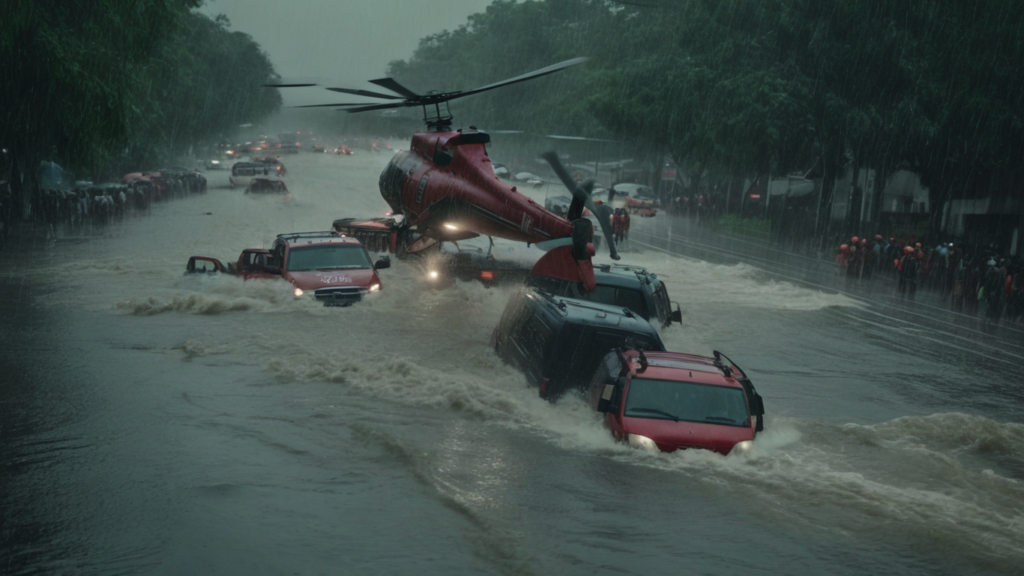
Survival Preparation for a Flood

  1. Introduction
    • Brief overview of flood survival preparation.
  2. Understanding Floods
    • Different types of floods.
    • Causes of floods.
  3. Importance of Flood Preparedness
    • Highlighting the necessity of being prepared.
  4. Creating a Survival Plan
    • Steps to develop a personalized flood survival plan.
  5. Gathering Essential Supplies
    • Listing necessary items for a flood survival kit.
  6. Emergency Communication
    • Importance of communication during floods.
    • Establishing emergency contact methods.
  7. Evacuation Routes
    • Identifying evacuation routes and safe locations.
  8. Securing Property
    • Tips for safeguarding belongings and property.
  9. Family and Pet Safety
    • Ensuring safety measures for all family members, including pets.
  10. Staying Informed
    • Utilizing different information sources during floods.
  11. First Aid and Medical Supplies
    • Including medical essentials in the survival kit.
  12. Water Safety
    • Guidelines for safe water usage during floods.
  13. Food Preparation
    • Tips for storing and preparing food during emergencies.
  14. Community Support and Resources
    • Utilizing local resources and support networks.
  15. Post-Flood Recovery
    • Steps to take after the floodwaters recede.

Survival Preparation for a Flood

Floods are natural disasters that can wreak havoc on communities, causing extensive damage to property and posing significant risks to human life. Whether caused by heavy rain, melting snow, storm surges, or dam failures, floods can occur with little warning, emphasizing the importance of being prepared. In this article, we’ll delve into essential survival preparation strategies for dealing with floods.

Understanding Floods

Floods come in various forms, including flash floods, river floods, coastal floods, and urban floods. They can result from intense rainfall, snowmelt, hurricanes, or even human activities like dam breaches. Understanding the different types and causes of floods is crucial for effective preparedness.

Importance of Flood Preparedness

Preparing for floods beforehand can mean the difference between safety and disaster. By having a well-thought-out plan in place, individuals and communities can minimize risks, protect lives, and reduce property damage.

Creating a Survival Plan

Developing a comprehensive survival plan is the first step in flood preparedness. This plan should include evacuation routes, emergency contacts, shelter options, and provisions for family members and pets.

Gathering Essential Supplies

A well-stocked survival kit is essential for weathering the challenges of a flood. Basic supplies such as non-perishable food, water, first aid kits, flashlights, batteries, and personal hygiene items should be readily available.

Emergency Communication

Maintaining communication during a flood is crucial for staying informed and coordinating rescue efforts. Establishing multiple communication channels, including cell phones, two-way radios, and social media, can help facilitate timely updates and emergency assistance.

Evacuation Routes

Identifying safe evacuation routes and emergency shelters is paramount for swift and safe evacuation. Familiarizing oneself with local evacuation procedures and designated safe zones can save precious time in critical situations.

Securing Property

Taking preventive measures to protect property from flood damage is essential. Elevating electrical appliances, sealing basement walls, and installing flood barriers or sandbags can help mitigate potential losses.

Family and Pet Safety

Ensuring the safety of all family members, including pets, should be a top priority. Develop contingency plans for evacuating pets, and include pet supplies in your emergency kit.

Staying Informed

Stay updated on flood alerts and weather forecasts from reliable sources such as the National Weather Service or local authorities. Pay attention to evacuation orders and heed warnings from emergency management agencies.

First Aid and Medical Supplies

Having a well-equipped first aid kit and an ample supply of essential medications is critical during flood emergencies. Be prepared to administer basic medical care until professional help arrives.

Water Safety

In the aftermath of a flood, water sources may be contaminated, posing health risks. Boil water before consumption or use alternative purification methods to ensure its safety.

Food Preparation

Store ample supplies of non-perishable food items that require minimal preparation. Consider dietary needs and preferences when stocking up on emergency provisions.

Community Support and Resources

Leverage community resources and support networks to enhance flood preparedness. Collaborate with neighbors, local organizations, and emergency responders to share information and resources.

Post-Flood Recovery

After the floodwaters recede, the recovery process begins. Assess property damage, file insurance claims promptly, and seek assistance from government agencies and relief organizations for rebuilding efforts.


Conclusion

Surviving a flood requires careful planning, preparation, and swift action. By following the outlined strategies and remaining vigilant, individuals and communities can mitigate risks, ensure safety, and expedite recovery in the aftermath of a flood.

FAQs (Frequently Asked Questions)

  1. What should I include in my flood survival kit?
    • Your survival kit should include non-perishable food, water, first aid supplies, flashlights, batteries, personal hygiene items, and important documents.
  2. How can I protect my property from flood damage?
    • Elevate electrical appliances, seal basement walls, install flood barriers or sandbags, and consider purchasing flood insurance.
  3. What should I do if I receive a flood evacuation order?
    • Follow evacuation orders promptly. Gather essential items, secure your property, and proceed to designated evacuation routes or shelters.
  4. How can I ensure the safety of my pets during a flood?
    • Develop evacuation plans for your pets, include pet supplies in your survival kit, and ensure their identification tags are up-to-date.
  5. What steps should I take during the post-flood recovery phase?
    • Assess property damage, file insurance claims, seek assistance from relief organizations, and prioritize safety while rebuilding.

Mentally Preparing for Survival

A survival kit should be carried by anyone who goes deep into the wilderness. What should be in it? Matches, a blade of some sort, and first aid supplies are among the usual recommendations. When you read the true stories of survival, though, you start to see that it is what’s in a persons head that often determines if they survive or not. What, then, should be in this mental survival kit?

1. Willingness to learn. Even those who know nothing about survival until lost in the wilderness can still learn as they go – if they are willing to. If you’re cold, watch that squirrel dive under a pile of leaves, and try that to stay warm (it works). Notice what’s working and what isn’t, and keep trying new things.

2. Willingness to do what’s necessary. This is one of the most important items in your mental survival kit. Hey, they can eat hissing cockroaches just for the chance to win some money on “Fear Factor,” so you can do it to save your life, right? Spoon with your buddy to stay warm, break open logs to find grubs to eat – do whatever it takes.

3. Positive attitude. This is an essential. In many stories of survival it is clear that those who expected to survive did. Even if you’re not sure you can survive, encourage this attitude by acting as if you expect to.

4. Inspirational thoughts. This is how to have that positive attitude. An easy and enjoyable way to get this inspiration is to read true stories of wilderness survival. Some of the stories are about situations far worse than anything you are ever likely to encounter. Remembering them at the appropriate time is a sure way to see that you can survive. tell them to others too, if you are in a group.

5. Wilderness survival knowledge. You don’t have to go to a survival training school to read and remember that you can safely eat all North American mammals, or that you can stuff your jacket with cattail fluff to create a winter coat. Any little bit helps, so learn a new trick or two each season, or take an edible plant guide on your next hike.

6. Reasons to survive. We all have reasons to want to live, but we need to remember to pull out those reasons when the time comes. Many people have attributed their survival to the constant thought of a loved one waiting for them, or something they want in the future.

Maybe you’ve already done this mental preparation, but it can’t hurt to look over the list above again. Is there anything you need to work on in your mental survival kit?

Preparing For A Natural Disaster, Terrorists Attack Or Pandemic

How prepared are you? Will you be like thousands of others and wait until the last minute to stock up on food and water? Do you even have a working flashlight in your home or auto? As we have clearly seen, waiting until it is too late does not work. Grocery stores run out, gas stations run dry and we certainly can’t depend on the government to help.

You need to start planning today, preparing for the unexpected so that you and your family can survive. Official sources always recommend having a 72 hour or 3 day kit. While it certainly helps, it is nowhere near adequate for an extended survival situation. As we have seen a natural disaster can last for more than 3 days. A possible bird flu pandemic may keep you housebound for weeks or months at a time. So how much is enough and what do you need?

You should plan on meeting your family’s daily needs for a minimum of a month, preferably up to 3 months or longer. This can include:

Food—Stock up on the basics. Flour, sugar, non-perishable foods like macaroni products, rice (a 25lb bag of rice is around $6.00 at SAM’s club), dried milk. Canned goods usually are good for a year or two. Start adding to your pantry now by buying a few extra items every time you go to the grocery store. Take advantage of sales, coupons and store brands. Buy foods you can fix easily, don’t need a lot of water or don’t need to be cooked at all. You can also add to your supply long term dehydrated foods that you can supplement your other food stores. They are vacuumed sealed and have a shelf life of 20-30 years. MRE’s ready to eat meals can also expand your food stores. Buy food and supplies in bulk at Sams club or Costco. Rotate your stock so you always have the freshest food available. Also include things like high-energy bars. Don’t forget pet food.

Water—You can store water in large containers, 5-gallon mylar water bags, camping jugs and other containers. You should also own a good water purifier.

Tools—are you equipped to handle minor repairs around your home? Fix your auto? Repair or build needed survival supplies? Tools to turn off natural gas, shovels to dig out, chainsaws to cut up downed trees and other essential rescue tools may be needed.

Energy—there may be interruptions or outages in electrical and other utilities. Do you have an alternative way of heating your home? A way of supplying power to lights and other needed electrical devices? Stocked up on batteries? A portable generator can be used for emergency backup. You will need gas to run the generator. Solar panels are handy for charging batteries. Extra propane can be used for a stove, lights or heat. Have several flashlights on hand. Newer flashlights feature L.E.D. bulbs that burn brighter and last forever. Also look for hand cranked flashlights that don’t need batteries. Include lighting such as oil or propane lanterns.

Medical— a good first aid kit is a must have. Over the counter drugs such as ibuprofen, aspirin, antacids, etc. Also personal medications and other first aid supplies. Don’t forget spare glasses/contacts and contact lens solution. Brush up on your first aid skills.

Household supplies—everything from shampoo and toothpaste to toilet paper, soap, detergent, bleach, disinfectants and everything else you use on a daily basis. Don’t forget hair clippers if you can’t get out to the barber. Have supplies on hand to deal with sanitation and garbage.

Communication—Newer walkie-talkies that have a 10-12 mile range will help you stay in touch with your family in the event your cell phone stops working. Give each member of your family one and tune them all to the same channel. Buy an emergency battery for your cell phone. They are good for about 60 minutes of talk time. Portable shortwave radios will help you keep in touch with the world. A small portable tv will also help keep you informed if the power is out. A hand cranked radio is also a must have.

Camping equipment—stoves, tents, sleeping bags can all come in handy especially if you need to relocate. Pick up camping supplies on sale and used equipment at garage sales.

Bicycles—if you need to get around and there is no gas a bike is the best item to have.

Relocating—if you choose not to stay in your home, then you need a plan on how you will relocate-to another town or remote cabin, etc. You may want to stock your vacation home with supplies and be prepared to “bug out” before travel is restricted.

Figure out how far you need to get away. Think about storing extra gas to provide a full tank and enough for your journey. 3 or 4–5 gallon gas cans, could be enough to get you several hundred miles away. Because of the fire danger it is very important that you store them safely and rotate them on a regular basis. Meaning, if you have 3 filled cans, week one dump that in your gas tank and refill that can. Week 2 dump the second can in your gas tank and refill that can. Week 3 dump can 3 into your gas tank and refill that can. Week 4 start over with can one. Using this system you will always have 15 gallons of fresh gas on hand in addition to gas that is already in your gas tank.

Plan your exit strategy from your city or town. Keep a map in your car with the roads out highlighted. Find all the alternative routes out of your city or town. Stay away from main highways if at all possible. Have copies of the map in other vehicles if other family members need to meet you later. Practice your escape route by driving it at least once.

Store your “bug out” survival supplies in containers that can be quickly loaded into your vehicle. Keep a smaller version in your vehicle at all times.

Start today preparing for the unexpected and if it happens you won’t need to divert your time and energy away from caring for your family, waiting in long lines for essential goods and services or waiting for the government or other aid organizations to come to your rescue.

Being Prepared for Disasters

Emergency preparation is very important and this includes being prepared for disasters. While no one likes to think that something bad will happen, the truth is that sometimes it does and you and your family will be much better off if you are prepared for this before it occurs.

So how do you go about being prepared for disasters? Here are some ideas:

  • Be aware of potential disasters that can occur in your area
  • Prepare your home for natural disasters and other problems
  • Have an emergency escape plan such as fire exits and other plants
  • Practice fire drills and family emergency escape plans
  • Plan for where you will go in the event that you need to evacuate your area

If the event of a disaster, does your family know what to do? Do you have a plan for if you get separated? Where will you go? Do your children know who to call if something happens to the adults? These are all scary things to think about happening but important things to prepare for. As is often said, it’s much better to be prepared and never have to do it than to have a disaster occur and not be ready.

Have an Emergency and First Aid Kit

Every family should have at least one emergency first aid kit. If you have a large family, a large house or multiple family members, it may also benefit you to have more than one first aid kit.

You may also want to take the time to learn basic first aid and CPR. Classes are held in most local areas and you never know when the situation will arise where you need to know this.

Your first aid kit should include:

  • Medical-grade vinyl gloves
  • Poison ivy relief cream
  • Burn relief cream
  • Sunscreen, SPF of 30 or greater
  • Antibiotic ointment, Polysporin® or similar
  • Sting relief lotion or ointment, calamine or similar
  • Box of sterile gauze pads, either 3″ x 3″ or 4″ x 4″
  • Abdominal (ABD) or combine sterile pad, 5″ x 9″
  • Rolled gauze of 2 sizes, 2″ x 4 yards and 4″ x 4 yards
  • Bandages of assorted types: finger, knuckle, plastic, Telfa®, and general adhesive
  • Sterile oval eye pad
  • Small sharp scissors
  • Tweezers with pointed tip
  • Thermometers, oral and rectal (for babies)
  • Elastic bandage, 3″ x 6″
  • Instant ice pack
  • Roll of adhesive tape, 1″ wide, may use plastic type if preferred
  • Triangular bandages, 2
  • Package of safety pins, assorted sizes
  • Absorbent cotton balls, 1 box
  • Diarrhea remedy, Pepto-Bismol or Kaopectate or similar
  • Popsicle (craft) sticks or finger splints
  • Antibacterial soap, liquid or bar
  • Medicine dropper
  • Water purification tablets
  • Small bottle of bleach
  • Sharp knife or multipurpose knife/tool
  • Bottles of aspirin, ibuprofen, and acetaminophen
  • Splint materials: thin boards 2-3′ long
  • Cough syrup and throat lozenges
  • Large plastic trash bag and several smaller, zip-closure bags

Your emergency kit should include:

  • Flashlights
  • Extra batteries
  • Radio
  • Emergency phone numbers
  • Back up cellular phone if possible
  • Blankets, sheets
  • Fire extinguisher
  • Supply of prescription medicines

Have Insurance whenever Possible

Do you have the proper insurance? While it’s difficult for some people to pay for expensive insurance to possibly never have to use it, you should also remember the expenses that could be involved if you are not properly insured.

There are many different types of insurance such as:

  • Medical/health
  • Life and death
  • Automobile
  • Home or renter’s
  • Mortgage
  • And more


Insurance will help protect your family financially should a disaster of some type occur. But it’s not enough just to have insurance. You also need to be sure your coverage is thorough, your premiums are paid on time and your policy remains up to date and that beneficiaries and other important members of the family know about your insurance policies. You should also carry copies of the insurance policies in a safe place in case something happens to the originals, such as a house fire.

Being prepared for disasters is one of the most important things you can ever do for yourself and your family. Will you be prepared if something unexpected happens to you?