The Sirius Backpack Survival Tactical Supplies: More Than Just a Pack, It’s a Preparedness Partner

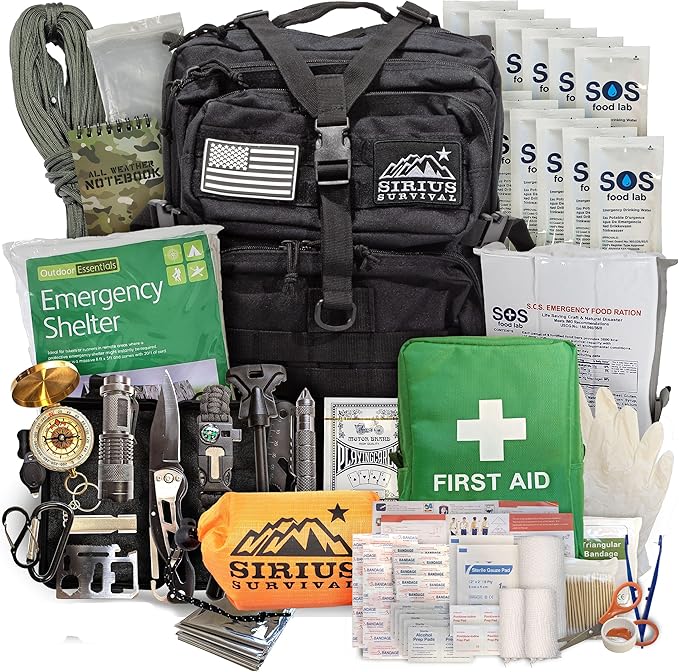
In an increasingly unpredictable world, the concept of preparedness has transitioned from a niche hobby to a vital aspect of modern living. Whether facing the vagaries of nature, the uncertainties of a power outage, or the need for a robust companion on demanding excursions, having the right gear can mean the difference between inconvenience and crisis. Among the myriad of options available, the Sirius Backpack Survival Tactical Supplies emerges as a compelling contender, promising not just storage but a comprehensive solution for those who prioritize readiness. This isn’t merely a bag; it’s a meticulously designed system, crafted to house essential survival tools and supplies, ensuring that when the unexpected strikes, you are not left wanting. Its tactical aesthetic hints at its rugged capabilities, while its internal organization speaks to a thoughtful approach to preparedness, aiming to be the silent guardian of your peace of mind.

The Sirius Backpack Survival Tactical Supplies distinguishes itself through its multifaceted approach to emergency readiness. At its core, it’s a high-capacity backpack, built from durable, water-resistant materials designed to withstand the rigors of outdoor use and the stresses of a survival scenario. The exterior boasts a MOLLE (Modular Lightweight Load-carrying Equipment) webbing system, a standard in tactical gear, allowing for extensive customization and the attachment of additional pouches, tools, and equipment. This adaptability is crucial, as individual preparedness needs vary greatly. Whether you’re a seasoned prepper, an avid hiker, or simply a concerned citizen, the ability to tailor your pack’s contents and external attachments is a significant advantage. Beyond the robust exterior, the internal design of the Sirius backpack is equally impressive. It features multiple compartments, dedicated pockets, and elastic straps, all engineered to keep your survival supplies organized, accessible, and secure. This thoughtful internal layout prevents the chaotic jumble often found in less specialized bags, ensuring that critical items can be located quickly and efficiently under duress.

Furthermore, the Sirius Backpack Survival Tactical Supplies often comes pre-stocked with a curated selection of essential survival items, transforming it from an empty vessel into an immediate preparedness solution. While specific contents can vary depending on the package purchased, these kits typically include items such as first-aid supplies, emergency blankets, water purification tablets, fire-starting tools, multi-tools, and signaling devices. This integrated approach eliminates the guesswork and time investment often associated with assembling a survival kit from scratch. The inclusion of these foundational elements means that even a novice can acquire a comprehensive starting point for their preparedness journey. The backpack itself is designed with ergonomics in mind, featuring padded shoulder straps, a sternum strap, and a padded back panel to distribute weight evenly and enhance comfort during extended wear. This attention to user comfort is paramount, as a cumbersome or uncomfortable pack can hinder mobility and morale in a survival situation.

The Advantages of Strategic Design and Comprehensive Contents

One of the most significant advantages of the Sirius Backpack Survival Tactical Supplies lies in its strategic design and the inherent comprehensiveness of its included contents. The tactical aesthetic, while appealing to many, is more than just a visual statement; it signifies a commitment to durability and functionality. The use of robust, often ballistic nylon, ensures that the pack can endure abrasion, tears, and exposure to the elements. The MOLLE webbing system is a game-changer for customization. It allows users to attach extra water bottle holders, medical pouches, flashlight holsters, or even a sleeping bag, effectively transforming the backpack into a personalized survival hub. This modularity is crucial because no two survival situations, or individuals, are identical. The ability to adapt and expand your gear is a testament to the thoughtful engineering behind the Sirius pack.

Beyond the exterior, the internal organization is a masterclass in efficient packing. Multiple zippered compartments, mesh pockets, and elastic loops ensure that every item has its designated place. This is not a trivial detail. In a high-stress scenario, fumbling through an unorganized bag can waste precious time and energy. The Sirius backpack’s layout facilitates rapid access to critical items like a flashlight, first-aid kit, or emergency rations. Furthermore, the inclusion of pre-selected survival essentials within many Sirius packages offers an unparalleled entry point into preparedness. These kits often contain the foundational elements necessary for immediate survival: a comprehensive first-aid kit, water purification methods, reliable fire starters, basic tools, and signaling devices. This curated selection removes the burden of research and procurement for beginners, providing a solid, well-rounded starting point that can be built upon over time. The emphasis on user comfort, with padded straps and back support, ensures that the pack remains manageable even when fully loaded, a crucial factor for mobility and endurance.

Potential Drawbacks and Considerations for the Savvy Preparer

While the Sirius Backpack Survival Tactical Supplies offers a compelling package, it’s important to acknowledge potential drawbacks and areas where users might seek to supplement or modify. One common consideration is the inherent variability in the quality and quantity of the included survival items. While many Sirius kits are well-curated, the specific brands and types of items included can differ. Some users may find that certain components, such as the fire starter or water filter, are of a quality that they wish to upgrade for greater reliability or longevity. This isn’t necessarily a flaw of the backpack itself, but rather a point to scrutinize when selecting a specific kit. It underscores the importance of understanding what is included and being prepared to invest in higher-grade replacements if necessary.

Another aspect to consider is the weight and bulk of a fully equipped survival backpack. Even with ergonomic design, carrying a substantial amount of gear for an extended period can be physically demanding. For individuals who are not accustomed to carrying heavy loads or who may have specific physical limitations, the weight of a fully stocked Sirius backpack could be a significant challenge. This necessitates a realistic assessment of one’s own physical capabilities and a potential adjustment of the contents to prioritize essential items over less critical ones. Furthermore, while the tactical appearance can be a benefit for some, it can also attract unwanted attention in certain environments. In situations where discretion is paramount, the overtly tactical look might not be ideal. Some users might choose to mitigate this by opting for a more subdued color scheme or by adding external elements that detract from the purely tactical aesthetic. Finally, the “survival tactical supplies” moniker can sometimes imply a higher price point, and while the value proposition is often strong, it’s always prudent to compare pricing and features with other options on the market.

Conclusion: A Solid Foundation for Preparedness

The Sirius Backpack Survival Tactical Supplies stands as a robust and intelligently designed solution for individuals seeking to enhance their preparedness. Its durable construction, extensive MOLLE webbing system for customization, and thoughtful internal organization provide a solid foundation for storing and accessing essential survival gear. The option for pre-stocked kits offers an accessible entry point for those new to preparedness, providing a comprehensive set of core survival items. This integrated approach streamlines the process of acquiring necessary supplies, allowing users to focus on learning how to utilize them effectively. The ergonomic design further ensures that the pack is comfortable to wear, a critical factor in maintaining mobility and morale during challenging situations. For those who value a proactive approach to potential emergencies, the Sirius backpack offers a reliable partner, empowering them with the confidence that they are equipped to face a wide range of eventualities.

Ultimately, the Sirius Backpack Survival Tactical Supplies is more than just a collection of gear; it represents a commitment to self-reliance and peace of mind. While astute users will recognize the need for potential upgrades or modifications based on individual needs and physical capabilities, the core offering remains exceptionally strong. It encourages a proactive mindset, transforming the abstract concept of preparedness into tangible readiness. Whether you are an experienced outdoorsman, a concerned homeowner, or simply someone who believes in the value of being ready, the Sirius backpack provides a compelling and practical pathway to achieving that goal. It’s an investment not just in a product, but in the security and well-being of yourself and your loved ones, a silent promise that when the unexpected arises, you are not caught unprepared.

Being Prepared

Let’s talk about something that often gets overlooked until it’s too late: being prepared. We all have those moments where the power goes out, or we’re venturing into the great outdoors, and suddenly, darkness descends. It’s in those instances that a reliable light source isn’t just a convenience; it’s a necessity. And that’s where the UCO Candles Lanterns Emergency Preparedness kit steps in, a seemingly simple yet remarkably effective solution for those “what if” scenarios.

Imagine this: a storm rolls in, the lights flicker and die, and your house plunges into an eerie silence. Or perhaps you’re enjoying a camping trip, and the sun dips below the horizon, leaving your campsite shrouded in darkness. In these situations, fumbling for a flashlight with dying batteries or struggling with a temperamental lantern can be incredibly frustrating. The UCO Candles Lanterns Emergency Preparedness kit offers a refreshing alternative. At its core, this is a system designed for simplicity and reliability. It’s built around the humble yet powerful beeswax candle, a source of light that has illuminated human lives for centuries. The kit typically includes a durable lantern designed to safely house these candles, providing a stable and wind-resistant light source. The beauty of this system lies in its straightforward functionality. There are no complex electronics to fail, no batteries to run out of power at the most inconvenient moment. It’s a tactile, dependable solution that works even when the grid is down. The lanterns themselves are often crafted from sturdy materials, built to withstand the rigors of outdoor use or the occasional bump during an emergency. They’re designed to be portable, making them easy to store in a go-bag, a car trunk, or a kitchen drawer, ready for immediate deployment. The included beeswax candles are a key component, offering a clean burn and a pleasant, natural scent, a welcome change from the often chemical odors of some artificial light sources.

The UCO Candles Lanterns Emergency Preparedness kit isn’t just about providing light; it’s about fostering a sense of security and readiness. When you have this kit on hand, you’re not just passively waiting for disaster to strike; you’re actively taking steps to mitigate its impact. The warm, inviting glow of a candle lantern can transform a tense, dark situation into something more manageable, even comforting. It allows you to continue with essential tasks, whether it’s reading a book, preparing a meal, or simply navigating your home safely. For campers and hikers, the UCO lantern becomes an indispensable part of their gear. It provides ambient light for the campsite, making it easier to set up tents, cook, and socialize after dark. The wind-resistant design is particularly valuable in outdoor settings, where a sudden gust can easily extinguish a lesser flame. Furthermore, the long burn time of the beeswax candles means you’re not constantly worried about replacing them. This sustained illumination is crucial during extended power outages or multi-day outdoor excursions. The kit is also incredibly user-friendly. Setting up the lantern and lighting the candle is an intuitive process, requiring no special skills or training. This ease of use is paramount in emergency situations where stress levels can be high, and complex instructions are the last thing anyone needs.

Now, let’s delve into the shining aspects of the UCO Candles Lanterns Emergency Preparedness kit. The most significant pro is undoubtedly its unwavering reliability. In a world increasingly dependent on electronics, the simplicity of a candle-powered lantern is a breath of fresh air. It requires no batteries, no charging, and no complicated troubleshooting. As long as you have the candles, you have light. This makes it an ideal choice for long-term emergency preparedness, where power grids can be down for extended periods. Another major advantage is its portability and ease of use. The lanterns are typically lightweight and compact, making them easy to store and transport. Setting them up is a breeze, even for someone with no prior experience with such devices. This accessibility is crucial for a wide range of users, from seasoned preppers to families just starting to think about emergency readiness. The warm, ambient glow provided by the beeswax candles is also a significant plus. Unlike the harsh, sterile light of some flashlights or LED lanterns, a candle lantern creates a cozy and inviting atmosphere, which can be incredibly comforting during stressful situations. Finally, the eco-friendliness of beeswax candles, compared to petroleum-based paraffin, is a bonus for environmentally conscious consumers.

However, no product is without its drawbacks, and the UCO Candles Lanterns Emergency Preparedness kit is no exception. One of the primary cons is the limited brightness compared to modern LED alternatives. While the warm glow is pleasant, it’s not designed to illuminate a large area with the intensity of a powerful flashlight. This means that for tasks requiring bright, focused light, such as detailed repairs or searching through dark corners, you might still need a supplementary light source. Another consideration is the burn time and need for refills. While beeswax candles offer a decent burn time, they are finite. This means that for extended outages, you’ll need to keep a good stock of replacement candles, which adds to the ongoing cost and storage requirements of the system. The potential for soot and smoke is also a factor, especially if the lantern isn’t properly ventilated or if the candles are not of the highest quality. While UCO’s beeswax candles are generally clean-burning, using them in enclosed spaces without adequate ventilation can lead to a build-up of soot on surfaces and a lingering smoky smell. Lastly, the fragility of the glass globe on some models can be a concern, particularly if the lantern is dropped or subjected to rough handling. While designed for durability, glass is still glass, and accidental breakage can render the lantern unusable.

In conclusion, the UCO Candles Lanterns Emergency Preparedness kit stands out as a testament to the enduring power of simple, reliable solutions. In an era where we’re constantly bombarded with new technologies, it’s refreshing to find a product that harks back to a time-tested method of illumination. The inherent simplicity of this kit is its greatest strength, offering a dependable light source that doesn’t rely on fickle electronics or finite battery life. It’s the kind of kit you can pack away and forget about until you truly need it, knowing that when that moment arrives, it will perform as expected, providing not just light, but a much-needed sense of calm and control. Whether you’re a seasoned outdoors enthusiast looking to enhance your camping experience or a homeowner building your emergency preparedness arsenal, the UCO Candles Lanterns kit offers a tangible and accessible way to ensure you’re never left in the dark.

Ultimately, the UCO Candles Lanterns Emergency Preparedness kit is more than just a source of light; it’s an investment in peace of mind. It’s about empowering yourself to face unexpected situations with confidence, knowing that you have a reliable and straightforward solution at your fingertips. While it might not replace the need for other emergency supplies, it fills a crucial gap, providing a comforting and practical form of illumination when it matters most. The conversational storytelling style of its use, from the cozy glow on a camping trip to the steady light during a power outage, underscores its practical yet comforting role in our lives. It’s a reminder that sometimes, the most effective solutions are also the most elegantly simple. So, consider adding this unassuming yet powerful kit to your preparedness plans; you might just be thankful you did when the lights go out.

Bank Collapse Survival Kit: 7 Countermoves to Keep Your Money Safe When Banks Go Bust

surviving homelessness

The Coming Wave of Bank Failures: What Analysts Aren’t Saying

There’s a strange stillness before a financial storm. You can almost feel it—like the heavy pause in the air before thunder cracks.
Banks, those marble pillars of trust, are beginning to tremble behind closed doors. They won’t tell you this, of course. The statements sound calm, the numbers look tidy, and the smiling anchors assure you that everything is “under control.”

But control is an illusion. Beneath the veneer of stability, a quiet panic is brewing—one hidden under layers of accounting jargon and regulatory optimism. Rising interest rates are squeezing liquidity. Commercial loans are faltering. The safety net the world depends on is fraying, one unseen thread at a time.


How Systemic Risk Hides in Plain Sight

It’s almost poetic, the way a system can decay in silence. You won’t see smoke. You won’t hear sirens. The danger lives in spreadsheets, in long-term bonds that quietly bleed value, in portfolios that looked rock-solid just a few months ago.

The collapse of Silicon Valley Bank and Signature Bank wasn’t some rare anomaly—it was a stress fracture in the foundation.
When one bank falters, the rest hold their breath. Because every institution, no matter how “separate,” is connected by invisible lines of exposure and trust. Once that trust breaks, panic moves at the speed of a tap on a phone screen.

In a digital world, a bank run doesn’t need a line of people at the teller window—it needs a single headline and a wave of withdrawals.


The Psychology of Financial Denial

Humans have a strange relationship with danger. We see the signs, we know the stories—but our brains protect us from panic by whispering: “It won’t happen to me.”

That’s financial denial. The same quiet resistance that kept people invested in doomed funds, or savings trapped in failing banks, because the alternative—taking action—felt too heavy, too real.

But awareness is freedom. Once you confront the uncomfortable truth that banks can and do fail, you stop being a spectator and start being a strategist. The shift is subtle but powerful: from hope to preparation, from passive to protected.


The 7 Countermoves to Protect Your Wealth

Here’s where the calm ends and the clarity begins. These are not abstract theories—they’re concrete, time-tested moves that turn chaos into opportunity. Think of them as financial survival instincts, recalibrated for the modern world.


Step 1: Split Deposits Using FDIC Coverage Bands

Most people believe their money is “insured.” Few understand what that actually means.
FDIC insurance covers up to $250,000 per depositor, per institution, per ownership category. That doesn’t mean each account. It means each relationship with a bank.

If you’ve got multiple accounts under one name at a single institution, you may already be over the limit—and you wouldn’t know until the doors lock.

So diversify.
Open accounts across different banks, or re-title accounts under joint ownerships or trusts to expand your insured coverage. The FDIC’s online calculator (“EDIE”) is a quiet genius—use it.
This isn’t paranoia. It’s precision. You’re not running from risk—you’re rerouting it.


Step 2: Build an Offline Emergency Fund

When a bank freezes withdrawals, your digital balance becomes an illusion. The money’s still there, technically, but you can’t touch it.

You need cash that breathes real air—money you can hold, count, and trade if systems blink out.

Start with a month’s worth of expenses. Break it into small bills. Store it securely—fireproof safe, hidden box, or another location you trust completely.
You’ll be shocked at the peace of mind it gives you. That quiet comfort of knowing that if screens go dark, you still have something real.


Step 3: Shift Assets into Tangible Stores of Value

Paper burns. Data corrupts. But metal endures.
Gold and silver have been humanity’s fallback for five thousand years for a reason—they don’t rely on anyone’s promise.

Consider shifting a portion (10–20%) of your wealth into physical assets: bullion, coins, or other tangible investments like land or energy equipment. Don’t chase trends—think durability.

Holding gold isn’t about hoarding. It’s about anchoring. It’s a psychological stabilizer in a digital storm.


Step 4: Use Alternative Banking Institutions

If one branch of the system is infected, don’t stand under the same roof.
Credit unions and community banks are built differently. They operate on member trust, smaller risk pools, and stronger local ties.

Open an account with one. Move part of your direct deposit there. Diversify not just your assets—but your access.
If a national bank goes dark, a local institution might still be operational. That’s the beauty of redundancy—it’s not flashy, but it’s what keeps the lights on.


Step 5: Prepare Payment Redundancies

Imagine waking up and your debit card declines everywhere. Not because you’re broke—but because the network froze.

That’s the new definition of helpless.
The fix? Build multiple payment rails.

Have peer-to-peer apps ready (PayPal, Venmo, Cash App). Keep a prepaid debit card loaded and tucked away. Consider stablecoin wallets if you’re crypto-comfortable.
And don’t underestimate barter tokens—silver rounds, fuel vouchers, or even skill-based trade items. The goal isn’t to play doomsday—it’s to ensure continuity when convenience fails.


Step 6: Secure Access to Digital Accounts Offline

The most common phrase in a crisis: “I can’t log in.”
It happens fast—authentication servers crash, 2FA texts won’t send, or your phone dies at the worst possible moment.

Print. Encrypt. Backup.
Store recovery codes and credentials offline. Keep an encrypted USB or paper backup sealed somewhere secure. Have a manual copy of your key financial contacts and account numbers.
When tech betrays you, paper becomes power.


Step 7: Stay Informed with Financial “Early Warning” Sources

The first people to move their money are never the ones watching cable news.
They’re reading between the lines—tracking the FDIC’s problem bank lists, credit default swaps, and stress test results buried in financial filings.

You don’t need to be an analyst to stay ahead. Follow independent economists, financial risk newsletters, and community alerts.
Information is speed. And in any collapse, speed is survival.


How to Build an Anti-Collapse Financial Network

You can’t go it alone. You’re only as strong as the people around you.


Group Strategies for Communities and Families

Start local.
Form trust circles with people who share your mindset—friends, relatives, or neighbors who value preparedness over panic.
Each person brings something: cash reserves, food, tools, communication equipment. Together, you create a collective firewall against disruption.

Money moves in networks, and resilience does too.


Barter and Local Resilience as Financial Continuity

When banks fail, communities restart economies from the ground up.
Bartering isn’t medieval—it’s modern self-sufficiency.

Stock up on goods with universal utility—fuel, medicine, tools, canned food, water filters. Build skills that matter: repair, grow, cook, trade.
When systems collapse, you’re not broke—you’re equipped.


Beyond Fear—Turning Uncertainty into Financial Power

Fear is a compass. It points to where you’re unprepared. Once you face it, it loses its grip.


The Mindset of Antifragile Savers

Some crumble when systems shake. Others adapt—and strengthen.
That’s the core of antifragility: using volatility as fuel.

Every countermeasure you take—splitting accounts, storing cash, diversifying holdings—reclaims power from uncertainty. You stop fearing failure and start using it as a design constraint.
This isn’t survivalism. It’s financial evolution.


How Crisis Investors Use Chaos to Grow Wealth

Crisis is a transfer mechanism. It moves wealth from the reactive to the ready.

In every collapse, some freeze while others act. The ones who kept liquidity—who prepared instead of panicked—buy assets at pennies on the dollar when the market hits despair.

They don’t wait for stability. They build it.
That’s what this whole strategy is about—not just surviving the collapse, but mastering it.


Questions Everyone’s Asking Right Now

Is my money really safe in a big bank?
Only up to your insured limit. The size of a bank doesn’t guarantee safety—it just amplifies exposure. Split deposits. Always.

Should I withdraw everything and hold cash?
No. Keep what you need accessible but balanced with diversified storage. Cash is for access, not investment.

Do precious metals still matter in a digital economy?
Absolutely. Gold and silver don’t crash when servers do. They’re immune to algorithms and electricity.

What’s one move I should make today?
Audit your accounts. Find your exposure. Open a credit union account tomorrow. The act of doing something shifts your psychology from fear to control.

Origin-Joy 5 Pack Military Tactical Pens – Tungsten Steel EDC Self-Defense Pen Set with 20 Ballpoint Refills – Discreet Protection, Heavy-Duty Reliability, Everyday Carry Survival Tool


🟦 BULLET POINTS (FEATURES + THEMATIC EDGE)

Looks Like a Pen. Performs Like a Tool.
Crafted from ultra-durable tungsten steel, each pen is built to deliver discreet, dependable protection when you need it most.

MacGyver-Approved Multifunctionality
Write, defend, and break glass in emergencies — these pens do more with less, just like the icons of the ’80s and ’90s we grew up admiring.

Built for Real-World Readiness
Compact enough to carry daily, strong enough to count on in high-stakes moments. Quiet strength meets tactical confidence.

Smooth Writing. Serious Backup.
Includes 20 high-quality ink refills — so your EDC doesn’t stop working when the writing gets tough.

The ThinkPad of Tactical Gear
No flash, all function. Designed for professionals, first responders, and anyone who values reliability without the noise.


🟦 PRODUCT DESCRIPTION (NARRATIVE-DRIVEN + SEO SMART)

🔒 Stay Ready. Stay Under the Radar.

The Origin-Joy Tactical Pen Set is not just a writing tool — it’s a mindset. For those who know that real strength doesn’t shout, it just shows up when needed.

Inspired by the quiet resilience of Gen X heroes — from Jason Bourne’s calm precision to MacGyver’s everyday genius — this 5-pack of tungsten steel pens brings confidence and capability to your pocket.

Whether you’re commuting, traveling, or navigating uncertain environments, each pen offers:

  • Rugged tungsten steel build
  • Emergency glass breaker tip
  • Smooth ballpoint writing
  • 20 ink refills for long-term use
  • Subtle, professional design

Perfect for gifting, prepping, or everyday carry. Because in a world full of noise, strength is silent.


🟦 A+ CONTENT / ENHANCED BRAND CONTENT HEADLINES (if applicable):

  • Hidden Strength, Always Ready
  • Built for the Real World, Not Just the Boardroom
  • Inspired by Legends: Bourne. MacGyver. You.
  • 5 Pens. 20 Refills. 1 Mission: Be Prepared.

Early Winter Preps for Your Vehicle: A No-Nonsense, Slightly Rambling Guide to Not Freezing on the Side of the Road

You know that first cold morning of the season—the one where you sit in your car, turn the key, and nothing happens but a sad little click? Or maybe your windshield is frosted solid, and you’re scraping away with a loyalty card from the gas station because you forgot the ice scraper. Yeah. Winter sneaks up like that annoying neighbor who borrows your snowblower and never returns it.

But here’s the thing: it doesn’t have to. With just a little bit of prep work now—before the snow falls and your tires are basically skating on black ice—you can set yourself up for a winter that’s, well, survivable. Maybe even comfortable.

So grab a cup of coffee (or hot cocoa, if you’re fancy), and let’s go through everything you need to do to winter-proof your vehicle.


Why Winter Prepping Actually Matters (More Than You Think)

Look, cars hate the cold almost as much as you do. Fluids thicken, rubber stiffens, batteries quit, and roads turn into slip-n-slides. What’s worse, breakdowns don’t politely happen in your heated garage—they happen on the side of the highway in the middle of a snowstorm while your phone battery is at 3%.

The goal here isn’t perfection. It’s prevention. A little maintenance can save you from expensive repairs, dangerous situations, and, honestly, a whole lot of stress.


Step 1: Don’t Let Your Battery Ghost You

You know how your phone battery drains faster in the cold? Same thing with your car battery. Except you can’t just plug your car into the wall at Starbucks (well, unless it’s an EV, but that’s another rabbit hole).

  • Test your battery at a local shop. Many do it for free.
  • If it’s over 3 years old, replace it. Yes, even if “it’s still fine.” Winter doesn’t care.
  • Clean the corrosion off the terminals—it’s that green, crusty stuff that looks like your battery just aged 100 years.

And hey, toss a portable jump starter in the trunk. Trust me: the day you need it, you’ll thank past-you for being such a genius.


Step 2: Tires Aren’t Optional Ice Skates

Driving on bald tires in the snow? That’s like wearing flip-flops to a hockey game—you’re not going to win.

  • Check tread depth: Stick a penny in the grooves. If Lincoln’s head isn’t partly covered, you need new tires.
  • Pressure matters: Cold weather makes tire pressure drop, sometimes dangerously low. Check it monthly.
  • Consider winter tires: They’re not just marketing hype. The rubber is softer, so they grip better in the cold.

Think of tires as your shoes. Would you wear smooth-bottomed dress shoes to hike through snow? Nope. Same logic applies here.


Step 3: Fluids—Because Cars Get Thirsty Too

Your car is basically a coffee-drinking office worker—it needs the right fluids to function.

  • Coolant/Antifreeze: Make sure it’s a 50/50 mix, or else it might freeze solid.
  • Oil: In colder climates, your car might need thinner oil. Check the manual.
  • Windshield washer fluid: Regular stuff freezes. Buy the winter-grade blue stuff. (And keep an extra jug in the trunk, because salty slush is windshield paint.)

Step 4: Wipers, Visibility, and Not Driving Blindfolded

Imagine trying to watch Netflix with a screen smeared in peanut butter—that’s what bad wipers are like in a snowstorm.

  • Replace them before the snow starts falling.
  • Consider winter wipers. They’re sturdier and don’t freeze as easily.
  • Check your defrosters and heater. Don’t wait for the first storm to discover they’re busted.

Because honestly, if you can’t see, it doesn’t matter how good your tires are.


Step 5: Build an Emergency Kit (Future You Will Hug Present You)

Let’s be real: most of us think, “Eh, it won’t happen to me.” Until it does. Snow drifts don’t discriminate.

Here’s your starter kit:

  • Blanket, gloves, and hat (the kind you won’t mind ruining).
  • Ice scraper + snow brush. Not your credit card.
  • Flashlight (with fresh batteries).
  • Snacks. Seriously, keep a couple of granola bars in there.
  • A small shovel. Collapsible ones are cheap.
  • Kitty litter or sand for traction.

It’s not glamorous, but neither is sitting in your car for four hours waiting for a tow truck while your toes go numb.


Step 6: Fuel & Exhaust Checks

Quick tip: keep your gas tank at least half full all winter. Not only does it prevent fuel lines from freezing, but it also means you’ve got heat if you get stuck in traffic during a blizzard.

And before starting your car after a heavy snow, check the exhaust pipe. If it’s blocked by snow or ice, carbon monoxide can back up into the cabin. Silent, deadly, not worth the risk.


Step 7: Lights, Electronics, and “Seeing Is Living”

Shorter days = more driving in the dark.

  • Check every exterior light—headlights, brake lights, turn signals.
  • Carry spare bulbs. They’re small, cheap, and can prevent accidents.
  • Make sure you’ve got a working phone charger in the car. Because being stranded with a dead phone? Nightmare fuel.

Step 8: Protect the Exterior (Because Salt Is Basically Acid)

Winter isn’t just tough on engines—it eats at the body too.

  • Get a good coat of wax on before the snow hits. Think of it like chapstick for your car.
  • Wash regularly in winter. Yes, even when it’s freezing. Focus on the undercarriage.
  • Spray or rub silicone lubricant on door seals to stop them from freezing shut.

Nothing worse than yanking on your frozen door at 7 a.m. and realizing it’s glued shut by Mother Nature.


Step 9: The “Unexpected Happens” Plan

Winter doesn’t care about your schedule. So…

  • Tell someone your route before long drives.
  • Check weather reports.
  • Download roadside assistance apps (AAA, insurance-based apps, etc.).

Planning takes five minutes. Being stranded takes hours.


Bonus Section: Stuff People Forget Every. Single. Year.

  • Floor mats: Swap out the nice ones for rubber mats. Easier to clean and keeps your carpet from smelling like wet dog.
  • Spare tire: Check it! A flat spare is the definition of useless.
  • Gloves for gas pumping: Because grabbing that frozen nozzle with bare hands? Instant regret.
  • Sunglasses: Snow glare is real. Keep a pair in the car.

Winter Prepping by Vehicle Type (Because Not All Cars Are Created Equal)

  • SUV/Trucks: Great in snow, but don’t get cocky. They slide too. Keep the weight balanced—maybe throw a bag of sand in the bed.
  • Sedans: Lower clearance = easier to get stuck. Don’t try to plow through snowbanks.
  • Electric Vehicles: Cold zaps range. Plan for more frequent charging. Keep the charging port free of snow/ice.
  • Classics/Older Cars: They hate the cold. Store them if possible, or at least baby them with regular starts and fluid checks.

Wrapping It All Up: Winter Is Coming… For Your Car

At the end of the day, early winter prep isn’t about turning you into a mechanic. It’s about avoiding those “I should’ve listened” moments when your car lets you down in the worst possible conditions.

Yes, it takes a weekend. Yes, you’ll probably get a little cold while checking your tire pressure. But would you rather do it now, or at 6 a.m. on a January morning when your fingers are numb and your breath looks like smoke signals?

Take care of your vehicle, and it’ll take care of you. That’s the deal.

Adrenaline Forges the Map of Readiness: How Tactical Gear Rewires the Way You See the World

You don’t put on a tactical vest just to carry tools.
You put it on because the world changes the moment you strap in.

That simple act—buckling, tightening, adjusting—does something most people never realize: it alters the way your brain processes reality. The vest is not fabric. It’s not mesh. It’s a trigger. A signal to the nervous system that says: the game has shifted, and you’re already on alert.

And here’s the part that should stop you in your tracks—your body listens.


The Body Doesn’t Wait for the Threat

Most people believe readiness begins when danger shows its face. Wrong.
Readiness begins the moment your body believes the possibility is real.

Biologically, strapping in increases sympathetic tone. Norepinephrine floods out of the locus coeruleus, one of the brain’s primal alert centers. In plain English? Your body steps on the gas pedal before a threat even appears.

Heart rate calibrates. Breathing shifts into a shallower rhythm designed for quick bursts of energy. Muscles prime themselves for acceleration or resistance.

The tactical vest is not neutral—it’s a message. A physical code that unlocks your body’s combat software before the fight even starts.


Your Attention Map Gets Redrawn

Psychology tells us this shift is not subtle.
Once the vest is on, your attentional system recalibrates.

Instead of scanning the environment for comfort cues—the smile, the open space, the safe sound—your brain defaults to threat surveillance. The amygdala, your fear-processing hub, is no longer passive. It’s tuned to catch the flicker of movement in the periphery, the shadow that doesn’t match, the detail others dismiss.

Every object becomes potential. Every sound acquires weight. The world doesn’t blur—it sharpens. And once you experience that shift, going back to “normal” feels like leaving your guard down.

This is where readiness training becomes essential. Without it, vigilance becomes noise. With it, vigilance becomes clarity.


Readiness Is Not Just a State—It’s a Filter

Philosophically, the implications run deeper than gear or survival.
Wearing tactical readiness alters reality itself.

The world doesn’t appear as it is—it appears as your nervous system is tuned to perceive it. Strap on the vest and reality reshapes around vigilance. Take it off and the softness returns. Same world, different filter.

The gear is not simply protecting you from threats—it’s changing the lens through which you meet existence. What you notice. What you trust. What you prepare for.

And this raises the bigger question: if adrenaline readiness can rewrite reality so quickly, what other lenses are shaping what you believe is “real”?


The Psychology of Control in a Chaotic World

Why does this matter? Because chaos is constant. Whether you’re preparing for a literal threat or navigating daily uncertainty, your nervous system craves signals of control.

Survival gear provides one of the most powerful cues. It says: you are not passive, you are prepared.

That message ripples outward. It boosts confidence. It stabilizes breathing. It shifts posture into assertive readiness. The nervous system doesn’t just hear it—it believes it.

And when the nervous system believes, performance follows.


The Hidden Cost of Inaction

Here’s the trap most people fall into: waiting.

They think readiness is something you summon in the moment. But biology says otherwise. Without the embodied cue, the system lags. Reaction is slower. Attention is scattered. The amygdala is caught off guard instead of pre-loaded.

Every millisecond counts when threat is real. Those who practice preparedness mindset—who strap in not just for the weight but for the neurological advantage—move through the world with a baseline edge. Those who don’t? They gamble with delay.

And delay is the most expensive mistake you can make.


Gear as Identity, Not Accessory

It’s easy to see tactical gear as utility.
Pockets, holsters, belts. Storage and access.

But that misses the deeper truth. Gear is identity. It fuses with the nervous system’s definition of self. Wear it often enough, and your proprioceptive map—the brain’s sense of where your body begins and ends—expands to include it.

You don’t carry the vest. The vest carries you.
It becomes part of the self you project, the self you feel, the self you trust when the world tilts unstable.

This isn’t just about survival. It’s about ownership of reality.


The Practical Edge: Why This Matters Now

In today’s environment—uncertainty, volatility, disruption—readiness is not optional. It’s the new baseline.

Every decision you make, from career to crisis, is influenced by the state your nervous system is in. Calm systems see opportunities. Alert systems catch threats. Neutral systems get blindsided.

By understanding how tactical vests and survival gear rewire the body, you gain a tactical advantage most people never think about: control over your perception itself. That is the real battlefield. And those who control perception control outcome.


The Takeaway: Readiness Is a Choice

The act of strapping in is more than habit. It’s ritual. It’s neurobiology. It’s philosophy made flesh.

You can drift through life unprepared, letting your nervous system lag behind reality. Or you can engage the filter of readiness—gear, training, awareness—that keeps you two steps ahead.

Readiness is not waiting for the world to shift.
Readiness is shifting first.


Your Next Move

Don’t treat your tactical vest as an accessory. Treat it as the trigger that recalibrates your biology, psychology, and philosophy of self.

The cost of inaction is delay. The reward of readiness is control.

The question isn’t whether the world will test you—it’s whether you’ll be ready when it does.
And readiness, like the vest, is something you put on before the moment arrives.


Final Word: Adrenaline forges the map of readiness. But you decide if the map is drawn in advance—or scribbled in panic after the threat has already arrived.


SEO Tags