Adrenaline Forges the Map of Readiness: How Tactical Gear Rewires the Way You See the World

You don’t put on a tactical vest just to carry tools.
You put it on because the world changes the moment you strap in.

That simple act—buckling, tightening, adjusting—does something most people never realize: it alters the way your brain processes reality. The vest is not fabric. It’s not mesh. It’s a trigger. A signal to the nervous system that says: the game has shifted, and you’re already on alert.

And here’s the part that should stop you in your tracks—your body listens.


The Body Doesn’t Wait for the Threat

Most people believe readiness begins when danger shows its face. Wrong.
Readiness begins the moment your body believes the possibility is real.

Biologically, strapping in increases sympathetic tone. Norepinephrine floods out of the locus coeruleus, one of the brain’s primal alert centers. In plain English? Your body steps on the gas pedal before a threat even appears.

Heart rate calibrates. Breathing shifts into a shallower rhythm designed for quick bursts of energy. Muscles prime themselves for acceleration or resistance.

The tactical vest is not neutral—it’s a message. A physical code that unlocks your body’s combat software before the fight even starts.


Your Attention Map Gets Redrawn

Psychology tells us this shift is not subtle.
Once the vest is on, your attentional system recalibrates.

Instead of scanning the environment for comfort cues—the smile, the open space, the safe sound—your brain defaults to threat surveillance. The amygdala, your fear-processing hub, is no longer passive. It’s tuned to catch the flicker of movement in the periphery, the shadow that doesn’t match, the detail others dismiss.

Every object becomes potential. Every sound acquires weight. The world doesn’t blur—it sharpens. And once you experience that shift, going back to “normal” feels like leaving your guard down.

This is where readiness training becomes essential. Without it, vigilance becomes noise. With it, vigilance becomes clarity.


Readiness Is Not Just a State—It’s a Filter

Philosophically, the implications run deeper than gear or survival.
Wearing tactical readiness alters reality itself.

The world doesn’t appear as it is—it appears as your nervous system is tuned to perceive it. Strap on the vest and reality reshapes around vigilance. Take it off and the softness returns. Same world, different filter.

The gear is not simply protecting you from threats—it’s changing the lens through which you meet existence. What you notice. What you trust. What you prepare for.

And this raises the bigger question: if adrenaline readiness can rewrite reality so quickly, what other lenses are shaping what you believe is “real”?


The Psychology of Control in a Chaotic World

Why does this matter? Because chaos is constant. Whether you’re preparing for a literal threat or navigating daily uncertainty, your nervous system craves signals of control.

Survival gear provides one of the most powerful cues. It says: you are not passive, you are prepared.

That message ripples outward. It boosts confidence. It stabilizes breathing. It shifts posture into assertive readiness. The nervous system doesn’t just hear it—it believes it.

And when the nervous system believes, performance follows.


The Hidden Cost of Inaction

Here’s the trap most people fall into: waiting.

They think readiness is something you summon in the moment. But biology says otherwise. Without the embodied cue, the system lags. Reaction is slower. Attention is scattered. The amygdala is caught off guard instead of pre-loaded.

Every millisecond counts when threat is real. Those who practice preparedness mindset—who strap in not just for the weight but for the neurological advantage—move through the world with a baseline edge. Those who don’t? They gamble with delay.

And delay is the most expensive mistake you can make.


Gear as Identity, Not Accessory

It’s easy to see tactical gear as utility.
Pockets, holsters, belts. Storage and access.

But that misses the deeper truth. Gear is identity. It fuses with the nervous system’s definition of self. Wear it often enough, and your proprioceptive map—the brain’s sense of where your body begins and ends—expands to include it.

You don’t carry the vest. The vest carries you.
It becomes part of the self you project, the self you feel, the self you trust when the world tilts unstable.

This isn’t just about survival. It’s about ownership of reality.


The Practical Edge: Why This Matters Now

In today’s environment—uncertainty, volatility, disruption—readiness is not optional. It’s the new baseline.

Every decision you make, from career to crisis, is influenced by the state your nervous system is in. Calm systems see opportunities. Alert systems catch threats. Neutral systems get blindsided.

By understanding how tactical vests and survival gear rewire the body, you gain a tactical advantage most people never think about: control over your perception itself. That is the real battlefield. And those who control perception control outcome.


The Takeaway: Readiness Is a Choice

The act of strapping in is more than habit. It’s ritual. It’s neurobiology. It’s philosophy made flesh.

You can drift through life unprepared, letting your nervous system lag behind reality. Or you can engage the filter of readiness—gear, training, awareness—that keeps you two steps ahead.

Readiness is not waiting for the world to shift.
Readiness is shifting first.


Your Next Move

Don’t treat your tactical vest as an accessory. Treat it as the trigger that recalibrates your biology, psychology, and philosophy of self.

The cost of inaction is delay. The reward of readiness is control.

The question isn’t whether the world will test you—it’s whether you’ll be ready when it does.
And readiness, like the vest, is something you put on before the moment arrives.


Final Word: Adrenaline forges the map of readiness. But you decide if the map is drawn in advance—or scribbled in panic after the threat has already arrived.


SEO Tags

Stress Rewrites Reality Before Bullets Do

When societies fracture, it’s not the food lines that fail first—it’s the meaning lines.

We like to think collapse begins with empty shelves. But history and neuroscience point to something darker: our perception of reality itself becomes the first casualty. Before bodies fall, belief systems warp. Before bullets fly, the brain starts rewriting the script.

This isn’t abstract theory. It’s biology. And if you understand it, you can protect yourself from becoming trapped inside a false world when stress fractures the real one.


The Invisible War Inside Your Head

Stress is not just “feeling tense.” It is a full-scale neurochemical assault on how you interpret the world.

When the HPA axis floods your body with cortisol and the locus coeruleus surges noradrenaline, your brain’s filters shift. The thalamus—the gatekeeper of sensory input—stops letting everything through. Instead, it favors threat signals.

Your cortex, which usually updates predictions based on new evidence, begins to lean on old beliefs instead. Your hippocampus, desperate for safety, fills in gaps with familiar patterns.

Translation? Under stress, you stop seeing what is and start seeing what feels consistent with your fears.


Why False Stories Feel Safer Than True Ones

Here’s the paradox: the truth is often messy, incomplete, ambiguous. In stable times, your brain can handle that. In crisis, ambiguity feels like death.

So your nervous system cheats. It grabs a narrative—any narrative—that offers coherence. Even if it’s false.

This is why conspiracy theories bloom in unstable times. They’re not madness; they’re stress relief mechanisms. Believing “someone is behind it” feels safer than “no one is in control.”

Every new crisis becomes a magnet for tribal explanations. “They did this.” “It’s all part of the plan.” False clarity beats unbearable uncertainty.


The Rise of Epistemic Tribes

When groups fracture under pressure, people don’t just choose different sides. They build entire reality ecosystems.

Each tribe has its own “trusted receptors” for information—whether that’s news outlets, influencers, or encrypted chats. Within that sphere, facts are curated not by accuracy but by loyalty.

Step outside, and you’re dismissed as blind or brainwashed. Step inside, and you gain belonging—but at the cost of truth.

This isn’t weakness. It’s psychology. Stress makes the social cost of belonging outweigh the personal cost of being wrong.


The Most Dangerous Scarcity Isn’t Food—It’s Perspective

Civil unravelings always spotlight food shortages, gas lines, or broken infrastructure. But neuroscience says: the true scarcity begins earlier.

It’s the scarcity of shared meaning.

When communities no longer agree on what’s real, every conversation becomes a border crossing. Trust erodes, not because people suddenly turn evil, but because their nervous systems are protecting them with competing fictions.

And once reality itself fragments, cooperation dies. That’s when collapse becomes irreversible.


Reality Isn’t Found—It’s Trained

Here’s the liberating shift: truth is not a possession. It’s a discipline.

If stress naturally tilts your brain toward certainty over accuracy, then survival demands rituals that slow perception down.

  • Sleep as a weapon: Sleep deprivation supercharges cortisol and locks you into paranoid loops. Protect your rest like food.
  • Cross-checking circles: Build small groups where disagreement is welcomed, not punished. They are anchors against epistemic drift.
  • Adversarial collaboration: Seek structured debates where people defend the side they oppose. It trains the brain to process ambiguity without collapsing into certainty.

These are not luxuries. They are neural inoculations against reality fracture.


Why This Matters Now

We live in a time of rolling crises—economic shocks, digital disinformation, political division. The stress load is already here. Which means the distortion of perception has already begun.

If you wait until bullets fly to protect your reality, you’re too late. The invisible war has already started. And the side that learns to guard attention, regulate stress, and train truth-seeking rituals will own the future.


The Choice in Front of You

You can either let your nervous system drag you into a comforting illusion—or you can practice reality as a skill.

One path leads to belonging at the price of blindness. The other leads to clarity, resilience, and leadership in times when most people are drowning in noise.

Civil unraveling is not inevitable. But if it comes, the ones who hold their grip on reality will shape what happens after.

The question is simple: when stress rewrites reality, will you train yourself to see what is—or will you cling to what merely feels safe?


Action Step

Start small. Tonight, before bed, write down one belief you hold that feels absolutely certain. Then tomorrow, find three credible sources that disagree with it. Not to abandon your belief—but to strengthen your ability to hold tension without collapsing into false clarity.

That one act is more powerful than any weapon. Because meaning collapses before food does—and once you lose the supply chain of truth, everything else follows.


✅ Bookmark this article.
✅ Share it with someone who needs to see beyond their stress lens.
✅ And above all—protect your mind first. Because reality is not a given. It’s a practice.


10 Practical Survival Tips That Could Save Your Life When Disaster Strikes

When modern comfort suddenly disappears—no electricity, no running water, no quick call for help—your survival depends on what you know and how prepared you are. Every year, thousands of people face unexpected emergencies, from wilderness accidents to natural disasters. The difference between panic and survival often comes down to a handful of practical skills. With these survival tips and emergency preparedness strategies, you can increase your chances of making it through any crisis.

1. Learn to Find and Purify Water

You can survive weeks without food, but only three days without water. To ensure wilderness survival, practice finding fresh sources:

  • Collect rainwater using a tarp, poncho, or leaves.
  • Use portable water filters or purification tablets.
  • Boil water for at least one minute to kill pathogens (longer at higher altitudes).

2. Master Fire-Starting Techniques

Fire is one of the most important survival skills. It provides warmth, light, safety, and the means to cook food and purify water. Carry waterproof matches, a magnesium striker, or a windproof lighter. If tools fail, dry grass, cotton, or pine sap can serve as tinder.

3. Build a Shelter Quickly

In emergencies, exposure is just as dangerous as dehydration. Shelter protects you from hypothermia, sunburn, or rainstorms. Use:

  • Branches and leaves for insulation.
  • Tarps, ponchos, or emergency blankets for waterproofing.
  • Natural features like cave overhangs or tree roots as a base.

4. Stockpile Multi-Use Gear

When preparing a bug-out bag or survival kit, prioritize multipurpose gear:

  • A knife for food prep, defense, or cutting rope.
  • Paracord for tying shelters, making traps, or splinting limbs.
  • A bandana to filter water, cover the head, or stop bleeding.

5. Know Basic First Aid

In survival situations, medical care may not be available. Learn how to:

  • Stop bleeding with pressure or a makeshift tourniquet.
  • Treat burns, cuts, and insect bites.
  • Recognize early signs of hypothermia and dehydration.

6. Signal for Help

If stranded, attracting attention saves lives. Effective rescue survival tips include:

  • Using mirrors, whistles, or strobe lights.
  • Creating ground signals visible from the air.
  • Building daytime fires with green leaves for smoky signals.

7. Stay Calm and Conserve Energy

Survival psychology is as important as physical skill. Avoid panic—sit down, breathe, and assess your options logically. Conserve calories by limiting unnecessary movement until you have a strategy.

8. Learn Navigation Without Technology

When GPS and phones fail, traditional navigation helps:

  • Use the sun’s position or stars like the North Star.
  • Rivers and valleys often lead toward civilization.
  • Carry a compass and map as reliable tools.

9. Forage Wisely and Avoid Poisonous Foods

Knowing what’s safe to eat is crucial. Understand your local environment and edible species. As a rule, avoid:

  • Plants with milky sap.
  • Leaves in groups of three.
  • Berries with unusual colors or odors.

Fishing, trapping, and gathering nuts are safer food-survival methods than guessing at wild plants.

10. Prepare Before Disaster Happens

The best survival tip is preparation. Keep a go-bag in your home, car, or workplace with:

  • Long-lasting emergency food
  • Portable water filter
  • Flashlight and batteries
  • Emergency blanket
  • Basic first aid supplies

Final Thought

Survival isn’t about luck—it’s about readiness, training, and resilience. These emergency preparedness tips will help keep you safe whether you face a wilderness accident, a natural disaster, or an urban crisis. The more knowledge you have now, the better your chances of survival later.

How Much Insurance do You Really Need?

When considering how much insurance you need to cover losses from a natural disaster, a good rule of thumb is to ensure your coverage is sufficient to rebuild your home and replace all of your personal belongings. Standard homeowners and renters insurance often have significant gaps in coverage for many natural disasters, so you’ll likely need to purchase separate policies or add-on endorsements. The specific amount of coverage you need is a personal calculation based on your individual risk factors and the value of your assets.


Understanding Coverage Gaps: What Your Standard Policy Misses 📄

Most standard homeowners insurance and renters insurance policies protect against a range of events, including fire, windstorms, lightning, and hail. However, they almost always exclude damage from natural disasters like floods and earthquakes. This is a critical distinction that many people don’t realize until it’s too late.

  • Floods: This is the most common and costly natural disaster in the U.S. Flood damage from overflowing rivers, storm surges, or heavy rainfall is not covered by a standard homeowners policy. You must buy a separate flood insurance policy, often through the National Flood Insurance Program (NFIP) or a private insurer.
  • Earthquakes: Damage from earthquakes, landslides, and mudflows is also excluded from standard policies. If you live in a seismically active area, you need to purchase a separate earthquake insurance policy.

How to Calculate the Right Amount of Coverage 🤔

Determining the right amount of coverage involves more than just looking at your home’s market value. Here’s a breakdown of what to consider for both your home and your belongings:

Homeowners Insurance for a Total Loss

Your home’s insurance should cover the replacement cost of rebuilding your house from the ground up, not just its market value. The cost of labor and materials for construction can fluctuate, and you want to be sure you can afford to rebuild exactly what you had.

  • Replacement Cost Value (RCV): This is the ideal type of coverage. It pays the full cost to repair or replace your home with a new one of similar quality, without factoring in depreciation.
  • Actual Cash Value (ACV): This coverage pays the replacement cost minus depreciation. This means you won’t receive enough to fully rebuild your home. Avoid this if possible.
  • Extended or Guaranteed Replacement Cost: Some policies offer this extra protection, which can pay an additional percentage (e.g., 20-25%) over your policy’s limit if rebuilding costs surge after a major disaster.

To calculate your needed dwelling coverage, consider getting a professional home appraisal or using an online calculator. You’ll need to know details about your home’s construction materials, square footage, and special features.

Protecting Your Personal Property

Your personal belongings—everything from furniture and electronics to clothing and appliances—should also be insured. Most homeowners and renters policies provide coverage for personal property, but you need to make sure the limits are high enough.

  • Create a Home Inventory: The best way to determine how much coverage you need is to make a detailed list of your possessions. Take photos and videos, and keep receipts. This documentation is crucial for a smooth claims process.
  • Check Your Limits: Most policies offer personal property coverage as a percentage of your dwelling coverage (typically 50-70%). Make sure this amount is adequate to replace everything you own.

Key Factors That Affect Your Premium and Coverage 📈

Several factors influence the cost and amount of your natural disaster insurance. Understanding these can help you find a more affordable and comprehensive policy.

  • Location: Living in a high-risk area for a specific disaster (e.g., coastal regions for hurricanes, California for earthquakes) will significantly increase your premiums and may require specialized policies.
  • Building Materials and Codes: Homes built with disaster-resistant materials or those that meet stricter building codes may qualify for lower rates.
  • Deductibles: The deductible is the amount you pay out-of-pocket before your insurance kicks in. A higher deductible will lower your premium, but you must be able to afford it in a crisis.
  • Credit Score: Insurers use credit-based insurance scores to help determine premiums. A good score can lead to lower rates.
  • Bundling Policies: You can often save money by bundling your home insurance with other policies, like auto or flood insurance, from the same provider.

By carefully assessing your risks, valuing your assets, and understanding your policy’s limitations, you can build a comprehensive insurance plan that provides true financial security when a natural disaster strikes. Sources

Jackery Generator Portable Off Grid Emergency: A Comprehensive Review

In an age where energy independence and sustainability are becoming increasingly crucial, the Jackery Generator Portable Off Grid Emergency power station has emerged as a reliable solution for outdoor enthusiasts, emergency preparedness, and even everyday use. This innovative generator is designed to provide clean, portable power in a compact form, making it an ideal companion for camping trips, road adventures, or as a backup power source during outages. With its sleek design and user-friendly features, the Jackery Generator has garnered attention from both casual users and serious adventurers alike. In this article, we will explore the key features of the Jackery Generator, weigh its pros and cons, and ultimately determine whether it lives up to the hype.

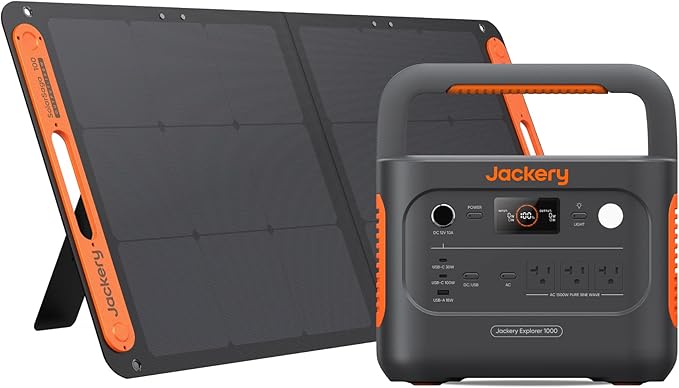
The Jackery Generator Portable Off Grid Emergency power station comes equipped with a lithium-ion battery, which ensures that it delivers a clean and efficient power supply without the harmful emissions associated with traditional gas generators. With various models available, users can choose from a range of power capacities to suit their specific needs. The most popular models, such as the Jackery Explorer 1000, boast a capacity of 1002Wh, which can power multiple devices simultaneously. This versatility makes it an excellent choice for charging smartphones, laptops, drones, and even small appliances like mini-fridges or electric grills. The generator features multiple output ports, including AC outlets, USB-A, USB-C, and DC outputs, providing flexibility for powering various devices. Additionally, the unit comes equipped with a built-in MPPT controller, enhancing solar charging efficiency for those looking to harness renewable energy.

One of the standout features of the Jackery Generator is its portability. Weighing in at around 22 pounds, it is designed with ergonomics in mind, featuring a comfortable handle for easy transport. The compact design allows it to fit conveniently in the trunk of a car or a camping backpack, making it an excellent choice for those who frequently venture into the great outdoors. Furthermore, the generator operates quietly, which is a significant advantage over traditional gas-powered generators that can be noisy and disruptive in serene environments. This makes the Jackery Generator an ideal choice for camping trips, tailgating events, or any situation where peace and quiet are valued.

While the Jackery Generator Portable Off Grid Emergency power station has many commendable features, it is not without its drawbacks. One of the primary concerns users have raised is the initial cost. Compared to traditional gas generators, the upfront investment for a Jackery Generator can be substantial, which may deter budget-conscious consumers. However, it is essential to consider the long-term savings associated with not having to purchase fuel, as well as the environmental benefits of using a solar-powered solution. Additionally, while the generator can handle multiple devices, it may struggle with high-wattage appliances, such as air conditioners or space heaters, which can limit its utility in specific scenarios.

Another potential downside is the charging time. While the Jackery Generator can be charged via solar panels, car chargers, or wall outlets, the time it takes to reach a full charge can be longer than some users may expect. For instance, charging via solar panels can take anywhere from 6 to 12 hours, depending on sunlight conditions and the size of the solar panel used. This may pose a challenge for those who require a quick energy boost in emergency situations. Additionally, the battery life may diminish over time with frequent use, which is a common issue with lithium-ion batteries. Users may need to replace the unit eventually, which could add to the long-term costs.

In conclusion, the Jackery Generator Portable Off Grid Emergency power station represents a significant advancement in portable power technology. Its combination of clean energy, portability, and versatility makes it an attractive option for outdoor enthusiasts, emergency preparedness, and those seeking a reliable backup power source. The multiple output options and quiet operation further enhance its appeal, ensuring that users can power their devices without disturbing the tranquility of nature or their surroundings.

However, potential buyers should carefully consider the initial investment and limitations regarding high-wattage appliances and charging times. While the Jackery Generator may not be the most budget-friendly option on the market, its environmental benefits and convenience may outweigh the costs for many users. Ultimately, the Jackery Generator stands out as a practical and innovative solution for anyone looking to embrace energy independence, whether on a weekend camping trip or during an unexpected power outage.

How to Stay Safe When the Grid Goes Silent for Good

The light didn’t flicker. It vanished. Gone. No warning, no hum, no eerie build-up—just a void, as if someone somewhere unplugged the entire sky. I was halfway through boiling water when the stove blinked off and never came back. The silence that followed wasn’t peaceful. It was the kind of silence that hurts your ears. Like the air itself was holding its breath, waiting for… something.

And that’s the funny thing—we wait. All of us. We wait for someone else to fix it. Flip the breaker. Patch the satellite. Send help. Reboot the system. As if the system was built to survive its own collapse. Spoiler: it’s not.

Most people don’t see the cracks until they’re inside them. You know, until their phone screen won’t glow, the fridge smells like rot, or the ATM just sits there, blank, like it forgot how to be useful. That’s when it starts to sink in—slow and sour like curdled milk. The grid isn’t a guarantee. It’s a gamble.

I used to believe the opposite. I mean, who doesn’t? Life hums along in this strange lullaby of chargers, alerts, and instant weather reports. Need food? Tap. Need cash? Swipe. Need to speak to someone on the other side of the world? Easy. Until it’s not.

Imagine—no, feel—this: it’s 2 a.m. and every appliance in your home dies at once. The air changes. The silence wraps around your chest like cold, damp rope. The lights outside are dark. No cars. No buzz from the transformer pole you never noticed until now. And when you try to check the news… there is no news. No signal. Nothing. Just blankness. Like the whole world forgot how to speak.

Sounds like a movie, right? It’s not.

See, electromagnetic pulses—EMPs—aren’t dramatic Hollywood nonsense. They’re real. Real like solar flares, real like nuclear tests, real like satellites that go blind mid-orbit. Heck, just last year there were whispers about power grids being probed. Not hacked exactly—scanned. Like someone was mapping our weak spots.

And still, people laugh. Or worse—they shrug. “Too paranoid,” they say, sipping their triple shot latte as if Starbucks will always be there. As if Wi-Fi is a human right and not a delicate, blinking fantasy held together by code and copper.

But the truth? The cold one no one wants to say out loud?

We’re fragile.

One bad day—an EMP, a solar blast, a high-altitude nuke—and we go dark. No cars. No internet. No refrigeration. Hospitals become tombs. Banks become museums. The world… slows. Then stalls. Then spirals.

And what do most people do?

They panic. They fight. They wait for help that doesn’t come. I’ve seen it. Not during an EMP, thank God, but after hurricanes. Floods. Even a city-wide blackout once that turned into a looting spree by midnight. That was just the power going out. Temporarily. There were still working phones and running water. And it was chaos.

Now multiply that by a thousand. For days. Weeks. Maybe months.

Still think prepping is a joke?

Look, I’m not here to scold or scare you—well, maybe scare you a little—but mostly to nudge. Because once, not that long ago, I was the guy with a flashlight and no batteries. A pantry full of condiments and nothing edible. A vague idea of how to purify water (I thought you boiled it and called it a day… wrong).

What changed? Honestly? A weird conversation at a gas station with this older guy. Scruffy. Quiet. Had a homemade solar panel in the back of his truck and a look in his eye that said he knew. I asked him, jokingly, what it was for.

He didn’t laugh. Just said, “One day, it’s gonna go quiet. I’m not waiting to be surprised.”

That stuck with me. Hard.

Because when you strip it all down—like all of it—what do we really have? What can we control when the scaffolding of modern life cracks and groans and gives way?

Not much.

Unless you choose to change that. Unless you start now—before the silence. Before the pulse.

And no, this doesn’t mean digging a bunker in your backyard or buying 8,000 pounds of dry beans you’ll never eat. That’s cartoon prepping. Real readiness? It’s subtle. Thoughtful. You start by learning. You build systems. Routines. Habits. You practice. You turn your home into a quiet fortress, not a fortress of fear, but of confidence. You learn how to filter water. How to communicate when the towers are dust. How to not panic.

The weird thing? It’s empowering. Like, seriously. The moment you stop being at the mercy of the grid, something shifts in your brain. You walk different. Sleep deeper. There’s a peace in knowing you’ve got this—even if they don’t.

But this… takes guidance. And clarity. You can’t just wing it. There’s too much nonsense out there—half-baked blogs and recycled checklists written by people who’ve never actually spent a weekend without power, let alone lived through a simulated blackout.

So what if there was a guide—an actual, grounded, useful blueprint that walked you through it all? No hype. No fear-mongering. Just the real stuff.

There is.

It’s called The EMP Readiness Blueprint, and yeah, the name sounds a bit dramatic, but once you see what’s inside—you’ll get it. It’s not just about prepping for a grid-down event. It’s about building a whole new mindset. It’s about being the kind of person who doesn’t flinch when the lights die. Who doesn’t cry when the freezer goes warm. Who leads when others freeze.

Because in the end, when the pulse hits—it will hit eventually, one way or another—there are only two kinds of people: the ones who scream into the darkness… and the ones who were ready for it.

Which one are you?

That’s not a rhetorical question.

Because right now, right this second, the answer’s still up to you.